
Best Graphics Cards with 2 HDMI Ports: 2026 Guide
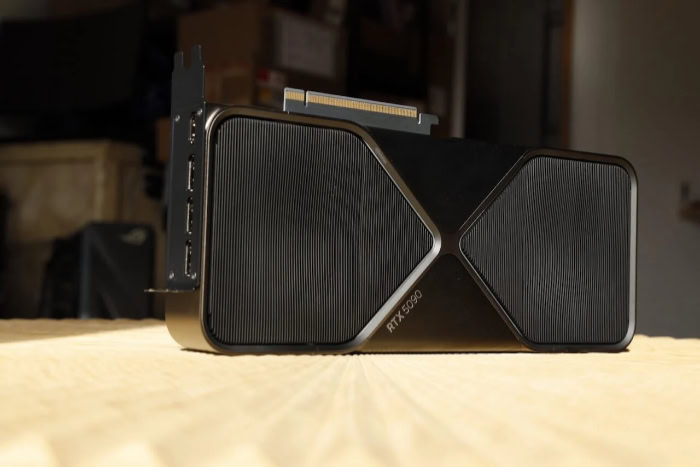
Setting up a dual-monitor workstation, connecting a VR headset, or hooking up a television alongside a standard desktop monitor often requires multiple HDMI connections. However, modern GPU manufacturers primarily favor DisplayPort, leaving buyers frustrated by standard layouts that offer only one HDMI port.
Finding a graphics card that supports multiple native HDMI setups requires looking past the standard reference models. Identifying the select manufacturers that still build these customized boards helps avoid the hassle of buying the wrong hardware.
Key Takeaways
- Most modern graphics cards only feature one native HDMI port because DisplayPort is royalty-free and dominates the PC monitor market, whereas HDMI requires paid licensing fees.
- ASUS is the primary manufacturer offering multiple HDMI ports on mid-range and high-end cards, frequently equipping ROG Strix, TUF Gaming, and Prime models with two native HDMI 2.1 ports.
- Having five physical video outputs on a customized graphics card does not increase display limits, as the internal GPU display controller still restricts you to a maximum of four active displays at once.
- Active DisplayPort to HDMI adapters actively translate signal protocols to fully preserve advanced features like 4K resolution at 120Hz, HDR, and high refresh rates, making them superior to limited passive cables.
- If you lack physical ports on your graphics card, you can enable the integrated graphics setting in your motherboard BIOS to run secondary, standard displays directly from your motherboard.
Understanding Why Dual HDMI Graphics Cards Are Rare
Setting up a modern workspace or multi-display gaming station often exposes a frustrating hardware limitation. While television screens and many standard monitors rely entirely on HDMI, the graphics card market is heavily slanted toward an alternative connection type.
This unequal distribution of ports is not an accidental oversight; rather, it is the result of industry standards, financial constraints, and official design blueprints established by the primary chipmakers.
The Dominance of DisplayPort
DisplayPort has consolidated its position as the preferred connection standard for PC monitors. Designed specifically for computer displays, it offers substantial bandwidth advantages over standard HDMI iterations, enabling it to drive higher resolutions and faster refresh rates simultaneously.
Additionally, DisplayPort is built on an open-source, royalty-free licensing model, making it highly attractive to hardware developers. This technology also natively supports Multi-Stream Transport, a feature that permits daisy-chaining multiple monitors together using a single output port on the graphics card.
Because PC monitor manufacturers heavily prioritize these features, graphics card designers build their hardware to match.
Licensing and Cost Constraints
Unlike the open-source nature of DisplayPort, implementing HDMI requires manufacturers to navigate a paid licensing model. Every device featuring a native HDMI port incurs a royalty fee, alongside annual administration costs paid to the licensing body.
While a few cents per port might seem negligible on a single card, these fees quickly compound into substantial expenses across millions of mass-produced units. To keep production costs manageable and maintain competitive retail pricing, manufacturers restrict the number of HDMI ports on standard consumer models, usually settling on just one.
Reference Designs vs. Custom Boards
When chip giants NVIDIA and AMD engineer a new generation of graphics processors, they distribute reference designs to establish standard board layouts and cooling guidelines. These baseline blueprints almost universally mandate a port configuration consisting of three DisplayPorts and a single HDMI port.
Most secondary manufacturers follow these reference guidelines precisely to speed up production and minimize development risks. However, select board partners choose to develop customized circuit boards with altered power delivery, massive coolers, and custom input-output brackets.
These premium, modified boards are the primary source for configurations that break away from the standard template to offer multiple HDMI ports.
Top Graphics Card Series Featuring 2 Native HDMI Ports

Although reference designs limit standard options, a few prominent hardware manufacturers cater directly to users who need multiple native HDMI outputs. By redesigning the port bracket and circuit board paths, these brands manage to fit extra high-speed ports onto their custom products.
Below are the specific graphics card models from each leading brand that offer native dual HDMI configurations.
ASUS Lineups (TUF Gaming, ROG Strix, and Prime)
ASUS stands out as the primary manufacturer consistently delivering multiple native HDMI ports on modern graphics cards. Across their TUF Gaming, ROG Strix, and Prime lineups, ASUS engineers often equip cards with a five-port configuration, typically featuring two HDMI ports alongside three DisplayPorts.
Having five physical outlets gives users exceptional flexibility to choose their preferred connection type.
| Model Name | HDMI Ports | DisplayPort Ports |
| ASUS ROG Astral GeForce RTX 5090 OC Edition | 2x Native HDMI 2.1b | 3x Native DisplayPort 2.1b |
| ASUS ROG Astral GeForce RTX 5080 OC Edition | 2x Native HDMI 2.1b | 3x Native DisplayPort 2.1b |
| ASUS TUF Gaming GeForce RTX 5080 OC Edition | 2x Native HDMI 2.1b | 3x Native DisplayPort 2.1b |
| ASUS ROG Strix GeForce RTX 4090 OC Edition | 2x Native HDMI 2.1a | 3x Native DisplayPort 1.4a |
| ASUS TUF Gaming GeForce RTX 4090 OC Edition | 2x Native HDMI 2.1a | 3x Native DisplayPort 1.4a |
| ASUS ROG Strix GeForce RTX 4080 Super OC Edition | 2x Native HDMI 2.1a | 3x Native DisplayPort 1.4a |
| ASUS TUF Gaming GeForce RTX 4080 Super OC Edition | 2x Native HDMI 2.1a | 3x Native DisplayPort 1.4a |
| ASUS TUF Gaming GeForce RTX 4070 Ti Super White Edition | 2x Native HDMI 2.1a | 3x Native DisplayPort 1.4a |
| ASUS TUF Gaming GeForce RTX 4070 Ti OC Edition | 2x Native HDMI 2.1a | 3x Native DisplayPort 1.4a |
| ASUS ROG Strix GeForce RTX 3060 OC Edition | 2x Native HDMI 2.1 | 3x Native DisplayPort 1.4a |
| ASUS TUF Gaming GeForce RTX 3060 V2 OC Edition | 2x Native HDMI 2.1 | 3x Native DisplayPort 1.4a |
Gigabyte Options (AORUS and Gaming OC)
Gigabyte offers several tailored alternatives for users wanting dual HDMI options, though their approach varies depending on the specific model. On their premium AORUS series cards, the company has historically provided highly flexible output configurations, sometimes incorporating up to three native HDMI outputs.
In their mid-range segments, such as the Gaming OC and Windforce series, Gigabyte occasionally deviates from the standard reference design by offering a balanced, symmetrical layout of two DisplayPorts and two HDMI ports.
| Model Name | HDMI Ports | DisplayPort Ports |
| Gigabyte Radeon RX 9070 XT Gaming OC 16G | 2x Native HDMI 2.1 | 2x DisplayPort |
| Gigabyte Radeon RX 9070 GRE Gaming OC 12G | 2x Native HDMI 2.1 | 2x DisplayPort |
| Gigabyte GeForce RTX 4060 WINDFORCE OC | 2x Native HDMI 2.1a | 2x DisplayPort 1.4a |
| Gigabyte GeForce RTX 3060 GAMING OC 12G (Rev 2.0) | 2x HDMI 2.1 | 2x DisplayPort 1.4a |
| Gigabyte AORUS GeForce RTX 3090 XTREME 24G | 3x HDMI 2.1 | 3x DisplayPort 1.4a |
| Gigabyte AORUS GeForce RTX 3080 MASTER 10G | 3x HDMI 2.1 | 3x DisplayPort 1.4a |
Low-Profile and Entry-Level Solutions
High-performance gaming cards are not always necessary, especially for home theater PCs, silent media centers, or basic office workstations. For these setups, compact, low-profile cards offer energy-efficient and quiet operation without sacrificing port variety.
Select manufacturers build low-profile cards specifically to pack multiple HDMI connections into tight systems.
| Model Name | HDMI Ports | DisplayPort Ports |
| Gigabyte GeForce RTX 4060 OC Low Profile 8G | 2x Native HDMI 2.1a | 2x DisplayPort 1.4a |
| ASUS GeForce RTX 5060 LP BRK 8GB GDDR7 OC Edition | 2x Native HDMI 2.1 | 2x DisplayPort |
| MSI GeForce RTX 3050 LP 6G OC | 2x Native HDMI 2.1 | 2x DisplayPort 1.4a |
| ASUS GeForce GT 730 2GB GDDR5 Low Profile | 4x Native HDMI 1.4a | None |
Technical Performance and Compatibility Considerations

When planning a multi-monitor configuration, looking at physical connection options is only the first step. The internal architecture of a graphics processor, the technical standards of each connection, and the physical requirements of custom boards all dictate how a system performs.
Gaining a clear picture of these performance specifications ensures that any dual-monitor setup functions reliably without unexpected bottlenecks or system conflicts.
Maximum Active Displays vs. Physical Ports
A common point of confusion is the difference between the number of physical ports on a graphics card and the number of screens it can run simultaneously. For example, several premium graphics cards feature five physical display outputs on their rear brackets.
However, the internal display controllers built into modern GPUs from NVIDIA and AMD are capped at driving a maximum of four active displays at once. The extra physical ports simply offer alternative routing options.
Users can choose to use two HDMI ports and two DisplayPorts, or one HDMI port and three DisplayPorts, but attempting to connect a fifth display will result in one screen remaining dark.
HDMI 2.0 vs. HDMI 2.1 Bandwidth
When utilizing dual HDMI ports, pay close attention to the specific generation of each port, as they offer vastly different capabilities. Older HDMI 2.0 ports deliver up to 18 Gbps of bandwidth, which is sufficient for running a standard 4K display at 60Hz or a 1440p monitor at 144Hz.
In contrast, the newer HDMI 2.1 standard increases bandwidth capacity to 48 Gbps. This massive leap in throughput supports high-end displays running at 4K resolution at 120Hz or 144Hz, as well as 8K screens, while also enabling variable refresh rates and high dynamic range color without compression.
For high-end gaming or high-refresh-rate tasks, using a card equipped with native HDMI 2.1 ports is essential to avoid limiting the display capabilities.
Physical Form Factor and Power
Choosing a custom board to secure an extra native HDMI port comes with distinct physical consequences. Because these cards are heavily modified by board partners, they usually feature beefier power delivery phases and massive heatsinks to ensure stable operation.
Consequently, dual-HDMI cards are often thick, heavy, triple-slot designs that demand significant space inside a PC chassis. These massive cards also draw substantial wattage, requiring high-capacity power supplies with extra PCIe power connectors.
Buyers must verify their computer case clearance and power supply capabilities before purchasing one of these larger graphics cards.
Practical Alternatives to Native Dual HDMI Cards

Finding a custom graphics card with multiple native HDMI ports is sometimes difficult or overly expensive. Fortunately, users do not need to limit their hardware options to a few select custom cards.
A variety of highly effective workarounds exist that allow a standard GPU configuration with multiple DisplayPorts to easily run multiple HDMI-based displays without compromising on display quality.
Active DisplayPort to HDMI Adapters
Active adapters represent the most reliable method for converting a DisplayPort output into an HDMI connection. Unlike simpler conversion cables, active adapters feature internal integrated circuits that actively translate the DisplayPort signal protocol into a native HDMI format.
This active translation preserves high-bandwidth features, allowing users to drive high-refresh-rate monitors, high dynamic range color spaces, and ultra-high resolutions up to 4K at 120Hz. If a native dual-HDMI card is unavailable, combining a standard card with a certified active adapter provides a completely seamless experience.
Passive DisplayPort to HDMI Cables
For secondary displays where high refresh rates or maximum resolutions are unnecessary, passive DisplayPort to HDMI cables offer a cost-effective alternative. These budget-friendly cables do not contain internal chipsets to translate signals; instead, they rely on the graphics card to detect the connection and automatically output an HDMI-compatible signal.
Because of this simplified design, passive cables are generally restricted to standard-resolution displays, typically topping out at 1080p resolution at a standard 60Hz refresh rate. They work perfectly for displaying chat windows, static documents, or secondary reference material on standard office monitors.
Enabling Motherboard HDMI Ports
Another practical workaround involves utilizing the physical HDMI port located directly on the computer motherboard. By default, installing a dedicated graphics card usually disables the processor’s integrated graphics.
However, users can access the motherboard system BIOS during startup and enable a setting typically labeled as “IGPU Multi-Monitor” or “Integrated Graphics.” Once activated, this setting allows the system to utilize both the dedicated GPU and the processor’s integrated graphics simultaneously, meaning a secondary display or media projector can be plugged straight into the motherboard HDMI port while the main gaming monitor runs off the primary graphics card.
Conclusion
While finding a graphics card with dual native HDMI ports is challenging due to the dominance of DisplayPort and HDMI licensing fees, options still exist. Select manufacturers, particularly ASUS with its ROG Strix and TUF Gaming lineups, continue to cater to this demand by offering highly customized board layouts with extra physical ports.
These premium models provide a clean, cable-free solution for multi-HDMI displays, though they often demand more physical space and higher power requirements.
Choosing between a dedicated dual-HDMI card and a standard card paired with adapters ultimately comes down to physical space and budget. If you have a compact PC case or a strict budget, opting for a standard graphics card alongside a high-quality active DisplayPort to HDMI adapter is a highly practical path that preserves signal quality.
However, if space and cost are not barriers, investing in a custom dual-HDMI board eliminates the need for extra hardware and simplifies your overall desk setup.
Frequently Asked Questions
Can I use all five ports on an ASUS card at the same time?
No, you cannot run five active monitors simultaneously because modern graphics processors are restricted to driving a maximum of four displays. The extra physical port on custom boards is meant to provide alternative connection options rather than expand your display limits. If you connect five displays, one screen will simply remain black.
What is the difference between HDMI 2.0 and HDMI 2.1?
HDMI 2.1 offers significantly higher bandwidth than HDMI 2.0, supporting resolutions up to 4K at 120Hz or 144Hz. While HDMI 2.0 is perfectly suitable for standard 4K at 60Hz displays, the newer HDMI 2.1 standard is necessary for modern high-refresh gaming displays, variable refresh rate technologies, and 8K screens.
Do DisplayPort to HDMI adapters actually work for gaming?
Yes, active DisplayPort to HDMI adapters work beautifully for gaming by converting the video signal without adding noticeable lag. To preserve high resolutions, HDR, and high refresh rates, you must choose an active adapter rather than a passive one. Passive options will limit your display resolution and refresh rate capabilities.
Can I plug one monitor into my motherboard and another into my graphics card?
Yes, you can run displays from both the motherboard and your dedicated graphics card simultaneously. To do this, you must enter your computer BIOS during startup and enable the integrated graphics setting, often called IGPU Multi-Monitor. This allows your processor to handle secondary screens while your GPU runs your primary gaming monitor.
Why are dual HDMI graphics cards so hard to find?
Dual HDMI cards are rare because DisplayPort is the royalty-free industry standard for PC monitors, whereas HDMI requires manufacturers to pay licensing fees. Because standard reference blueprints from NVIDIA and AMD prioritize DisplayPort configurations, only a few partners invest in the custom engineering required to add extra physical HDMI ports.
About the Author: Elizabeth Baker


