
How Does DoorDash Work? The 3-Sided Model Explained

Hunger strikes, you tap a screen, and thirty minutes later, a hot meal arrives at your door. DoorDash makes this seamless process look effortless, but behind the app is a highly coordinated digital logistics platform.
The system connects consumers, independent delivery drivers, and local merchants in a constant, real-time loop.
The company has also expanded far beyond restaurant takeout, moving everything from weekly groceries and retail goods to last-minute convenience items across thousands of cities. While you only see a simple menu interface, complex dispatch algorithms run the show.
Key Takeaways
- DoorDash operates a tri-sided marketplace connecting consumers, independent delivery drivers, and local merchants through a single digital platform.
- Customers pay through a combination of item costs, delivery fees, and service charges, with options to subscribe to DashPass for reduced rates.
- Independent drivers, known as Dashers, earn money through a calculated base pay, promotional bonuses, and one hundred percent of customer tips.
- Merchants utilize tiered commission structures to gain app visibility or use white-label services to process orders directly on their own websites.
- Advanced routing algorithms manage the entire logistical process, optimizing driver dispatch times and resolving missing item errors automatically.
The Tri-Sided Marketplace
DoorDash operates as a complex logistical bridge connecting three distinct groups to facilitate local commerce. Unlike traditional delivery models where a restaurant employs its own drivers, this platform relies on a decentralized network.
The system functions by balancing supply and demand in real-time, ensuring that food, groceries, and retail items move swiftly from local businesses to consumer doorsteps.
The Three Players
The entire operation relies on the coordination of consumers, independent delivery drivers, and local merchants. Consumers represent the demand side, opening the app to purchase meals or goods without leaving their homes.
Dashers are the independent contractors supplying the labor, providing the transportation required to move items across town. Merchants, ranging from independent coffee shops to massive grocery chains, supply the actual products and utilize the platform to reach a wider audience without maintaining an in-house delivery fleet.
The Order Lifecycle
A single transaction triggers a highly synchronized sequence of events. First, a customer finalizes their cart and taps the checkout button.
The system immediately transmits the details to the merchant, who reviews the request and begins preparing the items. Simultaneously, the platform’s algorithms locate an available driver nearby and offer them the delivery.
The assigned driver arrives at the store, collects the packaged items, and drives to the customer’s specified location for the final drop-off.
The Revenue Model
Sustaining a logistical network of this size requires multiple revenue streams. The company generates income primarily by charging merchants a commission percentage on every order processed through the platform.
On the consumer side, the service collects delivery and service fees applied at checkout. Furthermore, the company offers a monthly subscription plan, generating a steady stream of recurring revenue from frequent users who pay a flat rate to waive individual delivery charges.
The Customer Perspective: Ordering, Fees, and Subscriptions

The consumer experience is designed entirely around convenience and ease of access. Users interact with a streamlined application that hides the complex logistical routing happening in the background.
From selecting a nearby restaurant to tracking a meal’s progress down the street, the process is engineered to give users complete control and visibility over their purchase.
Browsing the Interface
Finding a specific meal or household item starts with a robust search and filtering system. Users browse local options categorized by cuisine type, current delivery estimates, price ranges, or user ratings.
The interface allows customers to scroll through highly visual menus, select specific items, and add customizations, such as requesting extra sauce or removing allergens, before proceeding to the checkout screen.
Deconstructing the Final Bill
The total cost presented at checkout is a combination of several distinct charges. The base item cost covers the food or retail goods, though merchants sometimes set these prices slightly higher than their in-store menus.
Added to this is a delivery fee, which fluctuates based on distance and current platform demand. A service fee, calculated as a percentage of the subtotal, helps fund platform operations.
Customers may also see a small order fee if their subtotal falls below a certain threshold, followed by an optional tip that goes directly to the driver.
The DashPass Ecosystem
Frequent users often opt into DashPass, a monthly subscription model designed to reduce transaction costs. For a flat monthly or annual fee, subscribers receive zero-dollar delivery fees and reduced service fees on orders from eligible merchants that meet a specified minimum subtotal.
This ecosystem encourages customer loyalty, as subscribers naturally prefer to order from participating merchants to maximize their savings.
Real-Time Tracking
Once an order is placed, the application transitions into a live tracking monitor. Customers watch a GPS map showing the assigned driver’s exact location as they travel to the restaurant and then to the drop-off destination.
During this transit period, users can send text messages or call their driver to clarify directions. The app also accommodates specific drop-off instructions, allowing customers to request that a package be left at the door or handed over directly.
The Dasher Perspective: Onboarding, Driving, and Earnings

For the independent contractors providing the labor, the platform serves as a flexible income source rather than a traditional job. Delivery drivers control their own schedules, choosing exactly when, where, and how often they want to work.
The interface they use is completely distinct from the consumer application, prioritizing route efficiency and earning metrics.
Becoming a Dasher
The barrier to entry for prospective delivery drivers is relatively low compared to traditional employment. Applicants must be at least 18 years old and submit to a standard background check.
They also need a smartphone to run the driver application and a valid form of identification. Depending on the density of the local market, drivers can fulfill orders using various modes of transportation, including cars, motorcycles, scooters, or even bicycles in crowded urban centers.
Understanding the Pay Formula
Driver compensation varies per delivery and is calculated through a specific formula. The foundation is Base Pay, which the platform determines by factoring in the estimated time, distance, and overall desirability of the route.
Added to this is the customer tip, with one hundred percent of the gratuity passing directly to the driver. During periods of high demand or inclement weather, the platform often implements Peak Pay, adding a flat monetary bonus to every completed delivery to incentivize more drivers to log in.
Operating the Dasher App
Working a shift involves strategic decision-making. Drivers can schedule blocks of time in advance or tap a button to start working immediately if their current area is busy.
When the system offers a delivery, the driver’s screen displays the guaranteed minimum payout, the total mileage, and the merchant locations. The contractor then has a brief window to accept or decline the request based on its profitability.
Once accepted, the app provides integrated GPS navigation to guide the driver through the pickup and drop-off sequence.
Payout Logistics
Contractors have multiple options for receiving their accumulated earnings. The standard method is a weekly direct deposit, transferring the previous week’s earnings directly into the driver’s bank account.
For those needing faster access to cash, the platform offers an instant payout feature for a small flat fee. Alternatively, drivers can sign up for a specialized prepaid debit card through the company, which automatically deposits earnings immediately after every shift at no additional cost.
The Merchant Perspective: Onboarding, Integration, and Commissions

For local businesses, partnering with a third-party delivery service offers a way to expand their customer base without managing an internal fleet of drivers. Setting up shop on the platform involves a structured process that dictates how a restaurant receives orders, markets its food, and pays for the service.
Establishing a Digital Storefront
Businesses gain access to a dedicated Merchant Portal to build their online presence. Through this dashboard, owners upload their menus, write detailed item descriptions, and add high-quality photographs of their dishes.
The portal also allows merchants to manage daily inventory, temporarily removing items that are out of stock and adjusting prices to reflect the added costs of specialized delivery packaging.
Operational Integration
Once the menu is live, the restaurant needs a reliable way to receive incoming orders. The simplest method involves a dedicated tablet provided by the platform, which chimes whenever a new request comes through.
Staff members read the tablet, manually punch the order into their own registers, and send it to the kitchen. For a smoother workflow, many restaurants opt for direct integration.
This routes incoming platform orders straight into the business’s existing Point-of-Sale (POS) system and kitchen display screens, completely removing the need for manual data entry.
Tiered Commission Structures
To compensate for the delivery network and app visibility, merchants pay a percentage-based fee on every transaction. The platform offers tiered partnership plans, typically set around 15%, 25%, and 30% commission rates.
A lower commission rate means the restaurant keeps more of its profit margin, but it usually comes with a smaller delivery radius and less prominence in the app’s search results. Opting into a higher tier expands the delivery zone and boosts the restaurant’s visibility to potential customers, essentially functioning as built-in marketing.
Fulfillment Options
Businesses can choose how they interact with the network. The standard Marketplace model puts the restaurant directly on the main application for users to browse.
Alternatively, businesses can use “DoorDash Drive” or “Storefront.” These are white-label services where a restaurant processes orders directly through its own website, maintaining total control over the customer relationship. The platform simply dispatches an independent contractor to pick up and drop off the food, charging the merchant a flat delivery fee rather than a percentage-based commission.
Platform Technology: Dispatch, Logistics, and Order Resolution
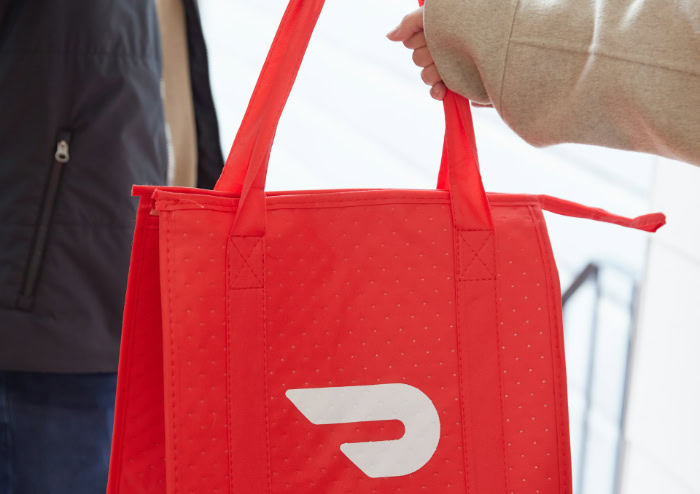
Behind the customer menus and driver schedules operates a massive backend infrastructure. The system processes thousands of simultaneous requests, constantly calculating variables to ensure hot food arrives quickly.
This invisible logistics engine dictates everything from driver assignment to automated error correction.
The Dispatch Algorithm
The operation relies heavily on a complex routing system. When an order is placed, the backend evaluates dozens of variables before offering the trip to a driver.
It calculates the restaurant’s average preparation time, the physical distance between the merchant and the customer, current traffic conditions, and the exact GPS location of available drivers. The goal is to time the driver’s arrival perfectly with the moment the food is packaged, minimizing wait times for everyone involved.
Route Optimization
To maximize efficiency, the system frequently groups multiple deliveries together. If two customers living in the same neighborhood order from the same restaurant, or from businesses located within the same shopping plaza, the algorithm creates a “stacked order.” A single driver is assigned to pick up both packages and deliver them sequentially.
This batching process reduces the total mileage driven and increases the driver’s hourly earnings by consolidating their workflow along a single geographic path.
Quality Control and Resolution
Given the volume of transactions processed daily, errors like spilled drinks or missing side dishes inevitably occur. The platform relies on an automated support system to handle most discrepancies quickly.
If a customer reports a missing item through the app, the system reviews the digital receipt and instantly calculates a partial refund or issues credits for a future purchase. For more complex issues, such as heavily delayed deliveries or drivers failing to find an address, human support agents intervene to mediate the situation and provide appropriate compensation based on who is at fault.
Conclusion
DoorDash operates as a highly tuned logistics engine, effortlessly syncing the actions of consumers, delivery drivers, and merchants in real time. From the moment a customer submits an order, complex dispatch algorithms calculate distances, preparation times, and traffic conditions to ensure items move quickly from the store to the front door.
This tri-sided operational model has fundamentally reshaped the modern economy. It provides unmatched convenience for everyday shoppers, offers flexible earning opportunities within the gig economy, and allows local businesses to reach broader audiences without managing their own complex delivery fleets.
Frequently Asked Questions
How much do DoorDash drivers make per delivery?
Driver earnings vary per trip based on a specific pay formula. Compensation includes a base pay calculated from estimated time and distance, plus any promotional peak pay during busy hours. Drivers also keep one hundred percent of the tips provided by the customer.
Does DoorDash pay for gas or car maintenance?
No, the company does not reimburse drivers for fuel, vehicle wear, or maintenance costs. Because Dashers operate as independent contractors rather than traditional employees, they are completely responsible for all vehicle expenses and tax obligations associated with their delivery work.
How does DoorDash make money?
The platform generates revenue through multiple channels across its user base. It charges merchants a commission fee on every transaction processed through the app. Additionally, the company collects delivery and service fees from consumers and earns recurring revenue from its DashPass subscription model.
Can you order items other than restaurant food?
Yes, the platform has expanded its delivery operations far beyond standard restaurant takeout. Consumers can now use the app to purchase groceries, pet supplies, prescription medications, and various retail goods. Drivers simply pick up these items from local stores and drop them off.
What happens if an order is late or missing items?
The platform utilizes an automated support system to handle common discrepancies. If an item is missing or an order arrives exceptionally late, customers can report the issue directly through the app. The system then evaluates the receipt and issues a partial refund or account credits.
About the Author: Julio Caesar


