
Is Netflix Worth It? The Real Cost Right Now

Streaming fatigue has set in, and shrinking entertainment budgets are forcing hard choices. Netflix used to be an absolute must-have utility.
You paid the monthly bill without a second thought. Today, rising costs and aggressive crackdowns on password sharing have transformed that automatic renewal into a heavily scrutinized expense.
With rival platforms fighting for your attention, blindly paying for the biggest name in streaming no longer makes financial sense. You need to know if the original giant of binge-watching still delivers enough quality to justify its premium price tag.
To answer that question, we are breaking down the current pricing tiers, content libraries, and technical features.
Breaking Down Pricing and Subscription Tiers
A streaming service must prove its financial value before you even look at the catalog. Netflix offers multiple subscription levels designed to capture different types of viewers.
Assessing these options requires looking closely at what you actually get for your monthly fee to determine which tier fits your lifestyle.
Evaluating the Baseline Costs
Streaming was once the cheap alternative to cable television. Today, multiple subscriptions easily rival old utility bills, making entertainment a highly scrutinized budget item.
Netflix remains one of the most expensive individual services on the market, with prices ranging from $8.99 to $26.99 per month. Families and individuals must decide if the platform justifies its position as a primary monthly expense.
The tier you choose dramatically changes the overall value proposition of the service.
The Standard with Ads Experience
The ad-supported tier costs $8.99 per month and offers a significant discount for budget-conscious viewers. It allows you to watch and download in 1080p high definition on two supported devices at a time.
You will have to sit through commercial breaks before and during most shows. Additionally, complex licensing agreements mean a small percentage of popular movies and series are locked away from ad-tier subscribers entirely.
You will see a padlock icon over unavailable titles. You save money, but you sacrifice the complete catalog and uninterrupted viewing.
The Standard Plan
The Standard plan costs $19.99 per month and serves as the middle ground for the majority of users. You receive full access to the entire library without any commercial interruptions.
Like the ad tier, this plan streams in 1080p high definition and allows simultaneous viewing and downloading on two different devices. For couples or small households with standard televisions, this provides a solid balance of price and performance.
You get exactly what you expect from a premium streaming service without paying the absolute highest premium.
The Premium Plan
The Premium plan demands the highest monthly fee at $26.99. In exchange, subscribers unlock Ultra HD 4K resolution, HDR video, and immersive spatial audio.
You also gain the ability to stream on up to four devices at once and download on up to six devices. This tier is strictly necessary for large households living under one roof.
It is also mandatory for home theater enthusiasts who want to maximize their expensive audio and visual equipment. If you are watching on a laptop or an older television, this expensive upgrade is a waste of money.
Evaluating the Content Library

You are ultimately paying for access to television and movies. Netflix operates on a massive scale, producing and acquiring thousands of hours of video every year.
The true value of the service depends heavily on your personal taste and how much time you actually spend watching television.
Original Programming Quality and Volume
Netflix produces an incredible volume of original content. The platform consistently delivers massive cultural hits that dominate social media conversations and office small talk.
It also funds high-budget films designed to compete for major industry awards. However, this high-volume approach results in a significant amount of mediocre programming.
Viewers often have to sift through dozens of forgettable reality shows and low-budget action movies to find the truly great content.
The Shifting Licensed Catalog
A few years ago, rival studios pulled their most famous comfort shows from Netflix to build their own streaming apps. This visible loss frustrated many long-term subscribers.
Recently, Netflix shifted its strategy by aggressively licensing popular movies and older television shows from those exact same networks. The catalog is constantly rotating.
You might lose a favorite sitcom one month but gain an entire franchise of blockbuster movies the next.
Global Dominance and Niche Content
Where Netflix truly dominates is in its global categories. The platform is the premier destination for massive international hits, particularly Korean dramas and Japanese anime.
It also boasts a bottomless well of true-crime documentaries and highly addictive reality competition shows. If you enjoy these specific genres, the subscription easily pays for itself through sheer volume.
No other platform offers as much high-quality international television in one place.
The Cancellation Frustration
A major source of frustration for loyal subscribers is the company's aggressive cancellation policy. Netflix frequently axes well-reviewed original series after just one or two seasons if they do not meet strict viewership metrics.
This habit creates a distinct hesitation among viewers. Many people now refuse to start a new show until the entire series is finished, which lowers the immediate perceived value of exciting new releases.
User Experience and Technical Features
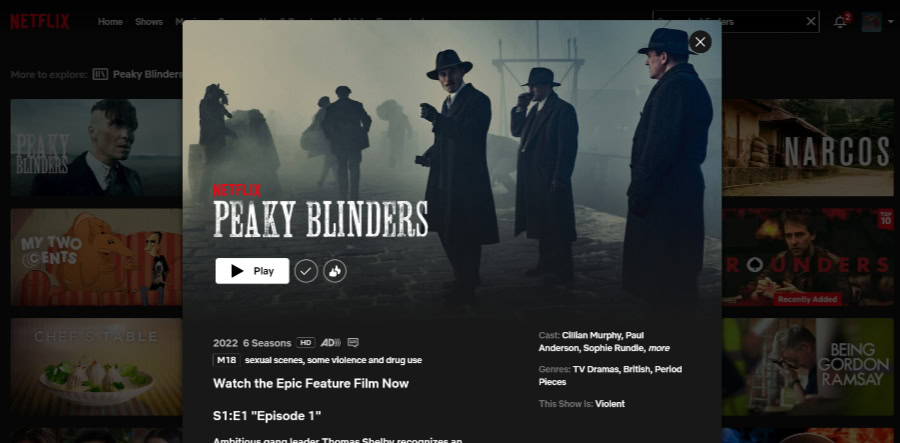
A fantastic movie library is useless if the application is miserable to use. User experience plays a massive role in making a monthly subscription feel worth the money.
Netflix has spent years refining its software to make finding and watching video as frictionless as possible.
Interface and Overall Usability
The visual interface remains the gold standard for the streaming industry. Navigation is fast and highly responsive across smart televisions, web browsers, and mobile devices.
The search functionality rarely fails to find what you want, even if you heavily misspell a title. Categories are neatly organized, making it simple to browse specific genres without feeling overwhelmed by the sheer amount of content available.
The Recommendation Engine
The recommendation algorithm is a mixed bag of personalization and corporate promotion. It successfully tracks your viewing history to suggest similar titles you might genuinely enjoy.
At the same time, the platform heavily prioritizes its newest original releases. Your home screen will always push the latest Netflix production to the top, regardless of whether it actually matches your personal taste or viewing history.
Viewing Convenience and Offline Options
Convenience features are built directly into the viewing experience. You can seamlessly pause a movie on your television and resume it on your phone seconds later without missing a beat.
The offline downloading system works flawlessly for travel, allowing you to save whole seasons of television directly to your mobile device for a long flight. You also have the option to adjust playback speeds if you want to watch a slow-paced documentary a little faster.
Account Management and Parental Controls
Managing a household account is highly intuitive. You can set up completely separate profiles for everyone in the home, ensuring your viewing history does not mix with your roommate's reality television habits.
Custom avatars add a fun touch of personalization to the login screen. Most importantly, the platform offers robust parental controls.
You can lock specific profiles behind a PIN code and strictly limit content based on specific age ratings to protect younger viewers.
Recent Policy Changes and Account Rules

Over the past few years, Netflix fundamentally altered how subscribers actually use their accounts. The company implemented aggressive new restrictions to crack down on unauthorized users and boost revenue.
You must now deal with a rigid system that tightly monitors your physical location and the devices you use to watch television.
The Strict Household Rule
The platform now strictly enforces a primary household policy. Under these new rules, an account is meant to be used entirely by people living together in one single physical location.
Netflix monitors your IP address, device IDs, and overall network activity to verify that the televisions and gaming consoles streaming from your account are all connected to your home Wi-Fi. If the system detects a device streaming regularly from a different address, it will eventually block that screen from accessing the service until the location is verified.
The End of Password Sharing
For years, sharing a single account with extended family members, college students, or friends was normal behavior. The inability to freely hand out your password heavily impacts the traditional perceived value of a subscription.
A premium plan that once served four different people across four different cities felt like an incredible bargain. Today, that exact same price tag applies to just one house.
Viewers who relied on splitting the bill with friends must now shoulder the entire cost alone, making the service feel significantly more expensive.
Extra Member Economics
To accommodate people who still want to share with users outside their home, Netflix introduced the extra member slot. Standard plan users can buy one extra slot, while Premium users can purchase up to two.
Adding an extra member costs an additional $7.99 per month for an ad-supported slot or $9.99 per month for an ad-free slot. When you combine a $26.99 Premium plan with two ad-free extra member fees, the total cost quickly approaches fifty dollars a month.
At that high price point, you have to seriously calculate if buying one massive account is actually cheaper than everyone simply buying their own individual ad-supported plans.
Travel and Remote Viewing Limitations
The household crackdown introduced frustrating friction for users who travel frequently or split their time between two residences. If you try to watch television on a hotel smart TV or a laptop while on vacation, you will likely encounter an on-screen prompt blocking your access.
You then have to request a temporary code via email or text message to unlock the screen for a limited number of days. While the platform allows for mobile viewing on phones and tablets, watching on a secondary television away from home is now a heavily restricted and annoying process.
The Competition and Viewer Strategies

Netflix no longer operates in a vacuum. A massive wave of well-funded competitors has flooded the market, giving consumers more choices than ever before.
To figure out if the original streaming giant is still worth your money, you must look at what other platforms offer and how modern viewers are gaming the system to save cash.
Netflix Versus Rival Platforms
When benchmarking costs and content, Netflix faces fierce opposition from Max, Disney+, Hulu, and Amazon Prime Video. Max focuses heavily on high-budget prestige television and major theatrical releases.
Disney+ relies on massive, established franchises to attract families and dedicated fans. Amazon Prime Video offers a massive catalog bundled directly with free retail shipping.
Netflix remains one of the most expensive standalone services among this group. However, it still holds a massive advantage in sheer volume.
Rivals may offer more recognizable legacy brands, but Netflix releases new original movies and shows at a pace no other company can match.
The Lack of Bundling Options
A major trend in the modern entertainment market is the return of the bundle. Competitors are actively teaming up to offer deep discounts.
You can easily find cost-saving packages that combine Disney+, Hulu, and Max into one single, cheaper monthly payment. Netflix stands completely separated from these media alliances.
The platform rarely offers direct discounts and refuses to package its service with rival applications. Because it operates as an isolated, standalone expense, consumers often find themselves weighing the cost of one Netflix subscription against a bundle that offers three entirely different streaming services for the same price.
The Subscription Hopping Strategy
Consumers are actively fighting back against rising prices by adopting a highly popular strategy known as subscription hopping. Instead of paying for an account all year round, viewers buy a single month of Netflix.
They use those thirty days to binge all the new releases, finish their favorite shows, and then immediately cancel the account. The following month, they take that same money and subscribe to a rival service like Max or Hulu.
This rotating method completely eliminates streaming fatigue and saves hundreds of dollars a year. The ease of canceling and restarting an account makes it perfectly acceptable to leave Netflix behind until a specific show you actually want to watch returns.
Conclusion
Netflix demands premium pricing and enforces strict rules against sharing accounts outside your physical home. You have to weigh those rigid policies and rising costs against the sheer volume of diverse content and a highly refined user experience that simply works better than most rival applications.
The service still holds massive value for heavy daily viewers and large families living under one single roof. If you regularly watch international television, consume massive amounts of true crime, or simply want a bottomless library of background entertainment, a subscription easily justifies its monthly expense.
Casual viewers who only watch television a few hours a week should strongly consider stepping away. Budget-conscious users and individuals frustrated by the recent password-sharing crackdown can easily find cheaper entertainment alternatives.
If you only care about one or two specific shows, your money is better spent rotating through cheaper competitor bundles.
Frequently Asked Questions
Can I still share my Netflix password with family?
You can no longer share your password for free with anyone living outside your primary residence. Netflix tracks device locations and internet networks to enforce this rule. You must pay an additional monthly fee to officially add an extra member to an existing Standard or Premium plan.
Does the Netflix ad-supported plan have every movie and show?
The ad-supported tier does not include the entire content library. Due to complex licensing restrictions with various outside studios, a small percentage of popular movies and television shows remain locked. You will see a lock icon over certain titles that require a more expensive, ad-free subscription.
Is the premium plan required to watch in 4K resolution?
Yes, you absolutely must purchase the most expensive Premium plan to unlock 4K Ultra HD resolution and spatial audio. The ad-supported and standard tiers restrict your video quality to standard 1080p high definition. If you own a high-end home theater system, the Premium tier is a necessary upgrade.
How do I watch Netflix while traveling or staying in hotels?
You can easily watch downloaded content or stream directly on your personal mobile phone and tablet while traveling. If you want to use a hotel television, the system will temporarily block access. You must request a temporary verification code sent to your email to unlock that specific screen.
Does Netflix offer a bundle with other streaming services?
Netflix generally operates as an isolated standalone service. It refuses to bundle directly with major streaming competitors. However, certain cellular providers and internet companies sometimes include a basic Netflix subscription as a promotional perk within their own specific phone or broadband billing packages.
About the Author: Julio Caesar


