
Optical Zoom vs. Digital Zoom: Know Before You Buy

Pinching a smartphone screen to capture a distant subject often ends in disappointment. The crisp image you see with your eyes transforms into a blurry, pixelated mess on the display.
Camera marketing rarely clarifies why this happens or how to prevent it. Manufacturers promote terms like “3x Optical” alongside aggressive claims of “100x Space Zoom,” confusing buyers about what the hardware actually does.
This ambiguity often leads consumers to overspend on features they do not need or settle for cameras that cannot deliver the shots they want.
The Mechanics of Zoom Technology
Cameras capture the world through two distinct methods of bringing a subject closer. One relies on the laws of physics and tangible hardware, while the other depends on computational power and algorithms.
Distinguishing between these processes is the first step in recognizing why two photos of the same scene can look drastically different depending on which mode was used. While the end result on the screen might appear similar at a glance, the path taken to achieve that image dictates the final quality.
Optical Zoom and True Magnification
Optical zoom is the gold standard for photography because it alters the image before it ever reaches the sensor. This process works by physically moving glass elements within the lens assembly.
When you adjust the zoom on a DSLR or select the telephoto lens on a smartphone, specific glass pieces shift their position to change the focal length. This movement narrows the field of view and magnifies the incoming light.
Since the magnification happens optically, the sensor captures the subject at the desired size naturally. The full resolution of the camera is utilized to record the magnified image.
Every pixel on the sensor receives real light data from the scene. This method ensures that the level of detail remains consistent regardless of how close or far the subject appears.
It is a purely mechanical action that preserves the integrity of the scene as the light travels through the glass elements.
Digital Zoom and Software Manipulation
Digital zoom operates on an entirely different principle that occurs after the image has been captured. It does not involve moving glass or changing focal lengths.
Instead, the camera takes a standard wide-angle shot and effectively crops it. The software identifies the center of the image and discards the outer edges, leaving only the middle portion.
To make this cropped section fill the screen or the final image file, the camera must enlarge it. This is where a process called interpolation takes over.
Since the cropped area contains fewer pixels than the full sensor provides, the software must invent new pixels to fill the gaps. It analyzes the surrounding pixels and guesses what color and brightness the new pixels should be.
While modern algorithms are clever, they are essentially creating data that was never there. The result is a simulation of a closer view rather than a genuine optical magnification.
Impact on Image Quality and Resolution

The method used to magnify a subject directly influences the clarity and fidelity of the final photograph. While casual viewing on a small phone screen might hide some imperfections, the differences become glaringly obvious when images are viewed on larger displays or printed.
The divergence in quality stems from how each technology treats the available data captured by the image sensor.
Lossless Versus Lossy Resolution
Optical zoom is frequently described as “lossless” because it maintains the sensor's native resolution throughout the zoom range. If a camera uses a 12-megapixel sensor, zooming in optically by 3x or 5x still results in a 12-megapixel image where every pixel represents actual light gathered from the scene.
The density of information remains high, allowing for substantial cropping or large-format printing without degradation.
Digital zoom is inherently “lossy.” When the camera crops into the center of the frame, it throws away a significant portion of the available pixels.
If you take a 12-megapixel image and apply a 2x digital zoom, you might effectively be left with only 3 megapixels of real data. The camera then stretches this low-resolution crop back up to 12 megapixels.
This process spreads the available information too thin. The final file might have the same pixel dimensions as the original, but the actual amount of detail it contains is significantly reduced.
Visual Artifacts and Noise
The visible consequences of digital zooming often manifest as specific defects in the image. Optically zoomed photos generally retain sharp, defined edges and natural textures.
A bird's feathers or the leaves on a distant tree will look distinct and crisp because the lens projected a clear image onto the sensor.
In contrast, digitally zoomed images frequently suffer from a loss of sharpness. As the software interpolates data to fill in the missing pixels, fine details are often smoothed over, creating a “watercolor” effect where complex textures look like smudges of paint.
Furthermore, if the digital zoom is pushed too far, the image breaks down into blocks of color, known as pixelation. Noise, the grainy speckles often seen in photos, also becomes more apparent because the cropping process amplifies the imperfections in the original capture.
Hardware Implications and Cost Factors

Implementing true optical zoom presents engineering challenges that digital zoom does not. Software is weightless and occupies no physical space, but glass and motors are tangible components that dictate the form factor of a device.
These physical requirements force manufacturers to make compromises regarding the size, weight, and light-gathering capabilities of their cameras.
Physical Constraints and Design
Optical zoom requires depth. For a lens to offer significant magnification, the glass elements need room to move back and forth along the optical axis.
This is why professional telephoto lenses are long and heavy. In the compact world of smartphones, this creates a conflict with the desire for thin devices.
To solve this, engineers must incorporate “camera bumps” that protrude from the back of the phone to provide the necessary space for the lens stack.
Another physical limitation involves the aperture, which is the opening that lets light into the camera. Telephoto lenses typically have narrower apertures compared to main wide-angle lenses.
A smaller opening restricts the amount of light reaching the sensor. Consequently, optical zoom lenses may struggle in dim environments, resulting in darker images or requiring slower shutter speeds that can introduce blur from hand movement.
The Price of Performance
There is a stark difference in the cost of producing these two technologies. Digital zoom is a feature of the camera's processing unit; once the software is developed, deploying it across millions of devices costs relatively little.
It allows budget-friendly devices to advertise high zoom capabilities without the associated hardware expense.
Optical zoom involves precision manufacturing. High-quality glass must be ground to exact specifications, coated to reduce glare, and mounted in complex mechanical assemblies with stabilization motors.
These components are expensive to produce and assemble. When consumers purchase a device with a dedicated telephoto lens, a significant portion of the price tag goes toward the physical engineering required to achieve that reach.
The premium cost reflects the tangible hardware superiority of optical glass over software estimation.
The Modern Middle Ground: Hybrid and AI
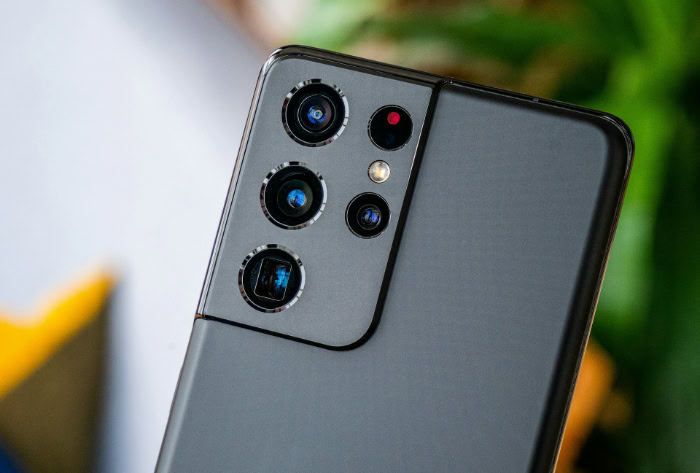
The strict line between hardware magnification and software cropping has blurred significantly in recent years. Camera manufacturers now rely on a sophisticated blend of physics and computational photography to achieve results that neither method could produce alone.
This convergence allows devices, particularly smartphones, to offer extended zoom ranges that maintain respectable quality without requiring the massive lens barrels found on professional cameras.
Hybrid Zoom Technology
Modern smartphones rarely rely on a single lens. Instead, they utilize a multi-camera array consisting of wide, ultra-wide, and telephoto modules.
As you pinch to zoom on the screen, the device seamlessly switches between these physical lenses. You might start with the main wide lens, but as you pass the 3x or 5x mark, the phone automatically activates the telephoto hardware. This “relay race” between lenses happens so quickly that the user often does not notice the transition.
Hybrid zoom takes this a step further by combining data from multiple sensors simultaneously. When you zoom to an intermediate level, such as 4x on a phone with 3x and 10x optical lenses, the device does not simply crop the 3x image.
Instead, it captures information from both lenses and merges them. The center of the image benefits from the sharp details of the telephoto lens, while the edges are filled in using data from the wider lens.
This composite approach yields an image with better texture and fidelity than standard digital zooming could achieve.
High-Megapixel Sensor Cropping
Another advancement involves the use of image sensors with incredibly high pixel counts, such as 108 or 200 megapixels. In standard shooting modes, these sensors combine pixels to improve light gathering.
However, when the user wants to zoom, the sensor changes its behavior. Instead of using the full sensor area, it isolates a central high-resolution portion.
For example, cropping the center 12 megapixels out of a 108-megapixel sensor effectively provides a zoomed-in view without the need for upscaling or interpolation. The resulting image contains real detail captured by physical pixels.
Additionally, artificial intelligence plays a major role in refining these shots. Machine learning algorithms analyze textures like grass or hair and predict what the missing details should look like.
While this is technically a digital process, the AI can reconstruct edges and reduce noise so effectively that the final image often rivals the quality of a dedicated optical lens.
Usage Scenarios and Best Practices

Knowing the technical differences is useful, but applying that knowledge to real-world situations is what actually improves your photography. There are specific environments where optical zoom is non-negotiable for high-quality results, and others where digital shortcuts are perfectly adequate.
When Optical Zoom is Essential
If your goal is to capture fine detail from a distance, optical zoom is the only viable option. Wildlife photography is a prime example.
You generally cannot get close to a bird or a shy animal without startling it. Using digital zoom in this scenario would turn feathers or fur into a smudge of indistinguishable pixels.
Similarly, sports photography requires freezing fast action from the sidelines. Optical zoom ensures the athlete is sharp and separated from the background.
Concerts and events generally fall into this category as well. These environments often have challenging lighting.
Optical lenses collect light naturally, whereas digital zoom amplifies noise and grain when cropping into a dark image. If you plan to print the photo, view it on a 4K monitor, or edit it in professional software like Lightroom, the integrity of the data matters.
You need the full resolution and dynamic range that only optical glass provides.
When Digital Zoom is Acceptable
Digital zoom serves a purpose when convenience outweighs quality. If you are taking a quick photo for social media, the compression algorithms used by platforms like Instagram or WhatsApp often hide the imperfections caused by digital zooming.
The screen size of a mobile phone is small enough that minor pixelation or softness is often imperceptible to the casual scroller.
It is also useful as a utility tool. If you need to read a distant menu, check a street sign, or document a serial number on a piece of equipment, clarity is less important than legibility.
The aesthetic quality of the image is irrelevant in these cases. However, before pinching the screen, you should always consider the “zoom with your feet” alternative.
If it is physically possible to walk closer to your subject, doing so will always yield a better result than cropping the image digitally. Moving closer changes the perspective and fills the frame with the subject, maintaining the sensor's full resolution without software tricks.
Conclusion
The distinction between optical and digital zoom comes down to a choice between quality and convenience. Optical zoom is a hardware solution that preserves the integrity of the image, ensuring that magnification does not come at the cost of resolution or detail.
Digital zoom remains a software workaround that sacrifices image data to create the illusion of closeness. While advancements in high-megapixel sensors and AI upscaling are narrowing the gap, they still rely on estimation rather than actual light capture.
For casual snapshots, digital reach is often sufficient. However, for anyone who values image clarity, texture, and the ability to edit or print their work, optical zoom is a necessary investment.
When choosing your next camera or smartphone, prioritize the device that relies on glass rather than algorithms to get you closer to the action.
About the Author: Julio Caesar


