
Smartwatch vs. Fitness Tracker: Things to Check

Deciding between a smartwatch and a fitness tracker often ends in total decision paralysis. Millions of people wear connected technology on their wrists every day, yet picking the perfect device remains a frustrating challenge for many shoppers.
The root of this confusion stems from massive feature overlap. High-end smartwatches now track intense workouts and recovery metrics, while slim fitness trackers display incoming text messages and phone notifications.
This blurred boundary makes it incredibly difficult to know exactly what you are paying for. Our objective is to clarify the fundamental differences and compare the core capabilities of both options.
What Sets Them Apart?
To make a smart purchase, you must first define what these devices actually do. While both wrap around your wrist and sync to your smartphone, their foundational purposes are vastly different.
One serves as a quiet observer of your physical health, and the other operates as a fully interactive communication hub.
Fitness Tracker: The Health Specialist
A fitness tracker operates mainly as a dedicated health specialist. Its primary purpose is passive, continuous monitoring of your daily biometrics, physical activity, and physical recovery.
The design philosophy behind a tracker is strict minimalism. It is engineered simply to collect data from your wrist and then send that information to a paired smartphone.
Users are meant to view their comprehensive health insights on the larger screen of their phone rather than interacting heavily with the wearable device itself.
Smartwatch: The Smartphone Extension
A smartwatch functions as a direct extension of your smartphone. Its primary purpose focuses on active user engagement, communication, productivity, and running complex applications natively on the wrist.
The underlying philosophy positions the smartwatch as a micro-computer. It is built to keep the user fully connected to emails, messages, and calls while actively reducing the amount of time they spend staring at their primary phone screen.
Design, Form Factor, and Daily Comfort
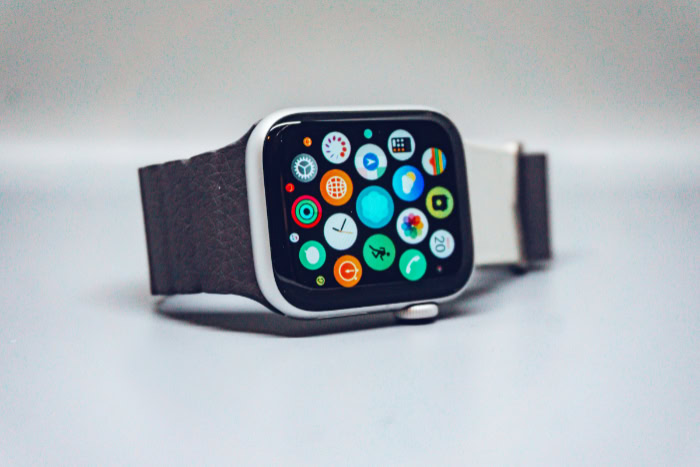
Physical construction directly impacts how a wearable device fits into your daily routine. Since these items are meant to be worn all day, the variations in screen dimensions, overall weight, and material durability dictate your overall comfort level.
Screen Size and Display Quality
Fitness trackers utilize narrow bands and smaller LED or OLED displays. Their touch-screen interaction remains intentionally limited to prioritize simplicity and reduce visual distraction.
Smartwatches feature large, high-resolution screens that dominate the wrist. They offer highly customizable watch faces and complex user interface navigation, allowing users to swipe through multiple menus, apps, and widgets with ease.
Weight, Bulk, and Durability
Fitness trackers are distinctly lightweight and low-profile. Their streamlined shape makes them far less prone to snagging on clothing or sustaining damage during intense physical activity, weightlifting, or contact sports.
Smartwatches carry significantly more weight and bulk. Manufacturers often build them with premium materials like specialized glass and polished stainless steel.
While this creates a highly professional appearance suitable for an office environment, these luxurious materials can be easily scratched or shattered during a rugged workout.
Wearability for Sleep
Wearing a piece of technology to bed can be a strange adjustment. The minimal physical footprint of a slim fitness tracker offers much higher overnight comfort compared to sleeping with a large, bulky smartwatch.
Users barely notice a thin tracker band while tossing and turning, ensuring uninterrupted sleep tracking data without the distraction of a heavy metal casing pressing into their wrist.
Health, Fitness, and Activity Tracking Capabilities

Monitoring human movement and physical well-being is the main reason most people purchase a wearable device. Both categories monitor your biology, but they process and display this information using distinctly different methods.
The Baseline Overlap
Despite their structural differences, a clear baseline of functional overlap exists between both device types. Regardless of choosing a basic tracker or an expensive smartwatch, you will receive reliable step counting, continuous heart rate monitoring, and daily caloric burn estimates.
These foundational metrics form the base of almost every wearable health platform on the market today.
Advanced Biometrics and Medical Sensors
Smartwatches hold a distinct advantage regarding highly advanced medical sensors. Premium smartwatches frequently include capabilities like an electrocardiogram (ECG), blood oxygen monitoring (SpO2), active fall detection, and irregular heart rhythm alerts.
Fitness trackers lack some of these active medical alerts but offer a deeper focus on passive, continuous recovery metrics. They excel at mapping Heart Rate Variability and holistic sleep staging over long periods.
Because trackers require much less power, they gather this extensive data without battery anxiety interrupting the collection process.
Workout Support and GPS Integration
A major divergence occurs in how users interact with their data during an actual workout. Smartwatches allow users to view real-time, complex workout metrics directly on a large screen while running or cycling.
Fitness tracker users must typically wait to review their detailed post-workout data inside the companion app on their phone. Furthermore, smartwatches almost always feature built-in GPS to track location and distance entirely independent of a phone.
Many fitness trackers rely on connected GPS, meaning they must piggyback off a smartphone's location data to map a runner's route accurately.
Connectivity, Productivity, and the Battery Trade-Off

Beyond counting steps and tracking sleep, wearables heavily influence how you interact with your phone and manage your daily tasks. Bringing communication tools and app stores to your wrist offers incredible convenience, but it also creates a major power drain.
Balancing what a device can do with how long it can last between charges is a crucial part of the buying process.
Communication and Smart Features
Smartwatches deliver full communication capabilities that often mirror a smartphone. Many offer optional LTE connectivity, allowing you to leave your phone at home entirely while still making phone calls, streaming music, and dictating text replies.
They also feature built-in voice assistants like Siri or Google and allow for seamless mobile payments at checkout counters. Fitness trackers provide a much simpler notification experience.
They generally offer basic, read-only push notifications that let you glance at incoming texts or emails. Their smart controls remain limited to simple actions like accepting an incoming call on your phone or skipping a music track playing from your mobile device.
Third-Party App Ecosystems
The software environment on a smartwatch operates much like a computer or smartphone. Users have direct access to independent app stores where they can download third-party tools.
This means you can install custom applications for services like Spotify, Strava, or even digital airline boarding passes right onto the watch itself. Fitness trackers operate on closed software ecosystems.
They are restricted to the native applications and features programmed by the manufacturer. You cannot download extra software or third-party tools to expand a basic tracker's capabilities.
The Battery Life Compromise
The absolute biggest compromise between these two devices is battery endurance. The advanced processing power, cellular connectivity, and bright, high-resolution screens of smartwatches drain power rapidly.
As a result, most smartwatches require daily charging, or at best, every other day. This routine forces users to take the device off, creating gaps in health data collection.
Fitness trackers achieve multi-day to multi-week battery life precisely because they use simplified operating systems and smaller screens. This extended power allows users to wear them continuously, gathering uninterrupted biometric data for weeks before needing to locate a charging cable.
Cost Comparison and Lifestyle Fit

Making a final choice requires looking at your budget alongside your daily habits. The financial investment varies wildly between basic health monitors and premium smart wearables.
Finding the best value means matching the specific strengths of a device to the actual demands of your personal and professional life.
Evaluating the Price Gap
Fitness trackers present a highly accessible entry point for consumers. You can find capable, entry-level trackers for a very low cost, while premium models with more advanced sensors max out at a moderate price.
Smartwatches carry a significantly higher financial barrier to entry. The base models are quite expensive, and prices climb rapidly when adding features like larger screens or stainless steel casings.
Furthermore, smartwatches often hide recurring costs. If you want to use cellular features without your phone, you must pay for a monthly cellular data plan.
Users might also encounter subscription fees for premium third-party apps downloaded from the watch's app store.
Buyer Profiles: Who Should Buy What?
To finalize your decision, consider which buyer profile matches your personality. The “Health Minimalist” is best suited for a fitness tracker.
This person is budget-conscious and highly focused on gathering accurate fitness and sleep data above all else. They hate the idea of charging another device every single day and strongly prefer to keep digital distractions to an absolute minimum.
Conversely, the “Connected Achiever” needs a smartwatch. This individual requires constant accessibility for work or social obligations and highly values the convenience of quick wrist-based replies.
They want a powerful, multi-functional daily driver and love the freedom of occasionally leaving their phone at home while staying completely plugged into their life.
Conclusion
The final choice ultimately comes down to a simple compromise between broad, interactive functionality and focused biometric tracking. A smartwatch acts as a powerful communication tool designed to keep you seamlessly tethered to your busy life.
A fitness tracker quietly operates in the background to provide long-lasting health data without constant interruptions. To secure the most satisfying purchase, you must evaluate your personal daily habits and aesthetic preferences.
Honestly assessing your tolerance for daily battery charging will guarantee you select the exact device that enhances your routine.
Frequently Asked Questions
Do you need a smartphone to use a smartwatch?
Most smartwatches require an initial pairing with a smartphone for setup and software updates. However, models equipped with cellular data plans can operate independently. This allows you to make calls, send texts, and stream music while leaving your phone safely at home.
Can a fitness tracker measure blood pressure accurately?
Currently, most mainstream fitness trackers cannot measure blood pressure directly from your wrist. They rely on optical sensors to monitor heart rate and blood oxygen levels instead. For accurate blood pressure readings, you still need a traditional medical cuff or a specialized, clinically validated wearable.
Is it safe to wear a smartwatch in the shower?
Most modern smartwatches and fitness trackers feature high water resistance ratings, making them safe for showering or shallow swimming. You should avoid exposing them to high-velocity water, hot steam, or harsh soaps. These elements can degrade the water-resistant seals and cause permanent internal damage over time.
How long do fitness tracker batteries usually last?
Fitness tracker batteries typically last anywhere from five days to an entire month on a single charge. Because they utilize smaller screens and highly simplified operating systems, they consume significantly less power than larger devices. This extended battery life ensures uninterrupted sleep and activity monitoring.
Are smartwatches worth the higher price tag?
The higher price is entirely justified if you utilize the advanced communication tools, third-party applications, and premium medical sensors. If you only want to count daily steps and track basic sleep patterns, you will likely find better value in a highly affordable, dedicated fitness tracker.
About the Author: Elizabeth Baker


