
What Is Speech Recognition? How It Works
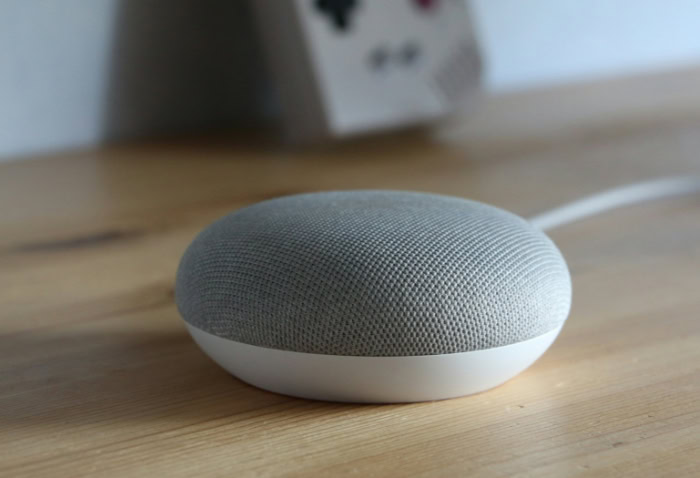
Conversing with technology has shifted from science fiction to a daily habit. Asking a phone for directions or dictating a message is now standard behavior for millions.
This interaction relies on speech recognition, the specific technology that captures spoken audio and translates it into written text. What seems like magic is actually a precise technical sequence involving complex algorithms.
Defining Speech Recognition
Speech recognition is the capability of a machine or program to identify words and phrases in spoken language and convert them into a machine-readable format. While the concept seems straightforward, the terminology and specific functions often get blurred in casual conversation.
To grasp the full scope of the technology, it is necessary to distinguish between the general concept and specific technical applications.
Terminology Breakdown
You will often hear speech recognition referred to by other names, most commonly Automatic Speech Recognition (ASR) or Speech-to-Text (STT). These terms are generally used interchangeably.
ASR refers specifically to the computational process where a computer takes an audio signal and processes it without human intervention. STT describes the functional output of that process: taking spoken audio and turning it into a text file or command.
Whether a developer uses the term ASR or STT, they are discussing the same fundamental mechanism of translating sound into data.
Speech Recognition vs. Voice Recognition
The most frequent confusion arises between speech recognition and voice recognition. While both technologies process audio, their objectives are entirely different.
Speech recognition is concerned with what is being said. It analyzes the linguistic content to create a transcript or execute a command, regardless of who is speaking.
Voice recognition, also known as speaker identification, focuses on who is speaking. It analyzes the unique biometric characteristics of a person's voice, such as pitch, tone, and cadence, to verify their identity.
Voice recognition is primarily used for security purposes, such as unlocking a device or authorizing a bank transaction, whereas speech recognition is used for dictation and control.
How Speech Recognition Works

The transformation of a spoken sentence into text on a screen involves a complex pipeline of signal processing and statistical analysis. The computer does not “hear” words the way a human ear does.
Instead, it breaks down sound into data points, matches patterns, and uses probability to determine the most likely message. This occurs through several distinct stages.
Analog-to-Digital Conversion
The process begins when a person speaks into a microphone. The microphone captures physical sound waves, which are vibrations moving through the air.
A computer cannot process these physical waves directly, so an Analog-to-Digital Converter (ADC) translates the vibrations into digital data. The system samples the sound waves at precise intervals to create a digital sequence of binary code that represents the audio signal.
Acoustic Modeling
Once the audio is digitized, the system must analyze the content. Acoustic modeling involves breaking the audio signal down into small time-frames, usually measuring just milliseconds.
The software analyzes these fragments to identify phonemes, which are the smallest distinct units of sound in a language. For example, the English word “bat” is composed of three phonemes: “b,” “aa,” and “t.”
The acoustic model matches the digital fingerprint of the audio to these known phonetic sounds.
Language Modeling
identifying sounds is not enough to create coherent text. The system must arrange these phonemes into meaningful words and sentences.
The language model acts as a digital dictionary and probability engine. It compares the sequence of identified phonemes against a massive database of known words to determine valid combinations.
It calculates the probability of word sequences to distinguish between words that sound similar, ensuring the final output is grammatically possible.
The Role of Machine Learning and NLP
To handle the nuance of human communication, advanced systems employ Natural Language Processing (NLP). NLP allows the software to use context clues and grammatical rules to structure sentences correctly.
Modern speech engines also rely heavily on deep learning and neural networks. These systems are trained on vast datasets of human speech, allowing them to learn from mistakes and improve accuracy over time.
This continuous learning enables the software to handle faster speech rates and more complex sentence structures effectively.
Primary Benefits of Speech Technology

Integrating voice capabilities into software and hardware offers significant advantages for users across various environments. By removing the need for physical input devices like keyboards or touchscreens, speech recognition streamlines interactions and opens up digital access to a wider demographic.
Accessibility and Inclusivity
One of the most profound impacts of this technology is the removal of barriers for individuals with disabilities. For people with limited motor function, speech recognition provides full control over computers and mobile devices without the need for a mouse or keyboard.
Similarly, it is a vital tool for those with visual impairments who cannot see a screen. It also supports individuals with learning conditions such as dyslexia, allowing them to compose text fluently without the friction of spelling or typing mechanics.
Increased Speed and Productivity
For many tasks, speaking is significantly faster than typing. The average person types around 40 words per minute but can speak between 125 and 150 words per minute.
Voice dictation software leverages this discrepancy to allow users to draft emails, reports, and documents at high speed. This efficiency gain is valuable for professionals who need to capture thoughts quickly or transcribe notes immediately after a meeting or event.
Safe, Hands-Free Operation
There are many scenarios where using hands to operate a device is either impossible or unsafe. Speech recognition allows for hands-free command and control in these environments.
This is critical for drivers who need to navigate or change music without taking their eyes off the road. It is equally important in industrial settings, healthcare facilities, or kitchens, where a user's hands may be occupied with tools, instruments, or hazardous materials.
Technical and Environmental Challenges

While speech recognition software has achieved high levels of accuracy, it still faces significant hurdles when deployed in uncontrolled environments. A quiet room with a standard microphone usually yields excellent results, but the real world is messy.
Developers and engineers constantly work to overcome specific technical limitations and environmental factors that degrade performance or compromise user trust.
Background Noise and Signal Isolation
One of the most persistent difficulties is known as the “cocktail party problem.” This refers to the challenge an algorithm faces when trying to focus on a single voice within a noisy environment.
Unlike the human brain, which can selectively tune out background chatter, traffic, or wind, a microphone captures every sound equally. When multiple audio sources overlap, the signal-to-noise ratio drops, making it difficult for the software to isolate the speaker's phonemes from the surrounding chaos.
This often results in failed commands or garbled transcriptions in busy public spaces.
Accents, Dialects, and Algorithmic Bias
Speech models require vast amounts of training data to learn how people speak. Historically, these datasets have been heavily skewed toward standard, neutral accents.
Consequently, systems often struggle to accurately transcribe speech from individuals with strong regional dialects, non-native accents, or speech impediments. This creates a functional bias where the technology works seamlessly for some demographics while failing others. Improving this requires diversifying the training data to include a broader representation of global speech patterns.
Lexical Ambiguity and Homophones
English and many other languages are filled with homophones, words that sound identical but have different spellings and meanings. Common examples include “there,” “their,” and “they're,” or “cite,” “sight,” and “site.”
Since speech recognition relies primarily on audio input, these words look identical to the acoustic model. The system must rely entirely on contextual probability to select the correct spelling.
If the context is unclear or the sentence is short, the software frequently selects the wrong word, requiring manual editing by the user.
Privacy and Data Security
The widespread adoption of voice-activated devices has raised serious questions regarding privacy. Smart speakers and virtual assistants generally operate in an “always-on” state, waiting for a wake word to activate.
Users often worry about whether these devices are recording private conversations unintentionally. Furthermore, the processing of voice data often occurs in the cloud rather than on the device itself.
This transmission and storage of biometric voice data create potential vulnerabilities where personal information could be intercepted or accessed without consent.
Real-World Applications
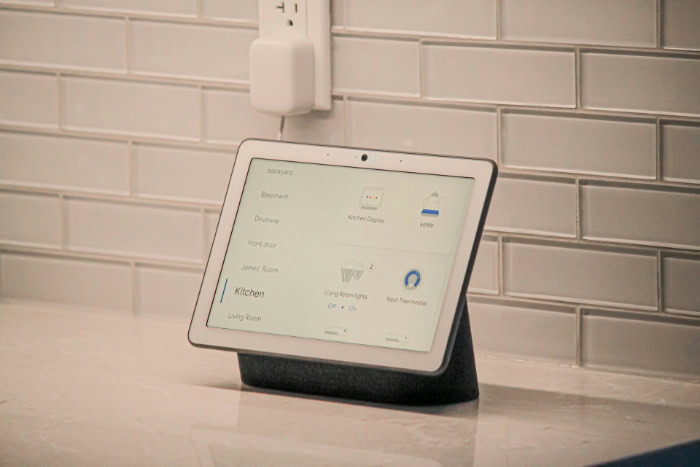
Speech recognition has expanded far beyond simple dictation tools. It is now embedded in the infrastructure of major industries, streamlining workflows and creating new ways for humans to interact with machines.
These applications demonstrate how voice technology solves practical problems across different sectors.
Consumer Electronics and Smart Devices
The most visible application of this technology is found in personal devices. Virtual assistants like Siri, Alexa, and Google Assistant have integrated voice control into daily routines.
Users can set alarms, play music, or control smart home devices like thermostats and lights using only voice commands. Smartphones also utilize these systems to facilitate text-to-speech messaging, allowing users to compose long messages or emails while walking or multitasking.
Business Operations and Customer Service
In the corporate sector, speech recognition automates routine interactions to save time and resources. Customer service departments rely on Interactive Voice Response (IVR) systems to greet callers and route them to the correct department based on spoken responses.
Additionally, automated transcription services have become standard for modern meetings. These tools listen to conference calls in real-time and generate written transcripts, allowing attendees to focus on the discussion rather than taking notes.
Healthcare and Specialized Sectors
The healthcare industry has adopted speech recognition to reduce the administrative burden on medical professionals. Specialized medical dictation software allows doctors and nurses to update Electronic Health Records (EHR) by speaking directly into a system.
This is significantly faster than typing and helps prevent burnout associated with paperwork. In sterile environments, such as operating rooms or laboratories, voice commands allow personnel to manipulate equipment or access patient data without breaking sterility by touching a keyboard or mouse.
Conclusion
Speech recognition is more than just a convenience feature on a smartphone. It represents a sophisticated intersection of acoustic physics, statistical analysis, and machine learning.
By converting physical sound waves into phonemes and then into structured text, this technology allows machines to interpret human intent with remarkable accuracy. As algorithms improve and processing power increases, voice interaction will continue to serve as a vital bridge.
It transforms the complexity of spoken language into actionable data, allowing us to communicate with the digital environment as naturally as we do with each other.
Frequently Asked Questions
What is the difference between speech recognition and voice recognition?
Speech recognition focuses on translating spoken words into text or commands, regardless of who is speaking. Voice recognition, on the other hand, identifies the specific person speaking based on their unique vocal biometrics. The former is used for dictation, while the latter is used for security.
How accurate is modern speech recognition software?
Top-tier speech recognition systems currently achieve accuracy rates of around 95 percent under ideal conditions. However, this accuracy can drop significantly in noisy environments or when processing heavy accents. Continuous improvements in deep learning are slowly closing the gap between human and machine hearing.
Does speech recognition require an internet connection?
Most high-accuracy systems rely on cloud processing to handle complex language models and vast databases. While basic voice commands can function offline on some devices, complex dictation usually requires an internet connection. This allows the software to access powerful servers for real-time processing.
Why does voice technology struggle with accents?
Algorithms are trained on datasets that often feature standard or neutral pronunciations. When a speaker uses an accent or dialect that differs from this training data, the system may fail to match sounds to the correct phonemes. Diversifying these training sets is essential for improvement.
Are smart speakers always recording my conversations?
Smart speakers are generally in a passive listening mode, waiting specifically for a “wake word” to activate. They do not record or transmit audio to the cloud until that trigger phrase is detected. However, accidental activations can occur if the device misinterprets background noise as the wake word.
About the Author: Julio Caesar


