
Starlink vs. Fiber: Pros, Cons, and Costs

Choosing an internet provider used to mean picking the lesser of two evils from regional monopolies. Today, a fierce battle for your home connectivity pits a terrestrial giant against an ambitious space constellation.
Fiber-optic internet remains the undisputed gold standard for blistering speed and absolute reliability. Meanwhile, Starlink acts as a major market disruptor. Elon Musk’s low-Earth orbit satellites beam high-speed access directly into the most remote backyards on the planet.
Deciding between a buried glass cable and a dish pointed at the sky depends entirely on your physical location, hardware budget, and performance demands.
The Underlying Technology: Ground vs. Space
The methods these two services use to deliver data to your home could not be more distinct. One relies on a vast physical infrastructure that physically connects your house to the broader internet.
The other bypasses ground level entirely to beam information down from space.
How Fiber-Optic Internet Works
Fiber-optic internet relies on thousands of miles of incredibly thin glass or plastic strands. Internet service providers bury these cables underground or string them along existing utility poles.
Instead of using electrical currents over copper wire, fiber networks transmit data using rapid pulses of light. This light bounces along the inside of the glass cables at incredible speeds.
The result is a highly efficient physical line capable of carrying massive amounts of information directly into a home modem.
How Starlink Works
Starlink takes an entirely wireless approach. Operated by SpaceX under Elon Musk, this service uses a massive constellation of Low-Earth Orbit satellites.
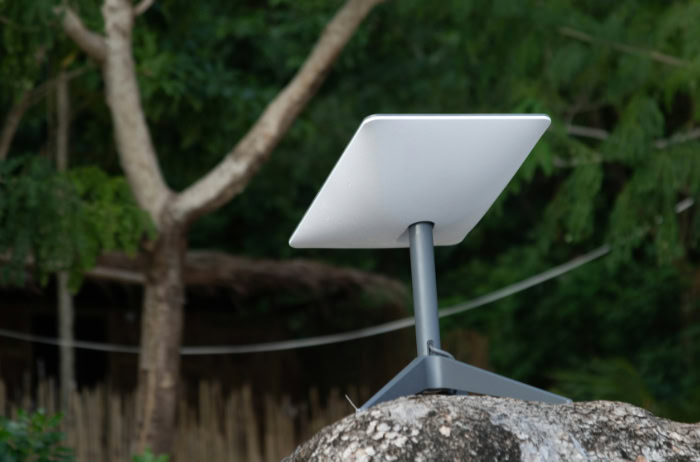
Because these satellites sit much closer to the Earth than traditional geostationary satellites, they can transmit data much faster. Users install a motorized, phased-array terminal on their property.
This dish communicates directly with the passing satellites via radio frequencies, pulling down the internet signal from space and sending it to a local Wi-Fi router indoors.
Fundamental Architectural Differences
The fundamental contrast lies in the physical connection. Fiber provides a fixed, hardwired link that is largely immune to atmospheric interference.
Starlink offers a wireless connection that requires a completely unobstructed view of the sky. If you have tall trees or buildings blocking the dish, the Starlink signal will drop.
Fiber requires no line of sight, but it physically chains your internet access to a single residential address.
Speed, Bandwidth, and Latency

Raw numbers often dictate which internet provider makes the most sense for a household. Internet speed tests measure how fast data moves, while latency measures how quickly that data responds to your commands.
Both providers offer impressive specifications, but they cater to very different performance thresholds.
Download and Upload Speeds
Fiber-optic technology excels in delivering symmetrical speeds. This means your upload speed is just as fast as your download speed.
Many fiber providers offer plans ranging from 1 Gbps to 10 Gbps. Starlink offers excellent download speeds for a satellite service, typically ranging between 100 Mbps and 200 Mbps.
However, Starlink features asymmetrical speeds, meaning the upload speeds are significantly slower. You might download a massive file in minutes with Starlink, but uploading a large video to a server will take substantially longer.
The Latency (Ping) Factor
Latency, often referred to as ping, measures the delay between a user action and the network response. Fiber boasts ultra-low latency, frequently registering under 10 milliseconds.
The physical light-based connection transfers data almost instantaneously. Starlink offers latency between 25 and 50 milliseconds.
While this is exceptionally good compared to older satellite internet providers, it still lags behind a physical fiber connection due to the distance the signal must travel into the atmosphere and back.
Real-World Application Impact
These performance metrics heavily influence daily internet usage. For competitive online gaming or high-frequency day trading, the ultra-low latency of fiber prevents lag and gives users a distinct advantage.
Fiber easily supports multiple users streaming 4K video or hosting high-definition video conferences simultaneously without buffering. Starlink can absolutely handle 4K streaming and standard remote work tasks.
However, heavy simultaneous usage by multiple people in the same house might strain its asymmetrical upload speeds and introduce occasional lag spikes during intense gaming sessions.
Geographic Availability and Portability

The best internet service in the world is useless if you cannot access it at your location. Geography dictates availability more than any other factor in the telecommunications industry.
The choice between these two services often comes down to exactly where you live and how often you plan to move.
Fiber's Geographic Constraints
Fiber is primarily found in urban centers and densely populated suburban neighborhoods. Installing a new fiber network is incredibly expensive for internet providers.
They have to dig up roads, trench through yards, and navigate complex local zoning laws. This last-mile trenching is simply not cost-effective in rural regions where houses sit miles apart.
As a result, millions of rural residents have absolutely no access to fiber-optic connections.
Starlink's Global Reach
Starlink ignores the physical limitations of ground infrastructure. Because the signal comes from space, the service can reach nearly any remote, rural, or entirely off-grid location.
If you live on a remote mountain, a sprawling farm, or an island lacking utility poles, Starlink can provide high-speed internet access. This global reach provides an immediate broadband solution to households that traditional internet service providers have ignored for decades.
The Portability Advantage
A fiber connection limits you to the specific building where the cable terminates. You cannot take your fiber internet with you on a road trip.
Starlink offers specific Roam service plans that allow you to take the phased-array dish anywhere. RV owners, boaters, and digital nomads can mount the dish to their vehicles and maintain high-speed internet access while traveling across the country.
This portability makes Starlink an invaluable tool for users who refuse to be tied down to a single physical address.
Reliability and Environmental Vulnerabilities

A consistent internet connection is vital for modern households. Both physical and satellite networks face unique environmental hazards that can disrupt service.
Evaluating how these systems handle physical damage and adverse weather conditions reveals their true reliability.
Fiber's Ground-Level Threats
Fiber-optic lines boast incredible consistency once properly installed. Since most new cables are buried underground, they avoid many common surface-level hazards.
However, this physical infrastructure remains vulnerable to human error. A careless construction crew or a neighbor doing deep yard work can accidentally sever a buried line, causing an immediate and total outage.
In areas where internet companies string fiber along utility poles, the connection shares the same vulnerabilities as standard electrical grids. Falling trees, car accidents involving utility poles, and severe natural disasters can physically tear down the lines and sever your internet access.
Starlink's Sky-Level Threats
Satellite internet avoids ground-level construction accidents but faces intense challenges from the sky. Starlink requires a completely clear, unobstructed view of the satellites passing overhead.
Even a single tree branch or the edge of a roof can disrupt the signal and cause your connection to drop momentarily. Severe weather conditions also pose a significant threat to wireless transmissions.
Heavy rain, thick cloud cover, and dense fog can scatter the radio frequencies, leading to temporary speed drops or complete dropouts known as rain fade. While the Starlink dish features an internal heater to melt snow, rapid and heavy accumulation can still overwhelm the hardware and block the signal entirely.
Network Congestion and Consistency
Physical connections and satellite networks handle local traffic very differently. Fiber provides dedicated bandwidth directly to your home.
This dedicated line means your internet speeds remain fast and consistent, even if every neighbor on your street decides to stream movies at the exact same time. Starlink operates on shared cell capacity, meaning all the dishes in a specific geographic area pull from the same passing satellites.
During peak evening hours, this shared capacity can experience severe network congestion. As more users log on to watch videos or play games, individual Starlink speeds can temporarily drop until the local demand decreases.
Cost Comparison and Overall Value
Financial considerations often dictate which internet provider a household ultimately selects. Evaluating the true value of an internet connection requires looking far beyond the advertised monthly rate.
You must factor in heavy hardware expenses, hidden installation fees, and specific policies regarding your monthly data consumption.
Upfront Equipment Costs
Choosing Starlink requires a substantial initial financial commitment. Customers must purchase the proprietary phased-array satellite dish and the corresponding router outright, which typically costs hundreds of dollars before the service even begins.
This high barrier to entry contrasts sharply with traditional ground networks. Fiber internet providers heavily subsidize the initial setup to attract new customers.
Many companies waive installation fees entirely and provide the necessary modems and routers for free or for a marginal monthly rental fee. This low initial cost makes switching to a fiber connection highly appealing for budget-conscious households.
Monthly Subscription Fees
Comparing the monthly service fees reveals a significant gap in overall value. Fiber generally offers vastly superior speed per dollar spent.
A symmetrical gigabit fiber plan often costs the exact same amount, or sometimes significantly less, than a standard Starlink subscription. Starlink customers pay a premium for the convenience and technological marvel of a space-based connection.
For rural residents with no other viable options, this higher monthly cost is easily justified by the massive upgrade over dial-up or legacy satellite providers. For urban residents with access to both, fiber simply delivers more bandwidth for less money.
Data Caps and Throttling
Usage policies drastically impact the true value of your monthly internet bill. The vast majority of modern fiber providers offer unlimited data, allowing users to download massive video games and stream movies constantly without facing penalties.
Fiber networks possess the immense bandwidth required to handle heavy household data consumption effortlessly. Starlink closely monitors network usage due to its limited satellite capacity.
While the company frequently updates its official terms of service, it relies heavily on network management policies. Users who consume terabytes of data may find their speeds heavily throttled or their traffic deprioritized during busy periods to ensure basic functionality for other local customers.
Conclusion
Choosing between these two technologies ultimately comes down to your physical address. If fiber-optic cables already run to your neighborhood, it is objectively the superior and more cost-effective choice.
A hardwired connection guarantees blazing symmetrical speeds, zero weather interference, and incredibly low latency for demanding online tasks. However, millions of people live far beyond the reach of traditional infrastructure.
For those residing in remote or rural locations, Starlink stands as a revolutionary alternative. By bypassing buried cables entirely, this satellite network vastly outshines legacy rural internet options and finally brings reliable broadband to the most isolated properties.
Frequently Asked Questions
Is Starlink faster than fiber internet?
Fiber internet is significantly faster than Starlink. While satellite speeds are impressive for rural areas, fiber provides gigabit connections with equal download and upload rates. Fiber also offers much lower latency, making it the better choice for gaming and large file transfers.
Does weather affect a fiber internet connection?
Weather rarely impacts a buried fiber-optic line directly. Heavy rain or snow will not degrade the light pulses traveling through the underground cables. However, if your local provider strings the lines along above-ground utility poles, severe storms can cause physical damage and outages.
Can I take my internet service with me when traveling?
You cannot travel with a physical fiber connection since it is hardwired directly to your home. Starlink offers specific roaming plans that allow you to mount the dish on an RV or boat. This provides high-speed satellite access from virtually any location outdoors.
Why is Starlink equipment so expensive upfront?
You are purchasing an advanced phased-array antenna capable of tracking low-Earth orbit satellites passing overhead. This complex hardware requires a high initial investment to manufacture. Most terrestrial internet companies avoid these costs by using cheap, mass-produced modems and standard copper or glass cables.
Will Starlink eventually replace traditional ground networks?
Satellite internet is unlikely to replace ground infrastructure entirely due to absolute bandwidth limitations and latency constraints. Physical cables will always provide a more stable and cost-effective solution for densely populated cities. Satellite services will instead serve as the ultimate broadband solution for rural territories.
About the Author: Julio Caesar


