
What Is Cloudflare? The Internet’s Security Guard

If you browse the web, you rely on Cloudflare even if you never realize it. You might only notice the brand when a security check momentarily pauses your connection, yet this service silently powers a massive percentage of global traffic.
Cloudflare acts as a high-performance intermediary sitting between a website’s origin server and your device. Think of it as a bouncer standing at the door of a crowded club.
It checks IDs to let real people in while blocking malicious bots and hackers before they reach the building. This system does more than just stop attacks; it also speeds up loading times by delivering content from locations near you.
The Core Infrastructure
Cloudflare functions as a massive global network that unifies several critical internet services into a single platform. While it is often recognized for making websites faster, its primary role is to serve as a comprehensive control layer for internet traffic.
The system replaces traditional hardware and separate software solutions by handling data delivery, privacy, and routing through its distributed architecture.
Content Delivery Network
A Content Delivery Network, or CDN, is a geographically distributed group of servers that work together to provide fast delivery of internet content. In a traditional hosting setup, a website lives on a single server in one specific location.
If that server is in New York, a visitor in Tokyo must wait for data to travel halfway around the world, resulting in slow loading times.
Cloudflare solves this by replicating the website’s content across hundreds of data centers located in cities around the globe. When a user visits a site, the CDN serves the content from the data center closest to them physically.
This proximity significantly reduces the distance data must travel and ensures that a user in London receives data from a London server rather than one in Los Angeles.
The Reverse Proxy
The concept of a proxy is familiar to many as a tool that users employ to hide their identity, but Cloudflare acts as a reverse proxy. A standard proxy sits in front of a user to protect their privacy from the internet.
A reverse proxy sits in front of a web server to protect the website from the internet.
When Cloudflare is active, the rest of the internet cannot see the true IP address of the website's origin server. Instead, they see Cloudflare’s IP addresses.
This arrangement means that all incoming traffic must pass through the Cloudflare network before it can reach the actual website. If an attacker tries to target the server directly, they hit the reverse proxy instead, keeping the origin server hidden and secure.
Domain Name System Provider
Every website relies on the Domain Name System (DNS) to function. This system acts as the phonebook of the internet by translating human-readable domain names, like google.com, into the numerical IP addresses that computers use to connect.
Cloudflare operates one of the largest and fastest DNS networks in the world. By managing these records, it ensures that when a user types in a URL, the browser finds the correct server almost instantly.
This speed is vital because the lookup process occurs before any content can even begin to load.
The Mechanics

The network handles traffic by fundamentally changing how data requests move across the internet. Rather than allowing a direct line of communication between a visitor and a host, the system actively manages, optimizes, and filters every packet of data.
This management happens automatically and ensures that resources are used efficiently while maintaining a seamless experience for the user.
Traffic Routing and Anycast
Most internet traffic follows a specific path to a specific destination, but Cloudflare utilizes a routing technology called Anycast. Under this model, the same IP address exists at multiple locations simultaneously across the globe.
When a user sends a request, the network does not send it to a specific server based on a rigid address. Instead, the network automatically routes the request to the nearest available data center that can handle it.
This method prevents any single location from becoming a bottleneck. If one data center goes offline or faces heavy traffic, the Anycast system instantly reroutes requests to the next closest facility.
The result is a resilient network that stays operational even when large portions of the internet face connectivity issues.
Intelligent Caching
To speed up the web, Cloudflare stores copies of static content on its edge servers. Static content includes elements that do not change frequently, such as images, CSS stylesheets, and JavaScript files.
When a visitor loads a page, the system checks if these assets are already stored on the edge server closest to the user.
If the content is available locally, the system serves it immediately without contacting the original web server. The system only reaches back to the origin server for dynamic content that must be generated in real-time, such as a shopping cart or a logged-in user profile.
This process drastically reduces the load on the website owner’s infrastructure and speeds up the experience for the visitor.
Request Inspection
Every time a device connects to a Cloudflare-protected site, the network performs a rapid analysis of the incoming request. This inspection happens in milliseconds.
The system evaluates the visitor’s behavior, IP reputation, and request headers to determine the nature of the traffic. It distinguishes between a legitimate human user, a beneficial crawler like a search engine bot, and a malicious script.
This filtering capability allows the network to block automated threats before they can consume bandwidth or exploit vulnerabilities.
Security Capabilities

Performance is valuable, but the ability to defend against attacks is frequently the main reason administrators route their traffic through this network. The internet is populated by automated scripts and malicious actors looking for vulnerabilities.
Cloudflare provides a robust defensive perimeter that neutralizes these threats before they can reach the target server.
DDoS Mitigation
A Distributed Denial of Service (DDoS) attack attempts to crash a website by overwhelming it with a flood of fake traffic. These attacks can involve millions of requests per second, far more than a standard web server can handle.
Cloudflare mitigates this risk by absorbing the traffic into its massive global network.
Because the network has a bandwidth capacity far exceeding that of any single attack, it can disperse the malicious traffic across thousands of servers. The system filters out the bad requests while allowing legitimate users to access the site.
The website owner often remains unaware that an attack is even occurring, as their server never feels the impact of the surge.
Web Application Firewall
Hackers often try to exploit specific weaknesses in a website’s code to steal data or gain unauthorized access. Common methods include SQL injection, where malicious commands are sent to a database, or cross-site scripting.
The Web Application Firewall (WAF) inspects the content of incoming web requests to identify these patterns.
The WAF operates using a set of rules that define what suspicious traffic looks like. If a request matches a known attack signature, the firewall blocks it at the network edge.
This protection ensures that malicious code never reaches the web application, effectively patching vulnerabilities without requiring the website owner to rewrite their code immediately.
SSL Encryption
Security also requires privacy for the data traveling between the user and the website. Cloudflare facilitates this through SSL/TLS encryption.
This technology creates a secure tunnel that scrambles data, ensuring that credit card numbers, login credentials, and personal information cannot be intercepted by third parties. This encryption is what generates the padlock icon next to the URL in a browser.
By handling the heavy lifting of encryption and decryption at the network edge, the service makes it easy for any site to enforce secure HTTPS connections.
Performance and Reliability
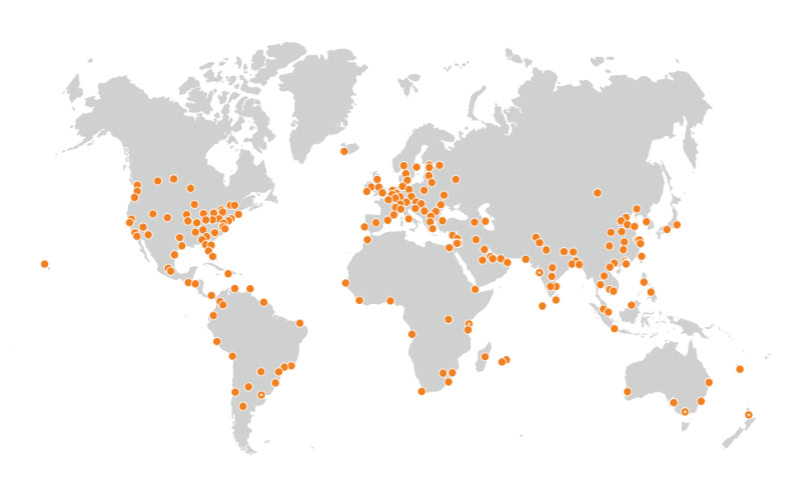
While security often dominates the conversation surrounding network infrastructure, the ability to deliver content quickly and consistently is just as critical. Cloudflare improves the efficiency of websites by optimizing how data travels and ensuring that connections remain stable even when technical failures occur.
This dual focus allows site owners to provide a superior user experience without investing in expensive hardware upgrades.
Speed and Latency Reduction
The physical distance between a user and a server significantly impacts how fast a website loads. This delay is known as latency.
If a user in Sydney tries to access a server in London, the request must travel thousands of miles, resulting in a noticeable lag before the page begins to render. This metric is technically referred to as Time to First Byte.
Cloudflare eliminates this delay by serving the website from a data center located in the user's own region.
Beyond proximity, the service automatically optimizes the content itself. Large image files are often the primary cause of slow loading speeds.
The network can compress these images and strip away unnecessary metadata without visibly reducing quality. It also minimizes code files by removing whitespace and comments.
These adjustments reduce the total file size that the browser needs to download, resulting in snappy and responsive pages.
Bandwidth Conservation
Hosting providers typically charge website owners based on the amount of data transferred, known as bandwidth. When a site becomes popular, these costs can rise dramatically.
By using a Content Delivery Network, a website offloads the majority of this traffic. Cloudflare serves static assets like photos and videos directly from its cache, meaning the request never reaches the original host.
This process significantly reduces the strain on the origin server. Since the network handles the heavy lifting of delivering large files, the original server only needs to process essential data.
This efficiency prevents the host from crashing during traffic spikes and keeps monthly hosting bills manageable for the site owner.
Always Online Capabilities
Web servers can fail for many reasons, from hardware malfunctions to software errors. In a traditional setup, a server crash results in an error message, leaving visitors unable to access the content.
Cloudflare counters this with a feature that maintains availability even during outages.
When the system detects that the origin server is unresponsive, it automatically serves a cached version of the website to visitors. This limited version allows users to browse static pages and read content while the administrators work to restore the main server.
This continuity preserves the site's reputation and ensures that temporary technical glitches do not result in a total loss of traffic.
The End-User Experience

Most of the time, Cloudflare operates invisibly in the background. However, there are moments when the service interacts directly with the person browsing the web.
These interactions usually occur when the security protocols need to verify a user's identity or when a consumer actively chooses to use Cloudflare's public tools to enhance their own internet connection.
Browser Verification Screens
Internet users occasionally encounter a screen that asks them to wait while their browser is verified. This interstitial page is a security checkpoint.
It appears when the network detects traffic that looks suspicious or unusual. The system performs a quick challenge to ensure the request is coming from a standard web browser rather than an automated bot or a malicious script.
Several factors can trigger this verification check. If a user is connecting through a VPN or a shared public Wi-Fi network with a poor reputation, the system may flag the connection for inspection.
Additionally, if a website is currently under a heavy cyberattack, the administrator may enable a heightened security mode. This mode forces every visitor to pass the check, ensuring that only humans can access the site while the attack is mitigated.
Privacy Considerations
Because Cloudflare sits between the user and the website, it occupies a unique position where it handles a vast amount of sensitive internet traffic. To inspect traffic for threats, the service must decrypt the data, analyze it, and then re-encrypt it before sending it to the server.
This process is necessary for security features like the Web Application Firewall to function effectively.
This architecture requires users to trust that the provider handles their data responsibly. Concerns often arise regarding the centralization of the internet, as a significant portion of global traffic flows through a single company.
Cloudflare addresses these concerns by limiting how long logs are kept and by promising not to sell personal data to advertisers. The company asserts that its business model relies on selling security services to websites, not selling user data to third parties.
Public DNS Resolver
While Cloudflare primarily serves website owners, it also offers a tool directly to consumers known as 1.1.1.1. This service is a public DNS resolver that replaces the default one provided by an Internet Service Provider.
ISPs often track which websites their customers visit and may sell that browsing history or use it to target ads.
The 1.1.1.1 service creates a more private experience by refusing to log browsing history or associate requests with a user’s IP address. In addition to privacy, this resolver is frequently faster than ISP alternatives.
By resolving domain names more quickly, it reduces the initial hesitation when clicking a link, making the overall browsing experience feel smoother and more responsive.
Conclusion
Cloudflare serves as both a defensive shield and a performance accelerator. It stands between a website and the rest of the web to filter out attacks while delivering content with maximum speed.
This dual identity makes the service a fundamental part of modern internet infrastructure. As online traffic grows and threats become more sophisticated, the reliance on standalone servers is no longer sufficient.
Intermediaries that manage traffic flow are necessary to keep the web fast and reliable. For website owners, adopting this technology is a practical step toward ensuring stability.
For the average user, seeing the Cloudflare brand is simply an indicator that the site you are visiting is secured against the volatility of the open web.
Frequently Asked Questions
Is Cloudflare free to use?
Cloudflare offers a robust free plan that includes unlimited bandwidth, global content delivery, and basic DDoS protection. This tier is sufficient for personal blogs and small business websites. Larger enterprises requiring advanced security rules or prioritized support response times will need to upgrade to a paid subscription plan.
Does Cloudflare slow down websites?
Cloudflare typically speeds up websites by caching content on servers closer to the visitor and optimizing image files. It reduces the distance data must travel. However, incorrect configuration settings or severe errors on the origin server can occasionally cause connection delays or timeouts for the end user.
Is Cloudflare safe for browsing?
Yes, Cloudflare is a legitimate security company used by millions of websites to protect against cyberattacks. When you see a Cloudflare verification screen, the system is simply checking your connection to ensure you are not a malicious bot. It acts as a safety barrier for the website you are visiting.
Does Cloudflare hide the server's IP address?
Yes, acting as a reverse proxy is one of the primary functions of the service. By routing traffic through its network, Cloudflare masks the actual IP address of the origin server. This prevents attackers from bypassing security measures and targeting the website's infrastructure directly.
What is the 1.1.1.1 service?
1.1.1.1 is a free public DNS resolver provided by Cloudflare that focuses on privacy and speed. Unlike many Internet Service Providers, it does not track your browsing history or sell your data to advertisers. Users can change their device settings to use this service for a more private internet connection.
About the Author: Julio Caesar


