
What Is Tokenization? How It Secures Your Data

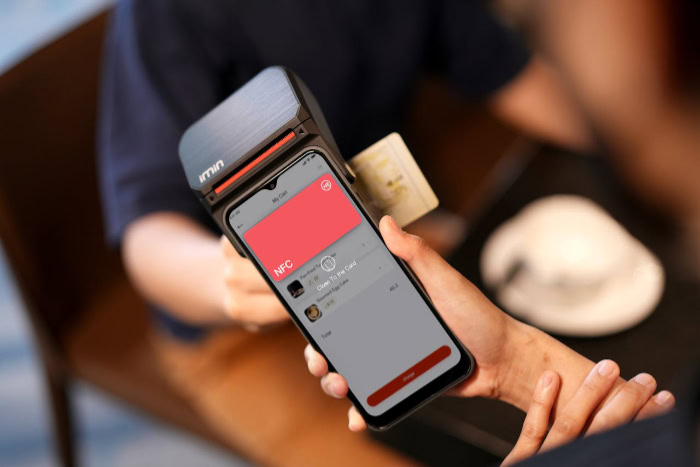
Every time you tap your phone at a checkout counter, a unique digital string replaces your actual credit card number to keep thieves from draining your bank account. Such invisible swaps are why your identity remains secure while your money moves across the globe.
By substituting sensitive data with a non-sensitive equivalent called a token, systems process transactions without ever exposing private details to potential leaks. While the technique began as a strategy for payment security, the logic of using placeholders now influences how investors buy portions of expensive assets and how AI models interpret the nuances of human speech.
Key Takeaways
- Tokenization replaces sensitive data like credit card numbers with random strings to prevent theft during electronic transactions.
- Fractional ownership allows investors to buy small shares of high value physical assets like gold or real estate through digital tokens.
- AI models use sub-word tokenization to break down complex language into fragments that are then mapped as mathematical vectors.
- Unlike encryption, tokenization preserves the original format of the data, which makes it compatible with older database systems.
- De-tokenization is the secure process of swapping a token back for original data by using a central mapping database called a vault.
Data Security and Payment Processing
Data security relies on the ability to move information without exposing it to unauthorized parties. Tokenization provides a solution by replacing sensitive values with random strings that have no intrinsic meaning.
This ensures that even if a database is breached; the information stolen is useless to a criminal. Because the token does not contain any part of the original data, it acts as a secure shield for both consumers and corporations.
Protecting PII and PHI
Sensitive information such as social security numbers, home addresses, and medical records fall under the categories of Personally Identifiable Information and Protected Health Information. Organizations use tokens to store this data in their daily operations.
For example, a hospital might use a token to represent a patient’s health record ID within its billing system. This allows administrative staff to process payments and schedules without ever seeing the actual medical history or government identification numbers associated with the individual.
Compliance and Regulatory Audits
For businesses handling credit card transactions, staying compliant with the Payment Card Industry Data Security Standard is a rigorous requirement. Tokenization simplifies this process by ensuring that actual card numbers never touch the company’s internal servers.
When a third party service provider handles the tokenization, the merchant’s systems are no longer in scope for certain parts of a security audit. This reduces the administrative burden and lowers the risk of massive fines or data breaches.
The Mechanics of De-tokenization
The process of returning a token to its original state is known as de-tokenization. This occurs within a highly secure environment often called a token vault.
When an authorized system needs the original data, it sends the token back to the vault, which verifies the request. If the credentials are valid, the vault matches the token to the original value and returns it.
This centralizes the risk to a single, heavily fortified point rather than spreading sensitive data across multiple applications.
Asset Tokenization and Blockchain Finance

The financial sector uses tokenization to modernize how people buy, sell, and trade physical property. By utilizing distributed ledgers, developers can create digital versions of tangible items.
This transition from physical paperwork to digital tokens allows for a more efficient way to track ownership and transfer rights. It bridges the gap between traditional physical markets and the speed of modern digital trading platforms.
Digital Representation of Physical Assets
Physical assets like real estate, fine art, or gold bars are often difficult to trade quickly. Through tokenization, a legal right to these assets is recorded on a blockchain.
A single token can represent a specific ounce of gold or a percentage of a commercial building. This digital record is immutable and transparent, providing a clear history of ownership that is accessible to all parties involved in a transaction without the need for manual record keeping.
Fractional Ownership Structures
One of the most significant changes brought by this technology is the ability to divide high value assets into smaller portions. Previously, investing in a multi million dollar painting or a luxury apartment complex was reserved for wealthy institutions.
Now, those assets can be split into thousands of digital tokens. Individual investors can purchase a single token, granting them a small share of the asset’s value and any potential dividends, which makes high end investing more accessible to the general public.
Market Liquidity and Accessibility
Traditional markets for assets like real estate are often slow, requiring weeks of legal checks and manual processing. Tokenization increases liquidity by allowing these assets to be traded nearly instantly on digital exchanges.
Because the tokens are standardized and easily transferable, the pool of potential buyers grows. This increased activity reduces the time it takes to enter or exit a position, making the market more dynamic and responsive to price changes.
Natural Language Processing and AI

Artificial intelligence does not understand language the way humans do; it requires a mathematical foundation. Tokenization serves as the first step in translating human speech or text into a format that a machine can process.
By breaking down sentences into smaller components, AI models can identify patterns and predict the next word in a sequence. This transformation is what allows chatbots and translation tools to function with high levels of accuracy.
Linguistic Building Blocks
When a computer receives a block of text, it first separates the content into tokens. These tokens can be full words, parts of words, or even punctuation marks.
By isolating these units, the model can analyze the structure of a sentence. This process ensures that the machine recognizes “running” and “run” as related concepts while still treating them as distinct tokens with different grammatical functions.
Token Granularity and Sub-word Units
Different AI models use different levels of granularity. Word level tokenization is simple but struggles with rare words or typos.
Character level tokenization is too slow for large tasks. Most modern systems use sub-word tokenization, such as Byte Pair Encoding.
This method breaks rare words into common fragments. For instance, the word “unhappy” might be split into “un” and “happy.” This allows the model to understand new words by looking at their familiar components.
Mathematical Vector Mapping
Once text is broken into tokens, each token is assigned a unique numerical ID. These IDs are then converted into vectors, which are lists of numbers that represent the token’s meaning in a multi dimensional space.
Tokens with similar meanings, such as “king” and “queen,” will have vectors that are mathematically close to one another. This mapping allows the AI to perform complex calculations to determine context, sentiment, and intent.
Comparing Tokenization and Encryption

While tokenization and encryption are both used to secure data, they function on fundamentally different principles. Choosing the right method depends on how the data will be used and where it needs to go.
Understanding these differences is essential for building a secure information architecture. One relies on mathematical transformation, while the other relies on substitution and database lookups.
Structural Variations in Data
Encryption typically transforms a piece of data into a ciphertext that is a different size and format than the original. For example, a sixteen digit credit card number might become a long string of random symbols when encrypted.
Tokenization, however, often preserves the format. A tokenized credit card number can still look like a sixteen digit number.
This is beneficial for legacy systems that expect data to follow a specific structure to function properly.
Algorithmic Security vs. Mapping
Encryption is an algorithmic process. The data is scrambled using a complex mathematical formula and a secret key.
Anyone with the key and the algorithm can decrypt the data anywhere. Tokenization does not use a mathematical relationship between the original data and the token.
Instead, it uses a map or a database. Without access to that specific mapping database, there is no mathematical way to reverse a token back into its original form.
Optimal Use Case Selection
Encryption is generally the better choice for data in transit, such as an email being sent across the internet, because it does not require a central database to function. Tokenization is often preferred for data at rest, such as stored customer information.
It is particularly useful when the data needs to be used by various internal applications that require a specific format but do not need to see the actual sensitive values.
Implementation Frameworks and Challenges
Deploying tokenization requires careful planning regarding how tokens are generated and managed. Organizations must decide between different technical architectures based on their specific needs for speed and security.
Furthermore, the human element of governance is just as important as the software itself. If the system for managing tokens is poorly designed, the security benefits can be lost.
Vault-Based vs. Vaultless Systems
A vault based system stores the relationship between the token and the sensitive data in a secure, central database. This provides a high level of control but can create a performance bottleneck if millions of requests are made at once.
Vaultless tokenization uses secure cryptographic functions to generate tokens without needing a database. While this is faster and scales better for large volumes of data, it requires extremely rigorous management of the underlying cryptographic secrets.
Governance and Access Control
The security of a tokenization system is only as strong as the rules governing who can access the de-tokenization process. Strict access controls must be in place to ensure that only authorized users or applications can swap a token back for the original data.
This involves logging every request and using multi factor authentication. Governance policies must also define how long tokens remain valid and when they should be rotated or deleted.
Integration with Legacy Software
Many companies rely on older software that cannot be easily updated to handle new security protocols. Tokenization is often used because it allows these legacy systems to continue operating without actually touching sensitive data.
However, ensuring that tokens remain functional across different platforms can be difficult. Developers must ensure that every application in the chain recognizes the token format and knows how to interact with the tokenization server without causing system crashes or data errors.
Conclusion
Tokenization serves as a critical link between the need for high stakes data protection and the requirement for daily functional utility. It allows businesses to maintain the speed of modern commerce while removing the inherent risks of storing sensitive information in its raw form.
By harmonizing the demands of data security with the goals of market liquidity and artificial intelligence, this technology provides a stable foundation for a more secure and efficient economy. It turns dangerous data into useful assets, ensuring that safety and progress can coexist in a complex environment.
As electronic systems grow more interconnected, the use of these surrogates will likely expand to cover even more aspects of daily life, from online identities to automated legal contracts. Seeing how these mechanisms work is essential for anyone looking to participate in modern finance and technology safely.
Frequently Asked Questions
Is tokenization the same thing as encrypting my data?
No, tokenization and encryption are different methods of securing information. Tokenization replaces sensitive data with a non-mathematical placeholder that has no intrinsic value, whereas encryption uses a mathematical algorithm and a secret code to scramble data. This makes tokenization ideal for static storage and encryption better for data in transit.
How does tokenization help me buy a house?
It allows you to buy a small portion of a property rather than the entire building. By converting the rights to a real estate asset into digital tokens on a blockchain, developers can offer fractional ownership to many investors. This lowers the cost of entry and makes high value property easier to trade.
Why do AI models need to turn words into tokens?
Computers cannot interpret human language directly, so they must convert text into numerical values they can calculate. Tokenization breaks sentences into smaller fragments like words or characters so the AI can assign them mathematical IDs. This helps the machine identify patterns and respond to prompts with much higher levels of accuracy.
Can a hacker reverse a token to see my credit card number?
A hacker cannot mathematically decode a token because there is no algorithmic link to the original data. To see the original number, an attacker would need authorized access to the secure token vault where the mapping is stored. Without that specific database, the stolen token is just a useless random string.
What makes vaultless tokenization different from using a vault?
Vaultless tokenization uses secure cryptographic functions to create tokens instead of storing them in a central database. This approach is much faster and handles higher volumes of data more efficiently than a vault based system. However, it requires much stricter management of the internal secrets used to generate those tokens.
About the Author: Julio Caesar


