
Why Do Smartphones Have Multiple Cameras? The Real Reason

Flip your phone over and you are likely greeted by a prominent block of glass housing three, four, or even five different lenses. This design has rapidly replaced the solitary flush camera of the past, transforming the back of our devices into complex optical arrays.
For many users, this sudden multiplication of sensors raises a valid suspicion. Is this visually aggressive trend actually necessary, or is it merely a gimmick to justify higher prices?
The reality is that these “camera islands” are an ingenious engineering workaround. Modern smartphones are simply too thin to contain the moving mechanical parts required for a single, versatile zoom lens.
To bridge the gap between a pocket-sized device and professional DSLR quality, manufacturers now rely on a team of fixed lenses working in unison. It is not just about adding more glass; it is about overcoming the physical limitations of light and space.
The Physics Problem
The fundamental reason your smartphone requires multiple cameras boils down to a conflict between optical physics and modern industrial design. As consumers demand thinner, lighter devices, manufacturers face a hard limit on how much physical space is available for camera components.
To maintain a slim profile while improving image quality, engineers had to rethink how a camera zooms and focuses.
The Space Constraint
Traditional dedicated cameras, such as DSLRs or mirrorless systems, rely on deep, retractable lens barrels. To zoom in on a distant subject, these cameras physically move glass elements back and forth inside the barrel, changing the focal length.
This mechanical movement requires significant depth. The lens needs space to extend and retract, which explains why professional camera lenses are often bulky and protrude significantly from the camera body.
Smartphone Limitations
Smartphones face a much tighter restriction. A typical modern device is only 7 to 9 millimeters thick.
There is simply not enough physical depth to house the moving mechanical parts and sliding glass elements required for a single, high-quality zoom lens. If a manufacturer attempted to fit a traditional optical zoom mechanism into a phone, the device would need to be uncomfortably thick, or the lens would have to protrude awkwardly, ruining the pocketability of the device.
The Swiss Army Knife Solution
To solve this, the industry adopted a “Swiss Army Knife” approach. Instead of trying to build one lens that can move to cover every situation, manufacturers install multiple fixed lenses.
Each lens has a specific, unchangeable focal length. One lens is permanently set to a wide angle, while another is permanently set for zoom.
When you pinch to zoom on your screen, the phone electronically switches from one physical camera to another. It effectively acts like a photographer carrying a bag of different lenses, but the switching happens instantly and automatically inside the device.
The Holy Trinity of Lenses

Most high-end smartphones now feature a standard configuration known as the “trinity” of lenses. This setup covers the three most common focal lengths required for photography, giving users the flexibility to capture expansive landscapes, standard portraits, and distant subjects without moving their feet.
The Main Camera (Wide Angle)
The primary shooter on almost every smartphone is the wide-angle lens. This camera typically features the largest sensor and the widest aperture, allowing it to gather the most light.
It serves as the default option for general-purpose photography, handling everything from quick snapshots to low-light dinner scenes. Because it receives the most engineering attention and the best hardware, this lens usually produces the sharpest and most detailed images of the bunch.
The Ultra-Wide Lens
Sitting next to the main sensor is usually the ultra-wide lens. Its purpose is to capture a significantly broader field of view, often 120 degrees or more.
This allows the camera to “step back” optically without the user moving physically. It is particularly useful for landscape photography, capturing tall architectural structures, or taking group photos in tight interior spaces where backing up is impossible.
While convenient, these lenses can sometimes introduce distortion at the edges of the frame.
The Telephoto Lens
The third critical component is the telephoto lens, which provides true optical zoom. Unlike digital zoom, which merely crops and enlarges the center of an image (reducing quality), a telephoto lens uses optics to magnify the subject, retaining detail.
To achieve higher zoom levels like 5x or 10x without making the phone thicker, manufacturers use a “periscope” design. This system uses a prism to fold incoming light sideways, running it through a tunnel of lenses inside the phone's body, effectively fitting a long lens into a thin space.
Specialized Sensors and Assistive Cameras

Beyond the main three lenses, many phones include additional sensors that look like cameras but serve different functions. These specialized components often work in the background to collect data that helps the main cameras produce better images, or they serve very specific niche uses.
Depth Sensors and ToF
Depth sensors and Time of Flight (ToF) sensors are not designed to capture standalone photographs. Instead, they emit infrared light to measure the distance between the phone and various objects in the scene.
By creating a detailed depth map of the environment, these sensors help the camera focus faster in low light. They are also responsible for the “Portrait Mode” effect, identifying exactly where the subject ends and the background begins so the software can apply an artificial blur, or bokeh, to the background.
Macro Lenses
A macro lens is designed specifically for extreme close-up photography. It allows the user to focus on subjects just centimeters away, revealing textures on leaves, insects, or fabrics that the main camera cannot resolve.
While useful for specific shots, these are often found on mid-range phones as dedicated, lower-resolution sensors. Premium phones often skip a dedicated macro lens, opting instead to use a high-quality ultra-wide lens with autofocus capabilities to achieve the same result.
Monochrome Sensors
Some manufacturers employ a monochrome (black and white) sensor alongside the color cameras. Because these sensors do not have a color filter array blocking light, they can capture true light values and contrast with greater accuracy.
The phone's processor then takes this high-contrast black-and-white data and layers it over the color image from the main sensor. This process improves overall sharpness, dynamic range, and detail, especially in challenging lighting conditions.
Computational Photography and Sensor Fusion
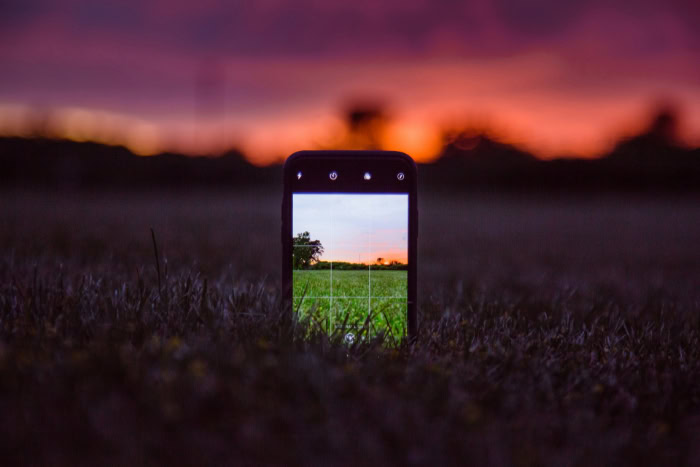
While the physical lenses gather light, the real magic happens inside the phone's processor. Modern mobile photography relies heavily on computational algorithms to overcome the limitations of small sensors.
The device does not simply record what the lens sees. It actively interprets, enhances, and merges data from multiple sources to construct a final image that often exceeds the optical capabilities of the hardware itself.
Simultaneous Image Capture
When you press the shutter button, you might assume only the active camera takes a picture. In reality, multiple cameras frequently fire at the exact same moment.
The smartphone activates secondary lenses to gather additional context about the scene. For instance, while you are focusing on a subject with the telephoto lens, the main wide-angle lens might also capture an exposure to reference color balance or dynamic range.
This simultaneous capture ensures the software has a surplus of data to work with before the image is even processed.
The Power of Image Fusion
Once the data is collected, the image signal processor performs “sensor fusion.” This technique involves stitching together the best parts of multiple images.
The processor might take the sharp details from the main high-resolution sensor and combine them with the wider field of view data from the ultra-wide lens to correct distortion at the edges of the frame. This happens instantly.
The user sees a single, crisp photograph, unaware that it is actually a composite built from the input of two or more distinct lenses working in tandem.
Seamless Zooming and Hybrid Techniques
One of the most difficult software challenges is making the switch between lenses invisible to the user. As you zoom in, the phone physically switches from the wide lens to the telephoto lens.
Since these sensors have different apertures and sizes, the color temperature and exposure can shift dramatically. Advanced software smooths this transition, matching the white balance so the viewfinder does not jump or flicker.
Furthermore, manufacturers utilize “Hybrid Zoom.” This enhances digital zooming by using actual data from the telephoto lens to fill in details on a cropped image, resulting in a shot that looks sharper than a standard digital crop.
Quantity vs. Quality

As camera bumps grow larger, consumers often fall into the trap of evaluating a phone based on a simple headcount of its lenses. Marketing departments heavily promote “Quad Camera” or “Penta Camera” systems to imply superior performance.
However, the number of lenses on the back of a device is rarely a reliable indicator of the final image quality.
The More Is Better Myth
There is a common misconception that a phone with four cameras is inherently better than a phone with two. This is false.
A device with two high-quality, large sensors will almost always outperform a device with four cheap, small sensors. The quality of the glass, the size of the image sensor, and the sophistication of the image processing software are far more significant than the sheer volume of lenses.
A crowded camera island often distracts from the fact that the individual components may be lackluster.
The Problem with Sticker Cameras
To achieve that impressive-sounding “Quad Camera” marketing claim, budget and mid-range manufacturers often resort to using “sticker cameras.” These are low-quality 2MP macro or depth sensors added solely to increase the lens count.
They contribute very little to the actual photography experience. The resulting images from these dedicated low-resolution macro lenses are often grainy and unusable compared to a cropped shot from a high-quality main sensor.
These extra lenses serve as spec-sheet filler rather than functional tools.
Flagship Versus Budget Philosophies
The difference becomes clear when comparing premium devices to budget alternatives. Flagship phones typically feature fewer but much larger sensors, focusing on low-light performance and dynamic range.
They prioritize a strong “trinity” setup where every lens produces usable, high-quality results. Conversely, budget phones often scatter many small sensors across the back to mimic the look of a high-end device.
When choosing a smartphone, it is wiser to prioritize the main sensor size and the manufacturer's reputation for image processing rather than counting the circles on the back of the phone.
Conclusion
The evolution of the multi-camera smartphone was never about vanity; it was a necessary engineering response to the laws of physics. Since a single lens cannot physically stretch and retract within a slim device to provide optical zoom, manufacturers split the workload across several specialized sensors.
This approach allows users to switch instantly between sweeping landscapes and detailed close-ups without the bulk of a traditional camera. As the technology matures, the race to simply add more lenses appears to be slowing down.
The industry is now shifting its focus toward increasing the size of individual sensors and refining the computational software that processes the images. When choosing your next device, look past the sheer number of cameras on the spec sheet.
It is far more valuable to prioritize the quality of the main sensors and select specific focal lengths that actually align with the way you take photos.
About the Author: Julio Caesar


