
AirPods 4 vs. AirPods Pro 2: Worth the Premium Cost?

Choosing your next pair of Apple earbuds forces a strict physical divide. Buyers must pick between a breezy open-ear fit and a deeply sealed acoustic chamber.
Because the AirPods 4 and the AirPods Pro 2 now share the exact same powerful H2 processor, top-tier audio performance exists across the entire lineup. This shared silicon makes deciding between the newest open-ear standard model and the flagship in-ear premium model surprisingly difficult.
Do you prioritize the lightweight comfort of a hard-plastic shell or the absolute silence of premium silicone tips? Finding your perfect match requires evaluating personal physical comfort alongside noise cancellation strength, exclusive health capabilities, daily battery stamina, and the final retail price. The right choice ultimately depends entirely on how you want to hear the world around you.
Key Takeaways
- AirPods 4 deliver an open-ear design focused on lightweight comfort and breathability.
- AirPods Pro 2 utilize silicone tips to create a tight acoustic seal for maximum noise isolation.
- Both models share the powerful H2 processor, ensuring excellent audio fidelity and smooth device switching.
- The flagship Pro earbuds exclusively feature specialized hearing assistance tools and active hearing protection.
Design, Fit, and Comfort
Physical design is the most obvious differentiator between these two earbuds. Choosing a model often comes down to pure physical comfort and how the hardware sits inside the ear canal.
Apple engineered entirely different approaches to fit, ensuring users can find a style that matches their daily activity levels and sensory preferences.
The Open-Ear Approach of AirPods 4
AirPods 4 feature a contoured, hard-plastic design that rests gently within the outer ear. This open-ear style does not enter the ear canal, making it an excellent choice for users who experience ear fatigue during long listening sessions.
Because the plastic shell simply sits inside the ear, listeners avoid the uncomfortable “plugged” sensation that often accompanies tighter fits. This lightweight, breathable approach means you might even forget you are wearing them, making them highly suitable for all-day wear in office or casual environments.
The Sealed In-Ear Approach of AirPods Pro 2
The AirPods Pro 2 take a drastically different route by utilizing soft silicone ear tips. Apple provides these tips in four sizes (XS, S, M, L) to guarantee a proper physical acoustic seal for a wide variety of ear shapes.
Pressing the silicone tip into the ear canal firmly anchors the earbud in place, providing a highly secure fit that resists falling out during intense movement or gym sessions. This sealed design not only prevents the earbuds from slipping but also forms a barrier against external sounds, acting as the foundation for the advanced audio isolation features of the hardware.
Durability and Environmental Protection
Regardless of the differing physical fits, both earbud models offer robust defense against the elements. The AirPods 4 and the AirPods Pro 2 boast IP54 ratings for dust, sweat, and water resistance.
This protection applies to both the earbuds and their respective charging cases. You can confidently take either model out for a heavy workout, a run in light rain, or a trip to a dusty beach without worrying about internal damage.
The high durability rating ensures both options are fully workout-ready and capable of handling everyday environmental hazards.
Active Noise Cancellation and Audio Performance

Silencing the outside world and delivering high-quality sound are primary goals for modern wireless audio. Both models pack impressive internal processing power, but their differing physical designs dictate how they block noise and project audio.
Approaches to Noise Cancellation
The open-ear design of the AirPods 4 relies almost entirely on advanced software to provide Active Noise Cancellation. The H2 chip works constantly to generate anti-noise waves that cancel out low-frequency sounds like airplane engines or city traffic, which is a remarkable engineering feat for an unsealed earbud.
Conversely, the AirPods Pro 2 combine this same software-driven ANC with the physical passive noise isolation of their silicone tips. This physical seal blocks a significant amount of high-frequency noise before the software even kicks in, resulting in maximum decibel reduction and absolute silence for the listener.
Audio Fidelity and Acoustic Architecture
Both models deliver rich, high-fidelity sound, but the acoustic experiences differ slightly. The sealed nature of the AirPods Pro 2 allows them to produce a tighter, more resonant bass response and a highly detailed soundstage, as no audio escapes the ear canal.
The AirPods 4 still offer impressive bass and clear highs, but the open design gives the audio a slightly airier quality. Both options support Personalized Spatial Audio with dynamic head tracking, surrounding you in a three-dimensional soundscape that adapts as you move your head, making movies and music feel incredibly immersive.
Transparency Mode and Adaptive Audio
Because the AirPods 4 rest loosely in the ear, you can naturally hear the world around you. However, both models utilize the H2 processor to power an electronic Transparency Mode, mixing environmental sounds seamlessly with your media.
Adaptive Audio takes this a step further by automatically lowering the volume of loud, harsh noises while keeping voices clear. Conversational awareness is highly effective across both designs, automatically lowering media volume and boosting the voices of people speaking directly to you, so you never have to remove an earbud to order a coffee or chat with a friend.
On-Device Controls and Smart Features

Managing your music, taking calls, and interacting with smart features without reaching for a phone adds immense value to wireless audio. Apple packed both of these earbuds with intuitive controls and advanced microphone technology to make daily interactions as frictionless as possible.
Navigation and Stem Controls
The stems of both the AirPods 4 and AirPods Pro 2 feature force sensors for easy media navigation. A quick squeeze on the stem will play or pause a track, while multiple squeezes allow you to skip forward or backward.
You can also press and hold to toggle between noise cancellation and transparency modes. The AirPods Pro 2 boast an exclusive touch-swipe gesture on the stem.
By simply sliding a finger up or down the smooth surface of the earbud, users can adjust the volume on the fly without needing to use voice commands or pull out their paired device.
Health and Accessibility Integrations
The AirPods Pro 2 pull far ahead by offering exclusive clinical-grade accessibility tools. Apple engineered these premium earbuds to function as a powerful health device.
They feature a built-in Hearing Test that allows users to independently check for hearing loss using their iPhone. Furthermore, the AirPods Pro 2 can serve as an over-the-counter Hearing Aid, boosting specific frequencies to help users hear conversations more clearly.
An active Hearing Protection feature also works in real-time to monitor and reduce exposure to dangerously loud environmental sounds, like concert speakers or construction sites.
Microphone Performance and Voice Isolation
Making clear phone calls in noisy environments is a priority for most users. Both earbud models utilize sophisticated machine learning algorithms and multiple microphones to isolate the voice of the user during calls.
The H2 chip works aggressively to filter out background disturbances like heavy wind, bustling cafe chatter, or passing traffic. While both perform exceptionally well, the AirPods Pro 2 have a slight edge in absolute vocal clarity due to their acoustic design, but callers on the other end of the line will hear you clearly regardless of which model you choose.
Battery Life and Charging Case Innovations
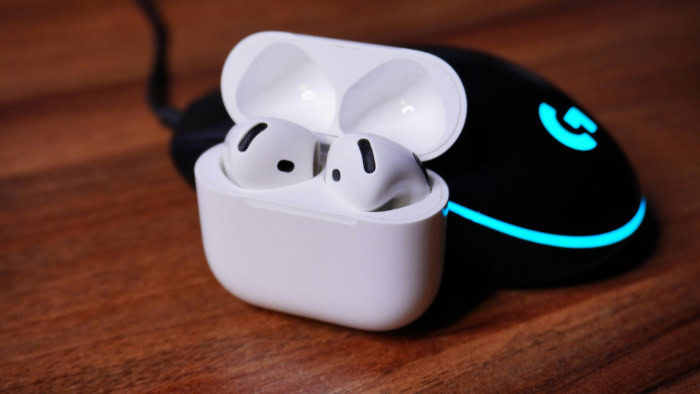
Wireless audio requires reliable power management and a case that easily fits into daily life. Apple refined both the internal battery efficiency and the external charging hardware to ensure listeners spend more time enjoying their media and less time tethered to a wall outlet.
Earbud Battery Endurance
Battery performance varies heavily based on your software settings. The AirPods 4 provide up to five hours of listening time on a single charge with Active Noise Cancellation turned off.
Activating ANC drops that figure to around four hours. Benefiting from a slightly larger internal footprint, the AirPods Pro 2 offer stronger endurance, delivering up to six hours of listening time even with Active Noise Cancellation fully activated.
Both models gain massive reserve power from their charging cases, pushing total listening time close to the 30-hour mark, ensuring you can easily get through a busy week of commutes and workouts.
Charging Case Form Factors
The physical size of the charging case directly impacts portability. Apple engineered the AirPods 4 case to be ultra-compact and highly pocketable.
It shrinks down to slide effortlessly into tight coin pockets or small bags without creating a visible bulge. The AirPods Pro 2 case maintains a slightly larger footprint to accommodate the extra battery capacity and specialized hardware components.
While still incredibly portable, the Pro case carries a bit more bulk compared to the absolute minimalist approach taken with the standard open-ear models.
Find My Integration and Case Hardware
Losing your earbuds is a common frustration, and the hardware built into the charging cases addresses this directly. The AirPods Pro 2 case includes an integrated U1 chip, enabling Precision Finding that points you straight to your misplaced device using directional arrows on your iPhone screen.
This premium case also houses a built-in speaker to play loud audio tracking alerts and an integrated metal lanyard loop to securely attach the unit to a backpack or keys. While the premium version of the AirPods 4 case does include a basic speaker for audible tracking, it lacks the precise directional tracking capabilities and the physical attachment point found on the Pro model.
Pricing Tiers and Value Assessment

Budget considerations ultimately guide most electronic purchases. Apple structured the current wireless audio lineup to cover a wide spectrum of price points, offering clear entry-level options alongside a premium flagship experience.
Figuring out which model delivers the best return on investment depends on balancing your wallet against your specific daily audio needs.
The AirPods 4 Two-Tier System
Apple split the AirPods 4 into two distinct models to address different price sensitivities. The standard base model offers a highly affordable entry point, stripping away advanced noise control while retaining the powerful H2 chip, excellent audio quality, and comfortable open-ear fit.
Stepping up to the premium AirPods 4 tier introduces Active Noise Cancellation and wireless charging to the case. This two-tier system allows buyers to save money if they only want reliable audio playback, or pay a little extra to gain software-driven noise blocking without committing to a flagship price tag.
The AirPods Pro 2 Premium Investment
The AirPods Pro 2 command a higher retail cost, reflecting their status as the top-tier flagship model. However, because this specific hardware has been on the market slightly longer, retailers frequently offer substantial discounts that close the price gap.
The premium investment pays for the superior physical acoustic seal, maximum noise reduction, touch volume controls, and advanced hearing assistance tools. If you can secure the Pro model during a seasonal sale, the exceptional feature set makes the higher initial cost an incredibly sound financial decision.
Target Buyer Profiles
Matching a purchase to your daily routine guarantees the best satisfaction. Instead of focusing just on the hardware, consider how you actually go about your day to find the perfect fit:
You should choose the AirPods 4 if:
- You hate the “plugged” feeling: You prefer earbuds that rest gently in your ear rather than pressing deep into the ear canal.
- You are budget-conscious: You want premium Apple audio quality without paying flagship prices.
- You wear earbuds all day: The lightweight, unsealed design prevents ear fatigue during long hours at a quiet office or working from home.
You should choose the AirPods Pro 2 if:
- You are a frequent commuter or flyer: You desperately need maximum physical and software-driven noise cancellation to block out train tracks, jet engines, or loud cafes.
- You have hearing accessibility needs: You want to utilize the clinical-grade Hearing Test, Hearing Aid functionality, and active Hearing Protection.
- You need a highly secure fit: You want the physical grip of silicone tips to ensure your earbuds stay firmly locked in place during heavy workouts or outdoor runs.
- You prefer on-ear volume control: You want the convenience of swiping the earbud stem to adjust your music volume without touching your phone.
Conclusion
Both Apple earbud models deliver exceptional audio performance, but they serve completely different listener profiles. The AirPods 4 provide a highly accessible, lightweight design that maximizes comfort without completely isolating you from your surroundings.
They offer excellent value for anyone who dislikes the feeling of plugged ears. Conversely, the AirPods Pro 2 justify their premium price tag by offering a deeply sealed acoustic chamber, absolute noise cancellation, and exclusive health monitoring features.
In the end, your final decision should rely heavily on your physical tolerance for silicone ear tips and how much background noise you need to block out during your daily routine.
Frequently Asked Questions
Do AirPods 4 have active noise cancellation?
Yes, Apple offers a specific version of the AirPods 4 that includes Active Noise Cancellation. This premium tier uses advanced software to block background sounds without requiring a tight physical seal, making it a great option for users who dislike silicone tips.
Can you work out with AirPods Pro 2?
Absolutely. The AirPods Pro 2 feature a strong IP54 rating, meaning they are highly resistant to dust, sweat, and water. The silicone ear tips also provide a very secure fit, ensuring the earbuds stay firmly in place during intense running or heavy lifting.
Are the AirPods Pro 2 good for hearing loss?
Apple designed the AirPods Pro 2 with powerful hearing assistance tools. Users can take a built-in hearing test directly on their smartphone to evaluate their audio needs. Based on those results, the earbuds act as over-the-counter hearing aids to boost specific vocal frequencies.
How long does the AirPods 4 battery last?
The AirPods 4 deliver up to five hours of continuous listening on a single charge. If you activate the noise cancellation feature, that time drops to roughly four hours. Using the included charging case pushes the total listening time to nearly thirty hours.
Which model is better for small ears?
The AirPods Pro 2 usually work best for small ears because they include four distinct sizes of silicone tips, including an extra-small option. This customization allows for a secure, comfortable fit that the rigid plastic shell of the standard model might not provide.
About the Author: Julio Caesar


