
Bluetooth 5.0 vs. 5.4: Does the Upgrade Actually Matter?

Your smartphone likely relies on a wireless standard finalized years ago, yet you expect it to handle lag-free gaming and a house full of smart gadgets without a single glitch. This gap between the hardware in your pocket and the latest connectivity standards often explains why some devices feel seamless while others struggle with interference and battery drain.
Bluetooth 5.0 arrived in 2016 as a major leap for range and speed, setting the baseline for the modern mobile experience. The move to version 5.4 changes the game again by prioritizing bidirectional efficiency and massive network stability.
Key Takeaways
- Bluetooth 5.4 introduces Periodic Advertising with Responses (PAwR), allowing bidirectional communication with thousands of devices simultaneously without forming a formal connection.
- Version 5.4 implements the LC3 codec, which delivers higher audio quality than version 5.0 while using significantly less data and power.
- New security protocols in 5.4 include Encrypted Advertising Data (EAD), which protects information transmitted during the discovery phase before pairing occurs.
- Auracast technology in 5.4 enables a single device to broadcast audio to an unlimited number of nearby receivers, a major upgrade over the one-to-one pairing found in 5.0.
- Battery life is extended in 5.4 through improved radio duty cycle management, allowing sensors and trackers to stay connected while spending more time in a deep sleep state.
Core Specifications and Technical Foundation
Bluetooth 5.0 acted as the primary blueprint for modern wireless communication, focusing on making the technology faster and more reliable over longer distances. Version 5.4 takes that foundation and sharpens it, moving away from simple raw power toward a more intelligent management of how data travels through the air.
Comparison of Speed and Range
Bluetooth 5.0 arrived with a significant boost in performance, offering a 2Mbps data rate that was twice as fast as previous versions. It also introduced a long range mode that allowed signals to travel up to four times further than before by using error correction techniques.
While Bluetooth 5.4 maintains these same maximum speed and range limits, it operates more efficiently within those boundaries. The newer version does not necessarily push the signal further or faster, but it ensures the data transmitted is more useful and less likely to be dropped.
Improvements in Data Capacity
The advertising extensions introduced in 5.0 allowed devices to send larger amounts of data without needing a formal connection. This was originally used for simple things like showing a device name or basic status.
Version 5.4 refines this by allowing these data packets to be structured and updated more dynamically. This means a peripheral device can share more complex information with a central hub while using fewer resources, making the communication cycle more productive.
Frequency Management and Interference
Both versions operate on the crowded 2.4GHz frequency, which is shared with Wi-Fi and various household appliances. Bluetooth 5.0 used basic channel hopping to find clear paths for data.
Bluetooth 5.4 improves on this with better channel classification. It allows devices to report which channels are suffering from interference more accurately, enabling the system to avoid noisy frequencies with greater precision.
This results in a more stable connection in environments packed with other wireless signals.
Advanced Communication Features Exclusive to Version 5.4

The jump to version 5.4 introduces features that change the fundamental way devices talk to each other. While earlier versions were often limited to one-way broadcasts or strict one-to-one pairings, the latest standard enables a more conversational and secure environment.
Periodic Advertising with Responses
In version 5.0, a device like a heart rate monitor would simply “shout” its data into the air for a phone to hear, a process known as unidirectional broadcasting. Bluetooth 5.4 introduces Periodic Advertising with Responses, or PAwR.
This allows the receiving device to talk back to the broadcaster in a synchronized, timed window. This bidirectional flow means a central controller can send commands back to thousands of end nodes simultaneously, creating a true two-way network without the overhead of individual connections.
Encrypted Advertising Data
Security in Bluetooth 5.0 was largely reserved for devices that had already completed a formal pairing process. Anything sent in an “advertising” packet before pairing was generally visible to any nearby receiver.
Version 5.4 introduces Encrypted Advertising Data, which allows a device to secure its broadcast data even before a connection is established. This ensures that sensitive information shared during the discovery phase remains private and protected from unauthorized interceptors.
Support for Massive Scalability
Traditional Bluetooth networks, known as piconets, were designed for a small number of devices. Bluetooth 5.4 was built specifically to handle massive scale.
Because of the efficiencies in PAwR and refined data handling, a single gateway can now manage and communicate with thousands of individual nodes. This is a level of density that Bluetooth 5.0 could not support without significant lag or signal collisions, making the newer standard necessary for large-scale deployments.
Audio Quality and Signal Stability

Audio has seen the most visible changes for the average user since the 5.0 era. While 5.0 provided the bandwidth for wireless music, it lacked the specific architecture to handle modern demands like high-quality broadcasting and perfect synchronization.
The LE Audio Standard and LC3 Codec
Bluetooth 5.0 relied on the older SBC codec, which often required high bitrates to maintain sound quality, leading to higher power use. Version 5.4 is built to fully utilize the LC3 codec.
This technology provides much higher audio quality at significantly lower bitrates. It allows for clearer sound with less data, which reduces the workload on the processor and the radio, resulting in a more consistent listening experience even in crowded areas.
Auracast Broadcast Audio
One of the biggest limitations of 5.0 was the one-to-one nature of audio. You could connect one pair of headphones to one phone.
Bluetooth 5.4 supports Auracast, a feature that enables a single source to broadcast audio to an unlimited number of nearby receivers. This allows for shared listening experiences in public spaces, such as tuning into a silent television at a gym or hearing a clear announcement at an airport directly through your earbuds.
Latency Reductions for Media and Gaming
Lag between an action on a screen and the sound in your ears has been a persistent issue for wireless audio. Bluetooth 5.4 minimizes this by refining connection events and how data packets are timed.
By reducing the time the system spends waiting for the next transmission window, 5.4 offers a much tighter synchronization for gaming and real-time media. This makes the experience feel as immediate as using a wired connection.
Power Consumption and Energy Management

Energy efficiency is the primary driver behind most Bluetooth updates. While both 5.0 and 5.4 fall under the “Low Energy” umbrella, the newer version is far more surgical in how it uses the radio, which is the most power-hungry component of any small device.
Low Energy Optimization
In Bluetooth 5.0, devices had to stay in an active state for longer periods to ensure they didn’t miss a data packet. Version 5.4 reduces the radio duty cycle, meaning the device spends more time in a deep sleep state and only wakes up for the absolute minimum time required to transmit or receive data.
This optimization directly translates to smaller devices being able to run for months or years on the same tiny battery.
Efficiency in Small-Packet Transfers
Many smart devices only need to send tiny bits of data, like a temperature reading or a status update. Bluetooth 5.0 was somewhat inefficient for these small bursts because the overhead of maintaining the connection was high.
The PAwR feature in 5.4 eliminates “idle listening,” where a device stays powered up just in case a message arrives. Instead, the device knows exactly when to wake up for its specific data slot, which drastically improves the life of coin-cell batteries in sensors and tags.
Balancing Connectivity and Power Saving
Maintaining a “keep-alive” signal is necessary to ensure devices don’t disconnect, but it often drains power. Bluetooth 5.4 uses more sophisticated methods to handle these signals, allowing the connection to remain active with far fewer radio check-ins than 5.0 required.
This balance ensures that your smartwatch or fitness tracker stays connected to your phone without constantly hitting the battery, even when no active data is being moved.
Practical Application and Hardware Compatibility
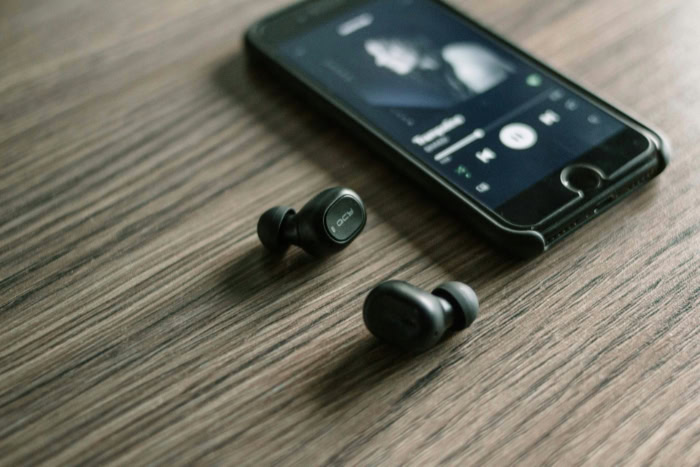
The technical differences between these versions dictate which products will work in specific environments. While 5.0 is still perfectly fine for many basic tasks, the newest version is becoming the requirement for advanced consumer and commercial hardware.
Benefits for Consumer Devices
For the person using a smartphone or wireless earbuds, the transition to 5.4 means more than just a specification on a box. It results in earbuds that last longer on a single charge and audio that does not cut out when walking through a busy train station.
Smartwatches also benefit from the improved data handling, as they can sync notifications and health data more quickly without the lag sometimes seen in older 5.0 hardware.
Industrial and Retail Implementation
The most significant impact of Bluetooth 5.4 is found in the commercial sector, particularly with Electronic Shelf Labels. In a large retail store, thousands of digital price tags need to be updated simultaneously.
Bluetooth 5.0 could not handle this volume of devices effectively. Version 5.4 allows a single central hub to update every tag in the store with encrypted, two-way communication, making it the standard for modern warehouse and retail tracking systems.
Backward Compatibility Dynamics
Bluetooth 5.4 is designed to be backward compatible, meaning a 5.4 phone will still work with 5.0 headphones. However, the connection will always default to the lowest common denominator.
If you use a 5.4 pair of earbuds with a 5.0 smartphone, you will not be able to use Auracast or benefit from the advanced power savings of the newer version. To access the full suite of 5.4 features, both the transmitter and the receiver must support the newer standard.
Conclusion
The transition from version 5.0 to 5.4 marks a shift from building a bigger pipe for data to building a smarter one. While 5.0 focused on providing enough speed and range to make wireless audio viable for everyone, 5.4 addresses the friction points of a crowded environment.
It moves away from the simple broadcast and hope method of 5.0 toward a highly synchronized, bidirectional system. This change is most noticeable in high density areas where many devices compete for the same signal space.
For the person primarily interested in standard music streaming, the jump to 5.4 offers marginal gains in signal stability. However, for those invested in the next generation of audio sharing through Auracast or for industrial sectors managing thousands of sensors, the update is a necessity.
The value of 5.4 lies in its ability to maintain massive networks with minimal power and maximum security, a feat that 5.0 simply was not designed to achieve.
| Feature | Bluetooth 5.0 | Bluetooth 5.4 |
| Data Throughput | 2 Mbps | 2 Mbps (Optimized Efficiency) |
| Connection Type | One-way / Unidirectional | Two-way / Bidirectional |
| Security Level | Standard Pairing Security | Encrypted Advertising Data (EAD) |
| Audio Technology | Standard SBC Codec | LE Audio with LC3 Codec |
| Power Strategy | Basic Low Energy | Advanced Radio Sleep Management |
| Network Scale | Limited Individual Pairings | Support for Thousands of Nodes |
Frequently Asked Questions
Do I need to buy a new phone for Bluetooth 5.4?
A new phone is only necessary if you want to use specific features like Auracast or improved battery efficiency for sensors. While basic tasks like music and calls work fine on older hardware, the phone must specifically support version 5.4 to access its advanced bidirectional communication and encryption capabilities.
Will my old Bluetooth 5.0 headphones work with a 5.4 phone?
Yes, Bluetooth 5.4 is fully backward compatible with older version 5.0 devices. You can connect your current headphones to a newer phone without any issues; however, the connection will limit itself to the older 5.0 standards. You will miss out on the superior LC3 audio codec found in the newer version.
Is Bluetooth 5.4 actually better for gaming?
Bluetooth 5.4 provides better performance for gaming by reducing the delay between the screen and your ears. It achieves this through more efficient data timing and the new LC3 codec, which processes sound faster than older standards. This results in a much more responsive experience compared to the older Bluetooth 5.0 baseline.
What exactly is Auracast?
Auracast is a feature in version 5.4 that allows one source to broadcast audio to an unlimited number of nearby receivers. Unlike the one-to-one pairing of version 5.0, this allows you to share music with multiple friends or listen to public broadcasts in venues like airports using your own earbuds.
Does Bluetooth 5.4 make my battery last longer?
Version 5.4 improves battery life for small devices by allowing them to stay in a sleep state for longer periods. It uses a feature called Periodic Advertising with Responses to ensure the radio only turns on at exact, synchronized moments. This prevents the constant listening drain that was common in older Bluetooth 5.0 devices.
About the Author: Elizabeth Baker


