
Is a GoPro Worth It? Pros, Cons, and Hidden Costs

Dropping a thousand dollar smartphone into a rocky creek while trying to capture a hiking video is a mistake you only make once. For most people, the decision to buy a GoPro starts at this intersection of high physical risk and the desire for high quality footage.
While your phone takes great portraits, it was never meant to be strapped to a bike or dragged through salt water. You need to know if adding another expensive device to your gear bag actually solves your problems or just creates a new set of chores.
Spending several hundred dollars on a rugged camera is a major commitment for any casual creator.
Key Takeaways
- HyperSmooth stabilization provides gimbal-quality smoothness for high-vibration activities without the need for external accessories.
- GoPros are waterproof up to 33 feet and built to survive impacts that would shatter a standard smartphone or professional camera.
- Using a dedicated action camera prevents you from draining your phone’s battery and filling up its internal storage with large 4K video files.
- Small sensors cause significant quality loss in dark or indoor environments, making the device best suited for bright outdoor use.
- The total cost includes necessary extras like high-speed V30 microSD cards and spare batteries for sessions longer than one hour.
The Technical Edge: Superior Stabilization and Field of View
GoPro cameras exist because traditional photography tools fail in high speed environments. While a standard camera produces sharp images in a controlled setting, it often falls apart when things get shaky or fast.
These devices are built to handle the physics of motion through specific internal processing and hardware design that prioritizes stability and field of vision over everything else.
HyperSmooth Technology
Electronic image stabilization has advanced to the point where external mechanical gimbals are rarely necessary for casual or even professional use. GoPro uses a proprietary system called HyperSmooth that analyzes movement in real time and crops into the sensor to compensate for shakes.
This results in footage that looks like it was shot on a floating rail, even when the person holding the camera is running over uneven terrain or mountain biking down a rocky trail. It removes the need for bulky, fragile motorized stabilizers that would otherwise be impossible to use in extreme weather.
The Ultra-Wide Perspective
One of the most recognizable aspects of action camera footage is the wide field of view. By using a fish eye lens design, these cameras can capture a massive amount of the environment in a single frame.
The SuperView setting stretches this perspective to fill a standard widescreen display, providing a sense of speed and immersion that a traditional smartphone lens cannot match. This is particularly useful for point of view shots, as it allows the viewer to see both their own hands and the horizon at the same time.
High-Frame-Rate Flexibility
Standard cinema and television usually play back at 24 or 30 frames per second. A GoPro can record at much higher rates, such as 120 or 240 frames per second, even at high resolutions like 4K.
This gives creators the ability to slow down fast action to a crawl without losing clarity. Whether it is a wave breaking or a skateboarder landing a trick, the extra data captured by high frame rates allows for professional quality slow motion that remains crisp and detailed on large screens.
Durability and Physical Versatility

The physical architecture of a GoPro is its most obvious advantage. Most modern electronics are fragile glass sandwiches that require constant care.
In contrast, an action camera is designed to be treated poorly. It is a tool that thrives in environments where salt water, mud, or heavy impacts would immediately destroy a smartphone or a professional mirrorless camera.
Ruggedized Build Quality
Modern models are waterproof right out of the box, often to depths of 33 feet or more without needing a separate plastic housing. The outer shell is rubberized to absorb shocks, and the lens covers are made of hardened glass that can be replaced if they become scratched or cracked.
This level of durability allows the user to focus on the activity rather than worrying about the safety of their gear. It can withstand freezing temperatures on a ski slope or the intense heat of a desert dashboard without the immediate failure common in consumer phones.
Mounting Ecosystem
A camera is only as good as the angles it can achieve. The mounting system used by GoPro has become an industry standard, allowing the device to be attached to almost anything.
You can secure it to a chest harness for a first person view of a hike, a suction cup on the side of a car, or an adhesive mount on the front of a surfboard. These options provide a hands free experience, letting the user participate in their activity naturally while the camera records from a unique vantage point that a handheld device could never reach.
Small Form Factor
Portability is a major reason why these cameras are used in the field. The device is small enough to fit in a pocket and light enough to be worn on a helmet for hours without causing neck strain.
In crowded tourist locations, the discreet size makes it less intrusive than a large camera setup. This compact design does not just make transport easier; it allows the camera to be placed in tight spaces, such as inside a guitar or under a vehicle, to capture perspectives that were previously impossible to film.
The GoPro vs. Smartphone Comparison

Choosing between a phone and a dedicated camera often comes down to risk and resource management. Even though phone cameras have improved significantly, they are also your primary tool for navigation, communication, and emergency calls.
Moving the heavy lifting of video production to a secondary device protects your most important piece of technology while offering better results in specialized scenarios.
Risk Mitigation
If you lose or break your smartphone while traveling, you lose your maps, your boarding passes, and your way to call for help. Using a GoPro as your primary action camera means you can leave your expensive phone safely in a bag or a pocket.
If the GoPro falls off a mountain or sinks to the bottom of a lake, your communication lifeline remains intact. This separation of duties provides peace of mind that allows for more creative risks when filming in hazardous spots.
Battery and Storage Offloading
Recording high resolution 4K video is one of the most resource intensive tasks a mobile device can perform. It drains the battery rapidly and fills up internal storage within minutes.
By using a dedicated device, you preserve your phone’s battery life for the rest of the day. Additionally, GoPros use removable microSD cards, meaning you can swap in a fresh card when one is full rather than having to delete apps or photos from your phone to make room for new footage.
Sensor Optimization
Smartphones are designed for general use, meaning their autofocus systems and shutter speeds are optimized for portraits and still scenes. When subjected to high vibrations, such as being mounted to a car engine or a bicycle handlebar, phone sensors often struggle with a wobble effect where the image appears to distort.
GoPro sensors and software are specifically tuned for high vibration environments. They use a very fast scanning process to ensure that the image remains stable and sharp even when the camera is being shaken violently.
Limitations and Pain Points
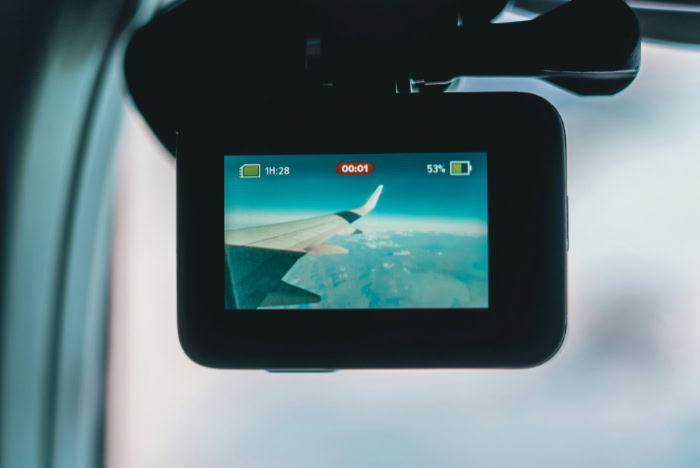
Owning a GoPro is not a perfect experience. There are clear trade-offs that come with such a small device.
While it excels in bright, fast moving conditions, its performance drops significantly once you move indoors or try to record for hours at a time. Prospective buyers need to be honest about these constraints before spending money on a specialized tool.
The Low-Light Barrier
The primary compromise of a small camera is the size of the sensor. Small sensors cannot collect much light, which leads to grainy or noisy footage in dark environments.
While GoPros look incredible under the midday sun, they struggle at sunset, in deep forests, or inside dimly lit buildings. The stabilization also tends to fail in low light, as the software needs a sharp image to calculate movement.
If your goal is to film late night city walks or indoor events, a GoPro may not be the right choice.
Thermal Management
Because the camera body is small and waterproof, it has very little room for heat to escape. When recording at maximum settings like 5.3K at 60 frames per second, the internal components generate significant heat.
Without consistent airflow, such as the wind from a moving bike or car, the camera may overheat and shut down to protect its circuitry. This makes it a poor choice for long, stationary recordings like podcasts or graduations, where it might stop unexpectedly.
The Editing Workflow
Unlike a smartphone where you can record a clip and post it to social media in seconds, a GoPro requires a more involved process. The files are large and often require a fast computer or a modern phone to preview and edit.
Transferring several gigabytes of data over wireless connections can be slow and frustrating. Most users find that they need to spend a significant amount of time at a desk after their trip just to organize and cut the footage into something watchable.
Total Cost of Ownership: Beyond the Initial Purchase

The price tag on the shelf is rarely the final amount you will pay. To get the most out of an action camera, you must consider the ecosystem that supports it.
Between memory requirements, power management, and software services, the total investment can grow quickly.
The “Must-Have” Accessories
A GoPro is incomplete without a few additional purchases. High speed microSD cards are mandatory, as cheap cards cannot handle the data rate of 4K video.
Most users also find that a single battery only lasts about an hour of intermittent filming, making a dual battery charger and spare packs a necessary expense. Depending on your interests, you may also need to budget for specialized mounts like a floating handle for swimming or a suction mount for automotive use.
The Subscription Model
The company heavily promotes its subscription service, which offers unlimited cloud backup, camera replacement insurance, and discounts on hardware. While this can provide good value, it is a recurring annual cost that adds to the total price of the device.
For some, the insurance alone justifies the cost, but for casual users, it may feel like another unnecessary bill. It is important to decide if the convenience of cloud uploads is worth the ongoing expense.
Depreciation and Longevity
Technology moves fast, and new models are released almost every year. This causes older versions to lose their resale value quickly.
However, because the hardware is so durable, a camera from two or three years ago still performs exceptionally well for most people. Purchasing a refurbished previous generation model is often a smarter financial move than buying the latest flagship.
On the other hand, if you plan to sell the camera in a year to upgrade, you should expect to lose a significant portion of your initial investment.
Conclusion
The decision to buy an action camera depends entirely on how often your hobbies take you into environments where a smartphone is a liability. If your weekends involve surfing, trail running, or mounting cameras to motorized vehicles, the specialized hardware is an obvious fit.
Vlogging also benefits from the wide angle and stabilization that make handheld footage look professional. However, if your primary interest is casual family gatherings or indoor events, the camera might spend most of the year in a drawer.
Before buying, ask yourself if you are willing to manage the extra batteries and the time required for file transfers. A GoPro is a powerful tool for capturing high intensity moments, but it only delivers value if your lifestyle provides the action necessary to justify its specific strengths.
Frequently Asked Questions
Is a GoPro actually better than my iPhone?
Yes, if you need extreme durability, wide-angle POV shots, or advanced stabilization for fast motion. While modern iPhones take excellent photos, GoPros are built to survive crashes and water exposure that would ruin a phone. They also offer a wider perspective and mounting options for hands-free filming during sports.
Do GoPros overheat a lot?
GoPros can overheat when recording at high resolutions like 5.3K for extended periods without airflow. Because the body is small and waterproof, it struggles to dissipate heat. This is rarely an issue during active sports like skiing or biking, but it may shut down if used as a stationary webcam.
Can I use a GoPro at night?
GoPros generally perform poorly in low light because their small sensors cannot capture enough ambient light. In dark settings, your footage will likely appear grainy and the electronic stabilization may fail. While newer models have improved night modes for photos, they are not ideal for handheld video after the sun goes down.
Is the GoPro subscription actually worth it?
The subscription is worth the price if you want unlimited cloud storage and camera replacement insurance. It provides a significant discount on the initial camera purchase and covers accidental damage. If you plan to use the camera frequently in high-risk environments, the peace of mind and the backup system justify the cost.
Why do I need a special SD card for a GoPro?
You need a high-speed microSD card to handle the massive amount of data generated by 4K and 5.3K video. Standard cards are too slow to write the data, which often leads to corrupted files or the camera freezing mid-record. Look for cards with a V30 or UHS-3 rating for consistent performance.
About the Author: Elizabeth Baker


