
What Is a GoPro? Modern POV Video Explained

Traditional photography used to force a choice between living a moment and documenting it. If you wanted to capture a high-speed descent or a deep-sea dive, you risked destroying expensive gear or missing the experience entirely.
The GoPro changed this dynamic by moving the camera from behind a tripod to the center of the action. These small, rugged devices are built to survive environments that would ruin a smartphone or a professional DSLR.
They offer a perspective that mimics human sight, allowing for immersive footage that puts viewers right in the middle of the story. Using one means you can keep your hands free while recording high-quality video in the rain, dirt, or surf.
Key Takeaways
- GoPro cameras are naturally waterproof up to thirty-three feet and shockproof, allowing for recording in environments that would damage standard electronics.
- The built-in HyperSmooth stabilization mimics the effect of a professional gimbal, producing steady video during high-impact activities like mountain biking or running.
- Integrated folding fingers on the bottom of the device allow it to mount directly to a wide variety of accessories without needing a separate frame or case.
- The wide-angle lens and high frame rate options enable users to capture expansive views and create professional-grade slow-motion clips at 4K resolution.
- Swappable batteries and microSD storage allow for extended filming sessions, provided the user has spares to replace power and memory as needed.
Anatomy and Physical Design
The physical build of a GoPro is a departure from traditional camera aesthetics, prioritizing utility and resilience over fragile components. Every aspect of the hardware is engineered to withstand extreme conditions while remaining small enough to be worn or mounted in places where a standard camera could never fit.
This design philosophy ensures that the device functions as an extension of the user rather than a piece of equipment that requires constant babying.
Compact Form Factor
The most recognizable aspect of the device is its small, boxy shape. Measuring roughly the size of a matchbox, it is light enough to be attached to a helmet, a surfboard, or even a pet without causing significant drag or discomfort.
This portability is not just about convenience; it allows for creative angles that were previously impossible, such as mounting the camera inside a guitar or on the end of a ski.
Ruggedized Construction
The outer shell is built to be naturally tough. Unlike smartphones that often require a bulky case for protection, the camera chassis uses high-impact materials that resist scratches and absorb shocks from drops.
This durability extends to dust and grit, making it a reliable tool for desert racing, mountain biking, or any environment where fine particles would typically jam a lens mechanism.
Native Waterproofing
Modern versions of the hardware are waterproof out of the box. Users can submerge the device in water, often up to thirty-three feet deep, without needing an external plastic housing.
This allows for clear audio recording and a more compact profile when swimming or snorkeling. For deeper scuba diving, specialized housings are available, but for most water activities, the camera is ready to go immediately.
Integrated Mounting System
On the bottom of the device, two small metal pieces known as folding fingers can be flipped down to create a secure connection point. This system is the standard for the industry, allowing the camera to lock into a vast array of accessories like chest harnesses, suction cups, or handlebar mounts.
Because the mounting system is built directly into the frame, there is no need for a separate cage to connect the camera to its gear.
Signature Video and Photo Capabilities
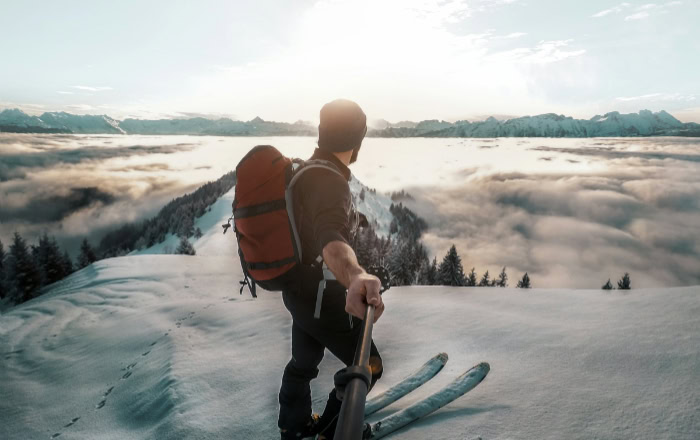
The internal processing power of these cameras is designed to handle high-resolution data while correcting for the chaos of movement. While the hardware is small, the visual output rivals professional cinema equipment in specific contexts.
The combination of wide optics and proprietary software allows for a unique look that defines modern action videography.
Wide-Angle Perspective
GoPro cameras are famous for their expansive field of view. Using lenses like SuperView, the camera captures more of the scene than a standard lens, providing a distorted but immersive fisheye effect.
This perspective is useful because it captures the person’s hands and feet along with the horizon, helping the viewer feel the scale and speed of the activity being filmed.
Advanced Image Stabilization
One of the most significant technical achievements in these devices is HyperSmooth technology. This electronic stabilization uses the internal sensor to predict camera movement and smooth out bumps in real time.
The result is footage that looks like it was filmed on a professional gimbal, even if the camera was shaking violently on a mountain bike or during a run.
High Frame Rate Options
Capturing fast action requires high frame rates to ensure the motion looks fluid rather than blurry. These cameras can record at 60, 120, or even 240 frames per second at high resolutions like 4K or 5.3K.
This capability allows creators to slow down footage by up to eight times during the editing process, turning a split-second jump or a splashing wave into a graceful, slow-motion sequence.
Still Photo Modes
Although primarily known for video, the device functions as a powerful still camera. It includes modes for TimeLapse, which compresses hours of footage into seconds, and Night Lapse, which uses long exposures to capture star trails or city lights.
Burst mode allows the camera to take dozens of photos in a single second, ensuring that the perfect frame of a high-speed moment is never missed.
User Interface and Ecosystem
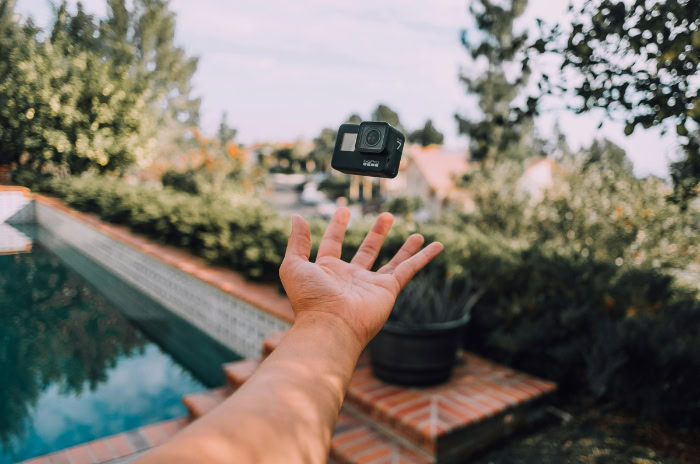
Operating a camera in the middle of a physical activity requires a simple and responsive interface. The GoPro ecosystem extends beyond the camera itself, incorporating mobile software and modular hardware expansions that allow the device to adapt to different creative needs.
Dual-Screen Navigation
Most models feature two distinct screens. The rear is a large touchscreen used for changing settings and reviewing footage.
The front-facing screen provides a live preview of the shot, which is helpful for vloggers or anyone trying to frame a selfie. This layout ensures that the user can see what they are filming regardless of which side of the camera they are on.
The GoPro Quik App
The hardware pairs wirelessly with a smartphone via the Quik app. This software allows users to control the camera remotely, which is useful when the device is mounted out of reach.
It also provides a cloud backup service and automated editing tools that can identify the best moments in a clip and sync them to music for a quick social media share.
Voice Control and Remote Operation
For moments when hands are occupied, such as while climbing or driving, the camera responds to voice commands. A user can simply say a phrase to start recording or take a photo.
Additionally, dedicated remote controls can be strapped to a wrist or handlebars, providing a tactile way to manage the camera without touching the device itself.
Expansion through Mods
The functionality of the base unit can be expanded through a series of “Mods.” The Media Mod adds a directional microphone and extra ports; the Light Mod provides a compact LED for dark environments; and the Max Lens Mod offers an even wider field of view with enhanced stabilization. These accessories transform the small action camera into a more capable production tool.
Ideal Use Cases

While the device started as a tool for surfers, its utility has expanded into many different fields. Its ability to go where other cameras cannot makes it a favorite for anyone who needs to document life from a first-person perspective or in challenging environments.
Action and Adventure Sports
The primary use remains Point-of-View (POV) filming for athletes. By mounting the camera to a helmet or chest, skiers, skaters, and divers can share their experiences exactly as they saw them.
The wide lens and stabilization make these high-speed activities look professional and easy to follow, providing an adrenaline-filled perspective for the audience.
Travel and Family Documentation
For travelers, the durability and wide lens make it a perfect vacation companion. It can take group shots in tight spaces or film a family pool day without worrying about water damage.
Its small size means it fits into a pocket, making it easier to carry than a heavy camera bag during a long day of sightseeing.
Vlogging and Content Creation
Mobile creators use these cameras for “B-roll,” which is the supplemental footage used to cut away from a main interview. Because it is easy to hide or mount, it can capture unique angles of a scene that a primary camera might miss.
Its ruggedness also makes it the go-to choice for travel vloggers who need to film in unpredictable weather.
Professional Industrial Use
Beyond entertainment, the device is used in cinema, journalism, and scientific research. Filmmakers use them as “crash cams” for stunts where a more expensive camera might be destroyed.
Researchers attach them to equipment or animals to observe environments that are inaccessible to humans, providing data and visuals that would be impossible to obtain otherwise.
Differentiating GoPro from Other Devices

Understanding where a GoPro fits into a toolkit requires comparing it to other common devices. While it excels in some areas, it is a specialized tool with specific trade-offs regarding image quality and lens flexibility.
GoPro vs. Smartphones
The most common comparison is with a smartphone. While modern phones have excellent cameras, they are fragile and difficult to mount.
A GoPro is far more durable and offers a much wider field of view, making it better for capturing action. It also keeps the phone battery full and the screen safe during risky activities.
GoPro vs. Mirrorless and DSLR Cameras
Compared to professional mirrorless or DSLR cameras, a GoPro lacks a large sensor and the ability to change lenses. This means it will not perform as well in low light and cannot create the “blurry background” effect common in portrait photography.
However, the GoPro is a fraction of the weight and much easier to operate for a single person on the move.
Fixed Lens vs. Zoom
Unlike most cameras, a GoPro uses a fixed focal length, meaning it has no optical zoom. You cannot zoom in on a distant subject without losing image quality through digital cropping.
This design is intentional; it ensures the camera stays compact and that everything in the wide frame remains in focus, which is preferable for action.
Storage and Power Management
Managing a GoPro requires attention to microSD cards and batteries. Because it records high-bitrate video, it requires fast, high-capacity memory cards.
The batteries are swappable, which is a major advantage over devices with built-in batteries. Carrying a few spares allows for an entire day of filming without needing to stop and find a charging port.
Conclusion
A GoPro is more than just a camera; it is a specialized tool designed to bridge the gap between human experience and digital media. By combining a rugged, waterproof exterior with sophisticated stabilization software, it enables the documentation of events that were previously too dangerous or difficult to film.
This technology has changed how people share their lives, moving away from static observation toward a dynamic, first-person narrative. The impact of the device lies in its ability to make the viewer feel the rush of the wind or the crash of a wave, ensuring that the most intense moments of life are never lost to memory.
Its ability to survive where other gear fails has cemented its place as the primary choice for anyone looking to turn a personal challenge into a visual story.
Frequently Asked Questions
Can I use a GoPro underwater without a case?
Yes, most modern GoPro models are waterproof up to thirty-three feet deep right out of the box. The rubberized seals and toughened glass protect the internal components from moisture and pressure without needing extra accessories. For deeper scuba diving or high-speed impact water sports, you might still want a protective dive housing for extra safety.
Why does the video look so steady even when I am moving?
The camera uses a built-in technology called HyperSmooth to electronically remove shakes and bumps in real time. It analyzes the movement of the camera and crops the edges of the sensor to keep the horizon level and the motion fluid. This allows you to get professional-looking footage while running, cycling, or skiing without using a bulky handheld stabilizer.
How long does the battery actually last?
A single battery usually provides between sixty and ninety minutes of continuous recording depending on your resolution and frame rate settings. Higher settings like 5.3K or high frame rates for slow motion consume more power and generate more heat. Most frequent users carry two or three spare batteries to ensure they can film throughout an entire day of activity.
Do I need a special SD card for a GoPro?
You must use a high-speed microSD card, specifically one with a U3 or V30 rating, to handle the large amount of data being recorded. Standard cards often fail or cause the camera to freeze because they cannot write the video files fast enough. Checking the official compatibility list ensures your footage is saved correctly without corruption or unexpected shutdowns.
Is it better than using my smartphone camera?
A GoPro is better than a smartphone for any activity involving high speeds, water, or a high risk of impact. While phone cameras are excellent, they lack the native wide-angle perspective and rugged mounting options that a GoPro provides. Using the action camera protects your expensive phone while capturing more immersive footage from unique angles like your chest or helmet.
About the Author: Elizabeth Baker


