
RTX 50-Series vs. RTX 40-Series: Our Final Verdict

NVIDIA has officially unleashed the RTX 50-series Blackwell architecture. This launch immediately challenges the dominance of the established RTX 40-series Ada Lovelace.
PC builders and gamers now face a critical decision. You must decide if the generational leap justifies the heavy cost of early adoption or if the previous tier offers superior value per dollar.
We will analyze the critical elements defining this rivalry. Our breakdown includes the architectural shift to GDDR7 memory, raw performance gains, and exclusive software limitations.
Architectural Shift: Blackwell vs. Ada Lovelace
The transition from Ada Lovelace to Blackwell represents a fundamental change in how NVIDIA approaches graphics processing. This generation focuses heavily on solving the bandwidth bottlenecks that restricted previous high-end cards while refining the density of the silicon itself.
We look at the physical changes on the board to see how the new architecture separates itself from its predecessor.
Process Node and Efficiency
Blackwell utilizes an evolution of TSMC’s manufacturing process to pack more transistors into a smaller area compared to the 4N process used for Ada Lovelace. This increase in transistor density allows the 50-series to perform more complex calculations without a proportional increase in physical die size.
The architectural refinements also target power delivery. While total power draw (TDP) remains high for top-tier cards, the performance-per-watt metric sees a substantial improvement.
A 50-series card can output significantly more frames than a 40-series counterpart while consuming the same amount of electricity.
Memory Subsystem Upgrades
One of the most defining hardware differences is the shift from GDDR6X to the newer GDDR7 standard. GDDR7 doubles the potential bandwidth per pin compared to the previous generation.
This relieves the memory pressure often seen in 4K and 8K gaming. NVIDIA also adjusted the VRAM capacity and bus width across the stack.
The mid-range cards, which previously suffered from narrow buses in the 40-series, receive necessary widenings and capacity increases. These changes ensure high-resolution textures load instantly without stuttering.
Connectivity and Standards
The 40-series faced criticism for sticking with DisplayPort 1.4. Blackwell corrects this by adopting DisplayPort 2.1.
This standard is essential for driving next-generation monitors that feature high refresh rates at 4K and 8K resolutions without relying on compression techniques. The 50-series also fully embraces PCIe Gen 5.0.
While PCIe Gen 4.0 offers sufficient bandwidth for most current games, Gen 5.0 ensures the GPU communicates with the CPU and storage subsystems at maximum velocity for future data-heavy workloads.
The Feature Wall: Exclusive Technologies
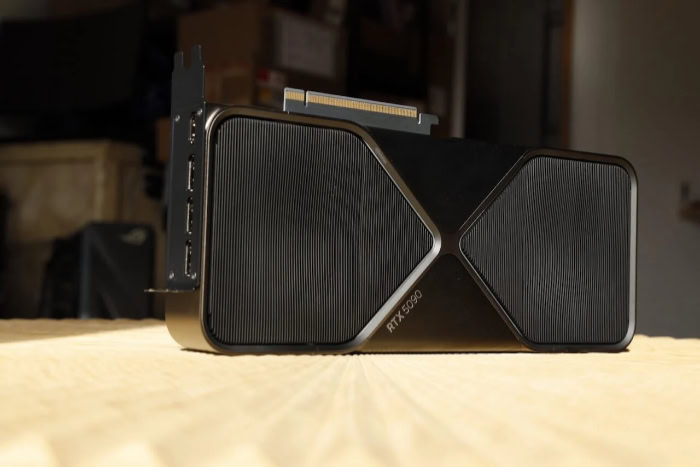
NVIDIA frequently segments generations by locking specific software advancements to newer hardware. The 50-series continues this trend by introducing features that rely on the specialized accelerators found only in the Blackwell architecture.
This creates a distinct line between what the new cards can do and where the 40-series stops.
DLSS Evolution
The 40-series introduced Frame Generation via DLSS 3. The 50-series pushes this further with the next iteration of Deep Learning Super Sampling.
This version leverages new optical flow accelerators to improve image quality and motion stability in ways the Ada architecture cannot support physically. While upscaling technologies usually remain backward compatible, the newest frame interpolation and texture enhancement techniques are exclusive to Blackwell.
Owners of 40-series cards will likely receive a watered-down version or no access to these specific neural rendering updates.
Ray Tracing Capabilities
Ray tracing performance depends heavily on the specialized RT cores within the GPU. The 50-series incorporates the newest generation of these cores.
They handle ray traversal and intersection calculations much faster than the units found in Ada Lovelace. This speed is vital for path tracing.
Full path tracing, often called “overdrive mode,” brings the 40-series to its knees in demanding titles. The 50-series manages these complex lighting scenarios with playable frame rates to make fully simulated lighting a practical reality rather than a tech demo.
AI and Compute Features
Local AI workloads have exploded in popularity since the launch of the 40-series. The Tensor cores in Blackwell are optimized specifically for these tasks.
They offer accelerated performance for running Large Language Models (LLMs) and generative image tools locally on your PC. For video creators, the media engine also sees an upgrade.
The 50-series enhances AV1 encoding efficiency and supports more simultaneous streams. This allows streamers and editors to handle high-resolution footage with less strain on the system compared to the previous generation.
Performance Analysis: Rasterization and Rendering

Specifications and feature lists eventually give way to real-world metrics. The true value of a graphics card is determined by how many frames it pushes and how quickly it renders complex scenes.
We analyze the performance gap to see if the Blackwell architecture delivers a tangible upgrade over the Ada Lovelace generation in standard use cases.
Raw Rasterization Gains
In traditional rendering scenarios without ray tracing or AI upscaling, the 50-series demonstrates a clear lead over the 40-series. The improved CUDA core count and clock speeds result in higher frame rates across the board.
This gap becomes most apparent at higher resolutions. At 1080p, the CPU often limits performance.
However, at 4K and 8K, the GPU takes the full load. Here the Blackwell architecture stretches its legs to deliver smooth gameplay in titles where the 40-series would struggle to maintain 60 frames per second.
Ray Tracing Benchmarks
Heavy ray tracing titles like Cyberpunk 2077 and Alan Wake 2 serve as the ultimate stress test. The 50-series shows its strength here by significantly reducing the rendering time for light bounces and reflections.
The generational delta is larger in these workloads than in standard rasterization. Where a 40-series card might require aggressive DLSS settings to maintain playability with ray tracing maxed out, the 50-series often handles the same settings at native resolution or with minimal upscaling.
Content Creation Workloads
For professionals, time saved on rendering translates directly to value. 3D suites such as Blender and V-Ray utilize the full compute power of the GPU.
The 50-series reduces render times noticeably compared to the 40-series to allow for faster iteration cycles. Video editing applications like DaVinci Resolve and Adobe Premiere also benefit.
Timeline scrubbing becomes smoother with high-bitrate footage, and export times decrease. This performance jump makes the new generation a compelling option for creators who feel limited by the throughput of the Ada architecture.
Market Positioning: Pricing and Availability

The release of a new GPU generation immediately disrupts the financial balance of the PC hardware market. Pricing strategies shift as retailers try to clear old inventory while capitalizing on the hype surrounding the new architecture.
We must examine the real cost of ownership by looking beyond the sticker price to see how market dynamics affect the value of both series.
MSRP vs. Street Price
The RTX 50-series arrives with the premium pricing typical of a flagship launch. Early buyers often face prices well above the Manufacturer's Suggested Retail Price due to high demand and retailer markups.
This “Early Adopter Tax” significantly inflates the cost of the Blackwell cards during their initial release window. In contrast, the RTX 40-series has entered its depreciation phase.
Retailers are aggressive with discounts and clearance sales to move remaining Ada Lovelace stock. This creates a scenario where a high-end 40-series card might cost significantly less than a mid-range 50-series option despite offering comparable raw rasterization performance.
Availability Channels
Finding a 50-series card at launch is often a test of patience and speed. Stock levels fluctuate wildly.
Scalpers and bots frequently snatch up inventory to resell at inflated rates. This scarcity forces many gamers to wait months for stabilization.
The 40-series situation is the opposite. The used and refurbished markets are currently flooded with these cards as enthusiasts offload their previous-generation hardware to fund upgrades.
This abundance makes the 40-series readily available on platforms like eBay or hardware forums. It offers a reliable alternative for buyers who need a GPU immediately and cannot wait for Blackwell supply chains to normalize.
Value Proposition
Value is best measured by the cost-per-frame metric. With the 40-series seeing price cuts, its ratio of performance to dollar is currently very strong.
A discounted 4080 Super may offer 90% of the experience of a newer card for 70% of the price. The 50-series dominates in absolute performance, yet the diminishing returns at the top end hurt its value score for average gamers. Resale value is another factor.
Owners of 40-series cards will see their hardware value drop sharply now that a superior generation is available. However, holding onto a 40-series card remains a financially sound decision for those who do not require the absolute bleeding edge.
Head-to-Head Tier Verdicts

Comparing architectures in a vacuum rarely helps the individual buyer. Most users shop within a specific budget or performance tier.
We break down the direct rivalries between the new Blackwell cards and their Ada Lovelace predecessors to determine which specific models earn a recommendation.
The Enthusiast Tier: RTX 5090 vs. RTX 4090
The RTX 4090 was a massive leap forward that remained unrivaled for years. The RTX 5090 aims to dethrone it by targeting the 8K resolution and high-refresh 4K market.
For users already owning a 4090, the upgrade is hard to justify unless they require DisplayPort 2.1 or professional-grade AI compute speeds. The raw gaming difference, while present, may not be visible to the naked eye in many titles.
However, for builders coming from a 3090 or older, the 5090 is the only logical choice for ultimate performance. It creates a new ceiling for what is possible in consumer graphics.
The High-End Tier: RTX 5080 vs. RTX 4080 Super
The 80-class battle is often where the most interesting price-to-performance discussions happen. The RTX 5080 typically targets the performance level of the previous flagship (the 4090) at a lower price point.
If the 5080 matches or beats the 4090 while costing less than a new 4080 Super, it immediately renders the older high-end cards obsolete. The 4080 Super remains a viable option only if its price collapses significantly.
Otherwise, the architectural improvements in ray tracing and future-proofing on the 5080 make it the definitive winner in this bracket.
The Mainstream Tier: RTX 5070 vs. RTX 4070 Family
The mid-range segment relies heavily on memory capacity and longevity. The RTX 4070 family was popular but often criticized for having 12GB of VRAM in an era demanding more.
The RTX 5070 addresses this by likely standardizing on higher VRAM capacities and wider buses. If the 5070 launches with 16GB of GDDR7, it instantly becomes the superior purchase over any 4070 variant.
The older cards simply lack the texture headroom for future titles. Gamers playing at 1440p should prioritize the 5070 to avoid the memory bottlenecks that will plague the 40-series in coming years.
The Upgrade Path Strategy
The decision to upgrade depends largely on your current starting point. Owners of RTX 30-series (Ampere) or older cards will see a massive, transformative jump in performance by moving to the 50-series.
The efficiency gains and feature support make this a recommended multi-generational leap. Conversely, owners of RTX 40-series cards are largely safe to skip this generation.
The Ada Lovelace architecture remains capable and supports most modern features. Unless you have a specific professional need for the new AI cores or display connectivity, sitting out the 50-series to wait for the next cycle is a prudent financial move.
Conclusion
The rivalry between Blackwell and Ada Lovelace ultimately comes down to a choice between aggressive future-proofing and immediate market value. We have dissected the architectural shifts and performance metrics to provide a clear answer for your next upgrade.
The RTX 50-series asserts its dominance through the dense 3nm process, the blistering speed of GDDR7 memory, and the inclusion of DisplayPort 2.1. These hardware upgrades create a bandwidth and connectivity gap that the previous generation cannot cross.
Software exclusivity also plays a substantial role. The improved neural rendering features and superior ray tracing throughput lock the absolute best visual experience behind the Blackwell architecture.
The ideal buyer for the RTX 50-series is the user who demands zero compromises. If you require professional-grade AI compute, plan to drive an 8K monitor, or simply want the highest possible frame rates in path-traced games, the premium cost is necessary.
The 50-series is the only path forward for these power users. Conversely, the RTX 40-series becomes the champion for value hunters and high-refresh 1440p gamers.
The Ada architecture still handles modern rasterization effortlessly. If you can live without the newest DLSS features and are willing to shop during clearance sales, a high-end 40-series card offers tremendous performance for a fraction of the price.
Ada Lovelace is no longer the king, but it is far from obsolete. The architecture provides enough horsepower to remain relevant for years to come.
While Blackwell defines the future of graphics, the 40-series remains a powerful engine for the present.
Frequently Asked Questions
Will RTX 40-series prices drop now that the 50-series is out?
Retailers typically reduce prices on previous-generation stock to clear shelf space for new inventory. You will likely see significant discounts on remaining new RTX 40-series cards. Additionally, the used market will see an influx of affordable options as enthusiasts sell their old GPUs to fund upgrades.
Do I need a new power supply for the RTX 50-series?
Most RTX 50-series cards utilize the 12V-2×6 or updated 12VHPWR power connectors introduced with the late 40-series. If you already own a high-quality ATX 3.0 or 3.1 power supply with sufficient wattage, you do not need to upgrade. However, older power supplies may require adapter cables to function correctly.
Can I use DLSS 4 features on an RTX 40-series card?
NVIDIA generally locks the newest DLSS iterations to the latest hardware architecture. The RTX 50-series features specialized AI accelerators required for the latest frame generation and texture improvements. While basic upscaling may remain compatible, the advanced features of DLSS 4 will likely remain exclusive to Blackwell GPUs.
Is it worth upgrading from an RTX 4080 to an RTX 5080?
For most gamers, the jump from one generation to the immediate next offers diminishing returns. The RTX 4080 remains a powerful card for 4K gaming. You should only consider this upgrade if you specifically need DisplayPort 2.1 connectivity or if you rely on professional rendering applications where time is money.
Will the RTX 50-series fit in my current PC case?
High-end Blackwell cards, especially the RTX 5090, feature massive cooling solutions that may exceed the dimensions of standard mid-tower cases. You must measure the maximum GPU length and thickness supported by your chassis before purchasing. Many 50-series models occupy three or even four PCIe slots.
About the Author: Julio Caesar


