
RAM vs. VRAM: What Is the Difference?
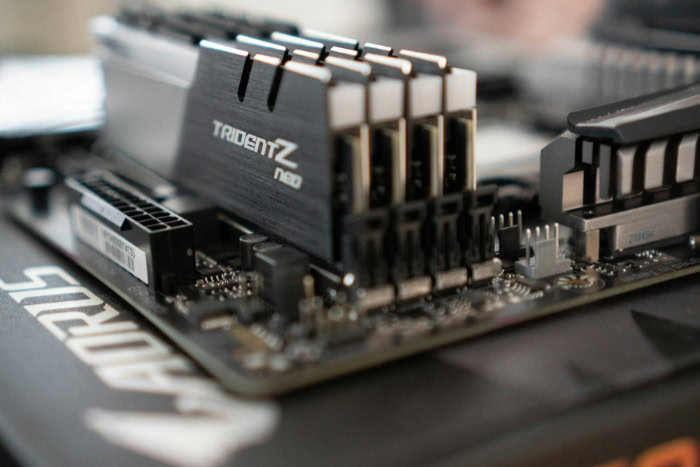
Every computer relies on short-term memory to keep software running smoothly by holding active data while the machine stays powered. However, buyers and everyday users frequently confuse system memory (RAM) with video memory (VRAM), assuming that a surplus of one can make up for a shortage of the other.
In reality, both components serve entirely different processors and feature distinct internal architectures. The following overview details their unique roles, technical designs, and common hardware setups such as dedicated versus shared memory pools.
It also outlines the performance penalties that occur when limits are reached, providing clear recommendations to match capacity needs with everyday office tasks, modern gaming, or demanding creative workloads.
Key Takeaways
- System RAM prioritizes low latency for general CPU processing across narrow 64-bit or 128-bit memory buses, whereas VRAM prioritizes massive throughput for parallel GPU rendering across wider 128-bit to 384-bit buses.
- Adding extra system RAM cannot compensate for insufficient VRAM because overflowing graphics assets must travel across the much slower motherboard PCIe slot, dropping data speeds from over 500GB per second down to around 32GB per second.
- Standard desktop and laptop system RAM is often user-upgradable via DIMM or SO-DIMM slots, while dedicated VRAM is permanently soldered onto the graphics card circuit board and cannot be expanded after purchase.
- Modern 1080p gaming generally requires 16GB of system RAM paired with at least 8GB of VRAM, while high-demand 1440p and 4K gaming with ray tracing calls for 32GB of system RAM and 12GB to 16GB of VRAM.
- Integrated graphics share standard system RAM with the CPU, reducing the total memory available for everyday software and delivering lower performance than dedicated graphics cards with standalone GDDR memory.
Overview of System RAM and Video RAM
Modern computers rely on specialized memory types to balance speed, capacity, and processor demands. While both system memory and video memory store information temporarily, they serve distinct processors and handle vastly different computational workloads.
System RAM: Workspace for the Central Processor
System random-access memory, commonly called RAM, functions as the primary working stage for the central processing unit (CPU). Whenever you start your computer, the operating system loads essential services and background processes directly into this memory space.
As you launch everyday programs such as web browsers, word processors, or spreadsheet software, the CPU places their code and active data into RAM so it can retrieve instructions within nanoseconds.
This direct interaction between the CPU and system memory ensures that your computer responds swiftly to user commands. If the processor had to pull information directly from a solid-state drive or mechanical hard drive every time you clicked a button, the entire interface would crawl.
System RAM is volatile, meaning it requires continuous electrical power to retain information. Once you shut down or restart your computer, all data stored within system RAM clears instantly.
Video RAM: Dedicated Storage for the Graphics Processor
Video random-access memory, or VRAM, acts as a dedicated holding area specifically built for the graphics processing unit (GPU). Instead of handling operating system files or background tasks, VRAM houses visual assets required to assemble images on your monitor.
These assets include high-resolution textures, complex three-dimensional geometric meshes, lighting maps, and render buffers.
Because modern monitors refresh at high speeds, such as 60Hz, 120Hz, or higher, the GPU requires an ultra-fast communication path to access and update visual data. VRAM provides this direct channel, enabling the graphics chip to manipulate pixel buffers and push completed frames to the display without delays.
Graphical updates take top priority, ensuring that visual output remains fluid and synchronized with display refresh cycles.
Division of Labor Between the CPU and GPU
The necessity for separate memory pools stems from how the CPU and GPU perform their work. The CPU handles sequential compute tasks, executing complex chains of instructions one after another with minimal delay.
In contrast, the GPU is a massively parallel processor engineered to perform thousands of simple calculations simultaneously, such as calculating colors for millions of pixels across a screen.
Because their operational goals differ, system RAM cannot easily substitute for graphics memory. System RAM provides fast response times for single operations, but it lacks the sheer transfer volume that graphics processing requires.
During application execution, the two memory banks coordinate closely. When you launch a graphics-intensive application, the CPU reads data from permanent storage and stages it in system RAM.
The computer then copies the relevant visual assets across the system bus into VRAM, allowing the GPU to work from its own dedicated memory pool without interrupting the CPU.
Technical Architecture and Hardware Characteristics

The differences between system RAM and VRAM extend deep into their underlying physical construction and architectural design. Each memory type features hardware modifications that optimize it for either the rapid individual instruction requests of a CPU or the massive parallel workloads of a GPU.
Data Transfer Speed and Memory Bus Width
System memory and graphics memory rely on different technological standards. Standard system memory utilizes DDR (Double Data Rate) technology, such as DDR4 or DDR5.
In contrast, dedicated graphics cards employ specialized memory such as GDDR (Graphics Double Data Rate) or HBM (High Bandwidth Memory). While standard DDR memory prioritizes quick command responses, GDDR uses higher clock frequencies and optimized signaling to push substantial volumes of data simultaneously.
Bus width represents another major difference between the two configurations. Standard desktop and laptop systems access RAM through relatively narrow channels, typically 64-bit for single-channel configurations or 128-bit for dual-channel setups.
Graphics hardware connects to memory across much wider channels, commonly spanning 128-bit, 256-bit, or even 384-bit layouts. High Bandwidth Memory takes this concept even further with interfaces that exceed 1,024-bit widths.
These wide pathways allow graphics memory to achieve bandwidth figures reaching hundreds of gigabytes per second, or even exceeding 1,000GB per second, providing the raw throughput needed to render detailed visual scenes.
Trade-Off Between Latency and Bandwidth
Memory design involves a fundamental trade-off between latency and bandwidth. Latency measures the delay between a processor requesting a piece of information and the memory module delivering it.
Bandwidth measures the total volume of data transferred over a specific timeframe. The CPU requires ultra-low latency because it constantly jumps between unrelated software routines, and any delay leaves execution cores idle.
The GPU operates under completely different priorities. When rendering a three-dimensional scene, the graphics processor must stream massive data packages, including geometry and high-resolution textures, to thousands of cores simultaneously.
In this scenario, raw bandwidth matters far more than low latency. GDDR memory accepts slightly higher initial response delays because its immense transfer capacity keeps graphics pipelines consistently supplied with visual data.
Physical Installation and Component Upgradability
The physical form factor of each memory type reflects its distinct operational needs. System RAM commonly appears as modular sticks inserted into standard DIMM slots on desktop motherboards, or smaller SO-DIMM slots on laptops.
This modular layout gives computer owners the ability to upgrade capacity, replace faulty modules, or adjust memory speeds by simply inserting new components.
Dedicated VRAM, however, is permanently soldered directly onto the graphics card circuit board adjacent to the GPU silicon. This close physical proximity minimizes electrical trace lengths, which is necessary to achieve high clock speeds and wide memory buses.
Because these chips are surface-mounted, users cannot replace or upgrade their VRAM after purchase. Anyone buying a dedicated graphics card must choose sufficient memory capacity upfront to satisfy future graphical demands.
Memory Implementations: Dedicated, Shared, and Unified
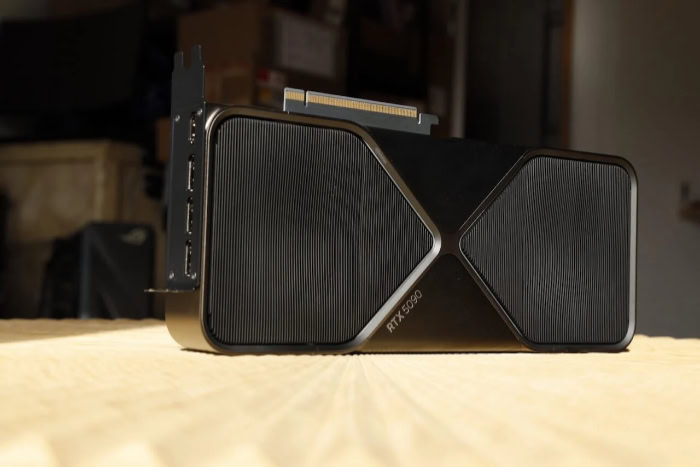
Personal computers implement memory architectures in diverse ways depending on their physical size, target cost, and performance goals. The presence of a standalone graphics card, an integrated processor, or a modern system-on-chip dictates how memory resources are allocated and shared.
Dedicated VRAM on Discrete Graphics Cards
Discrete graphics cards, common in performance desktops and gaming laptops, feature their own separate memory subsystem. In these systems, dedicated VRAM operates in isolation from central system tasks, communicating directly with the graphics processor across an onboard memory bus.
This arrangement delivers maximum bandwidth and prevents graphics tasks from competing with general operating system functions for memory access.
This dedicated architecture comes with higher thermal and power costs. High-speed GDDR chips draw significant wattage and generate intense heat during operation.
Discrete cards require robust voltage regulation modules, dedicated heat sinks, and active cooling fans to manage temperatures. Consequently, desktop graphics cards occupy substantial physical space inside a computer case, while laptops with discrete graphics demand bulkier cooling solutions.
Shared Memory Allocation in Integrated Graphics
Many everyday laptops and budget desktop computers lack standalone graphics cards, relying instead on integrated graphics processing units (iGPUs) built directly into the main CPU. Because an iGPU lacks its own dedicated memory chips, it carves out a reserved slice of standard system RAM to store visual assets and framebuffers.
This shared arrangement introduces noticeable performance compromises. Because system RAM runs on narrower buses with lower raw bandwidth than dedicated graphics memory, graphical rendering speeds drop significantly.
Furthermore, both the CPU and iGPU must compete for access to the same memory channels, causing bus contention during intensive operations. This shared structure also reduces usable system memory for standard software.
For example, if a computer contains 8GB of system RAM and the integrated graphics system reserves 2GB for display tasks, only 6GB remains available for the operating system and user applications.
Unified Memory Architecture in Modern Processors
Modern system-on-chip (SoC) designs, such as Apple Silicon processors and certain handheld gaming platforms, adopt a unified memory architecture. Instead of physically separating system RAM and VRAM or forcing an iGPU to borrow standard memory across an ordinary bus, unified architecture places a single, high-bandwidth memory pool right beside the central processor package.
Both the CPU cores and GPU cores share direct access to this single memory space. This setup eliminates the need to create redundant copies of assets when passing information between the two processing units.
If the CPU prepares geometry or texture files, the GPU can immediately read that data from the exact same physical addresses, cutting memory overhead and lowering power consumption. By combining high bandwidth with exceptionally low latency across the entire processor, unified architectures deliver robust graphical and general compute performance within compact computer designs.
Performance Bottlenecks and System Symptoms

A computer operates at its best when memory capacity balances the demands of running software. When an application requests more memory than the hardware provides, severe bottlenecks emerge, producing distinct signs of system distress depending on which pool has run dry.
System Instability from Insufficient System RAM
When active software demands more system memory than the installed RAM can provide, the operating system prevents total failure by writing excess data to permanent storage. This mechanism, known as virtual memory, uses swap files or paging files located on a solid-state drive or hard drive.
Even the fastest modern solid-state drive operates at speeds far slower than system RAM, resulting in severe performance degradation.
Users encounter noticeable system freezes, prolonged application launch times, and sluggish window switching. Running multiple browser tabs alongside background applications can cause programs to become completely unresponsive or crash without warning.
Multitasking responsiveness erodes rapidly, leaving the computer struggling to manage basic background services.
Visual Glitches and Stutter from VRAM Limits
Exhausting video memory produces distinct visual anomalies rather than standard software freezes. When a graphics-intensive game or rendering application runs out of local VRAM, the graphics engine struggles to keep high-resolution visual files in memory.
Players often observe texture pop-in, where blurry or low-resolution textures appear suddenly on screen before sharpening seconds later, or textures may fail to load entirely.
Beyond visual glitches, frame delivery suffers dramatic inconsistencies. The graphics processor stalls while waiting for necessary assets, causing sudden drops in frame rates and pronounced micro-stutters that disrupt smooth motion.
In extreme cases where the software cannot dump or downscale visual assets fast enough, applications crash to the desktop with explicit errors stating that the system ran out of video memory.
The Slowdown from PCIe Memory Spillover
When dedicated VRAM fills completely, the graphics driver attempts to avoid an outright crash by allocating overflow assets into regular system RAM. To access this overflow data, the GPU must retrieve files across the motherboard PCIe (Peripheral Component Interconnect Express) slot.
While PCIe slots offer high speeds for general computer communication, their data transfer rates fall far short of an onboard graphics memory bus.
A modern PCIe 4.0 x16 connection provides approximately 32GB per second of bandwidth, whereas onboard VRAM easily exceeds 500GB per second. Routing graphics data across this comparatively narrow path creates a massive bottleneck.
For this reason, possessing an abundance of system RAM, such as 32GB or 64GB, will not preserve smooth frame rates once dedicated VRAM reaches capacity. The delay created by hauling graphics files across the PCIe connection brings rendering speeds to an abrupt crawl.
Capacity Selection for Specific Computer Uses

Selecting appropriate memory capacities requires aligning hardware purchases with your primary computing activities. Balancing system RAM and graphics memory ensures optimal performance while avoiding unnecessary hardware expenses.
Memory Allotment for Standard Everyday Tasks
General office work, web browsing, and media consumption demand modest hardware specifications. For tasks like drafting documents, streaming video content, and managing a dozen browser tabs, an entry-level computer functions smoothly on 8GB to 16GB of system RAM.
Non-specialized tasks do not require discrete graphics hardware. Modern integrated graphics chips easily handle desktop window management, multi-monitor productivity setups, and high-definition video playback using shared system memory.
For basic home and office computers, choosing 16GB of system RAM ensures ample headroom for background tasks while leaving plenty of shared memory for the integrated display processor.
Memory Requirements for Video Games Across Common Resolutions
Gaming demands specific balances between system RAM and VRAM, with requirements scaling sharply as display resolution rises. At 1080p, modern titles generally run well on a baseline configuration of 16GB of system RAM paired with 8GB of VRAM.
At 1440p, increased pixel counts and higher texture settings push memory requirements higher, making 12GB of VRAM and 16GB to 32GB of system RAM the preferred baseline.
Running games at 4K display settings or enabling advanced visual features like ray tracing places extreme pressure on memory resources. Ray tracing requires extra memory space to store complex bounding volume hierarchies, while 4K monitors necessitate ultra-high-resolution texture packs.
To sustain smooth performance at 4K, systems require 16GB or more of VRAM alongside 32GB of system RAM, ensuring rendering pipelines remain clear of bottlenecks.
Memory Demands for Creative Media and Heavy Compute Tasks
Professional content creation and computational workloads push computer memory far beyond standard gaming thresholds. Video editing in 4K or 8K resolutions, intricate audio production with hundreds of virtual instruments, and running multiple virtual machines simultaneously require substantial system RAM. Workstations handling these workloads routinely demand 32GB, 64GB, or even 128GB of system RAM to hold uncompressed timeline caches and multi-layered project files.
GPU-accelerated tasks require matching increases in VRAM. Complex three-dimensional modeling scenes in software like Blender, GPU-based video color grading, and training or running local machine learning models require vast graphics memory pools.
Local artificial intelligence models, in particular, must load billions of computational parameters directly into VRAM to function at reasonable speeds. Creative workstations require careful component balance, as pairing a powerful GPU with insufficient VRAM or an inadequate pool of system RAM stalls complex production pipelines.
Conclusion
System RAM and VRAM fulfill distinct purposes within a computer. While system RAM serves as the fast, flexible workspace for the CPU to handle the operating system and background applications, VRAM delivers the massive data bandwidth that the GPU requires to process geometric assets and display smooth imagery.
Because their physical architectures and bus speeds differ so dramatically, having an excess of system RAM cannot resolve bottlenecks caused by a shortage of video memory. If a visual project or game overflows the dedicated graphics pool, routing that data across the motherboard connection creates severe performance drops regardless of total system capacity.
Achieving responsive, reliable performance depends on selecting a balanced hardware configuration that supplies both processors with sufficient memory tailored to your daily productivity, gaming targets, or creative computing needs.
Frequently Asked Questions
Can adding more RAM make up for not having enough VRAM?
No, adding more system RAM cannot compensate for a shortage of VRAM. When video memory fills up, the graphics card offloads visual data to system RAM across the motherboard PCIe connection. This transfer route is vastly slower than dedicated graphics memory, which causes severe stuttering and frame rate drops regardless of how much system RAM you have installed.
Can I upgrade the VRAM on my computer?
You cannot upgrade VRAM on its own because it is permanently soldered onto the graphics card. Unlike desktop system RAM, which uses removable modules, graphics memory chips are fixed in place. Increasing your VRAM requires purchasing a new discrete graphics card for a desktop, or buying an entirely new laptop.
How much VRAM do I need for gaming today?
Most modern video games run best with at least 8GB of VRAM for 1080p resolution. If you plan to play at 1440p or 4K, or enable heavy settings like ray tracing, you should look for 12GB to 16GB of VRAM instead. Insufficient VRAM leads to blurry textures, sudden stuttering, and frame drops.
How does shared memory work on laptops with integrated graphics?
Integrated graphics chips borrow a portion of regular system RAM to use as video memory. Because these processors lack dedicated memory chips, the system reserves a slice of RAM exclusively for display tasks. This reduces available memory for standard software and performs slower than dedicated graphics hardware.
What happens when my computer runs out of RAM?
Running out of system RAM forces your operating system to use your storage drive as slow temporary memory. This process, known as swapping or paging, moves excess data to your drive. Because storage drives operate far slower than RAM, your system suffers from frozen windows, sluggish responsiveness, and application crashes.
About the Author: Julio Caesar


