
What Is 3D Printing? The Basics Explained

You probably interact with products influenced by additive manufacturing every single day, often without realizing it. From the customized clear aligners straightening your teeth to the lightweight components improving fuel efficiency in the airplanes you fly on, 3D printing shapes modern life.
Once confined to high-tech laboratories as a specialized tool for rapid prototyping, this technology now operates on desktop workstations and factory floors alike.
Additive manufacturing creates physical objects from digital files by depositing material layer by layer. This approach bypasses the restrictions of traditional cutting or molding processes, allowing creators to produce highly complex geometries with fewer resources.
By breaking down the exact mechanics behind this process, you can evaluate how different systems and materials might turn your own digital concepts into tangible reality, along with the practical advantages and limitations you will encounter along the way.
Key Takeaways
- Additive manufacturing builds physical objects layer by layer directly from digital files, completely eliminating the need for expensive metal molds or subtractive cutting tools.
- Fused Deposition Modeling melts spools of plastic filament to build parts, making it the most affordable and accessible technology for rapid prototyping and hobbyist projects.
- Stereolithography uses UV light to cure liquid resin into highly detailed, complex geometries favored for custom dental appliances and intricate jewelry design.
- The layer-based construction of printed objects creates directional weakness, meaning parts can split along horizontal lines if they are not oriented correctly to handle physical stress.
- While excellent for creating custom prototypes efficiently, additive processes operate too slowly to replace traditional injection molding for high-volume commercial production runs.
The Core Concept of Additive Manufacturing
Additive manufacturing represents a fundamental shift in how physical objects are created. Instead of starting with a larger block of material and whittling it down, or forcing liquid material into rigid molds, this method constructs items by meticulously depositing material precisely where it is needed.
This approach simplifies the transition from a digital concept on a computer screen to a tangible object in your hand.
Understanding “Additive” vs. “Subtractive” Manufacturing
The additive approach builds objects layer by layer from the ground up. The machine only places material required for the final shape.
You can contrast this directly with subtractive manufacturing methods like CNC machining. Subtractive techniques require cutting, carving, or milling away material from a solid block of plastic or metal to reveal the final part.
The subtractive process inevitably generates waste in the form of shavings and offcuts, while additive methods use only the necessary amount of material to form the structure.
Additive vs. Formative Manufacturing
Traditional mass production heavily relies on formative manufacturing techniques. Processes like injection molding and casting require creating precise metal molds, which are then injected with molten material under high pressure.
These formative methods excel at producing thousands of identical parts quickly but require massive upfront financial investments in tooling. Additive manufacturing entirely bypasses the need for molds.
A printer can produce ten completely different objects back to back without requiring any hardware changes between jobs.
The Digital-to-Physical Transition
Additive manufacturing allows digital data to directly translate into physical geometry without the need for physical patterns or specialized tooling. A computer file dictates exact coordinates for the machine to follow.
Because the process is entirely driven by software, designers can alter a digital file and instantly print a new, updated version of a prototype.
The Step-by-Step 3D Printing Workflow

Creating a printed part involves a chronological progression from virtual concept to a finished physical reality. Every project moves through four distinct phases, beginning with software design and ending with physical post-processing.
Phase 1: Digital 3D Modeling (CAD)
Objects are first designed using Computer-Aided Design software. These programs allow engineers and designers to build precise three-dimensional models.
If creating a design from scratch is not necessary, alternative sourcing methods exist. You can download existing models from extensive online repositories or use 3D scanning hardware to capture the geometry of an existing physical object and digitize it.
Phase 2: Slicing the Model
Once a 3D design is complete, it must be processed through specialized slicing software. This program literally slices the 3D model into hundreds or thousands of thin, horizontal two-dimensional layers.
Slicing software translates the design into machine-readable instructions known as G-code. During this phase, the user assigns specific parameters such as layer height for print resolution, infill density for internal strength, and overall print speed.
Phase 3: The Printing Phase
Before printing begins, the operator prepares the machine by leveling the build bed and loading the chosen material. Once the machine is ready, the physical execution of the print job commences.
The machine reads the G-code and carefully follows the instructed paths, depositing or curing material one layer at a time until the full object emerges.
Phase 4: Post-Processing and Finishing
Most parts require some level of finishing after they are removed from the printer bed. The most common post-processing step is removing temporary support structures that the slicing software added to hold up overhanging features during the print.
Further finishing techniques depend on the specific technology and desired outcome. These steps might include washing the part in solvents, curing it under UV light to finalize material properties, sanding rough edges, or painting and polishing the surface for a cosmetic finish.
Primary 3D Printing Technologies
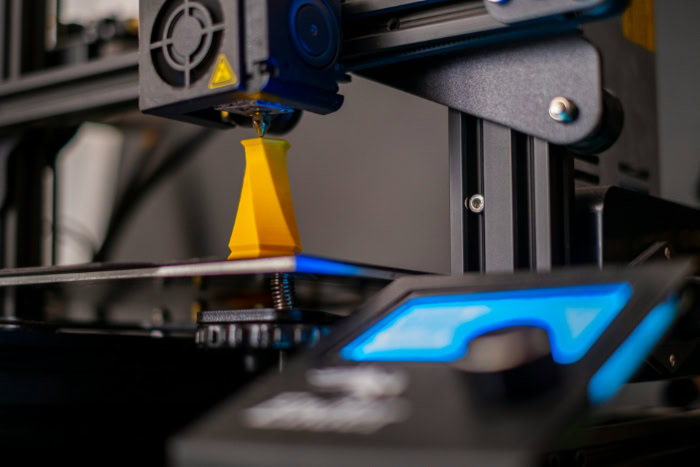
While all additive manufacturing builds objects in layers, the mechanical methods used to construct those parts vary significantly. The industry relies heavily on three distinct technologies, each operating on a completely different physical principle to bind materials together.
Fused Deposition Modeling (FDM) / Fused Filament Fabrication (FFF)
Fused Deposition Modeling works by pulling a solid plastic filament through a heated nozzle. The nozzle melts the plastic and extrudes it along a programmed path, layer by layer, onto a build plate where it quickly cools and solidifies.
FDM is highly accessible and relatively inexpensive. Its primary use cases include rapid prototyping, educational projects in schools, and creating functional parts for hobbyists.
Stereolithography (SLA)
Stereolithography belongs to a category called vat photopolymerization. Instead of melting plastic, an SLA printer holds a vat of liquid resin.
A UV laser or light projector flashes specific patterns into the liquid, curing the resin into solid plastic layer by layer. Because light can be controlled with immense precision, SLA excels at producing highly detailed models.
Common applications include intricate jewelry design, custom dental appliances, and models featuring complex geometries.
Selective Laser Sintering (SLS)
Selective Laser Sintering uses a high-power laser to fuse small particles of polymer powder together into a solid structure. A roller spreads a thin layer of powder across a bed, the laser traces the cross-section of the part to melt the particles together, and the bed lowers to make room for the next layer of powder.
The unsintered powder acts as its own support structure, allowing for complex geometries without the need to print breakaway supports. This technology is widely used for creating strong, functional industrial parts and executing small batch manufacturing runs.
Common Materials Used in 3D Printing
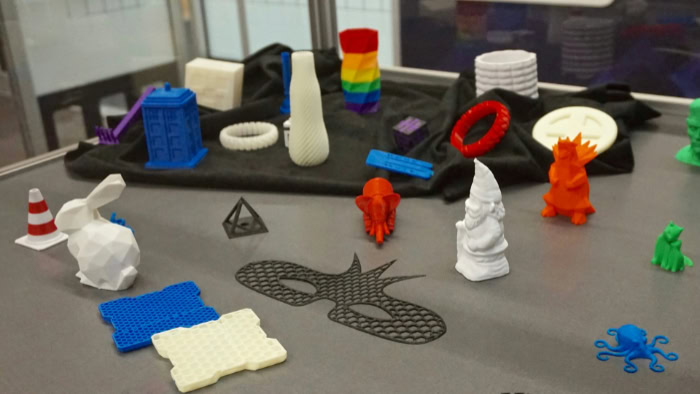
The exact materials used in additive manufacturing are specifically formulated for the technology printing them. From standard plastics to heavy metals, the science behind these mediums dictates the strength, flexibility, and overall utility of the final part.
Thermoplastic Filaments
Filament-based printers predominantly use thermoplastics. Polylactic Acid (PLA) is biodegradable, user-friendly, and ideal for beginners due to its low melting point and low tendency to warp.
Acrylonitrile Butadiene Styrene (ABS) offers higher durability and heat resistance, making it suitable for functional parts, though it requires a heated enclosure and is more difficult to print successfully. Specialty filaments expand these capabilities further, offering options like PETG for chemical resistance, Nylon for mechanical wear resistance, and TPU for flexible, rubber-like properties.
Liquid Photopolymer Resins
Resin-based printers require photopolymers that react to specific wavelengths of light. Standard resins are generally used for high-detail cosmetic models that do not need to endure significant mechanical stress.
Engineers and product designers utilize engineering-grade resins for functional testing. These specialized formulations can mimic the properties of traditional plastics, offering tough, highly flexible, or high-temperature resistant variations for rigorous applications.
Metal and Industrial Powders
Industrial machines rely heavily on powdered mediums. Direct metal laser sintering materials allow manufacturers to print functional metal components using powders of titanium, stainless steel, and aluminum.
These metals are crucial for aerospace and medical applications. Polymer powders also play a significant role in powder-bed systems.
Nylon and Polyamide powders are widely favored for creating durable plastic components that possess excellent mechanical properties.
Benefits and Limitations of 3D Printing

Additive manufacturing provides distinct advantages for modern production while simultaneously presenting specific engineering and financial hurdles. An objective evaluation reveals exactly where the technology excels and where it currently falls short.
Advantages of 3D Printing
Rapid iteration stands out as a primary advantage. Designers possess the ability to modify a digital file and reprint a physical prototype within hours, drastically reducing the time it takes to refine a product.
Additive processes also excel at design complexity. Machines can easily fabricate complex internal channels, intricate organic shapes, and lightweight lattice structures that are mathematically impossible to achieve with traditional cutting tools.
Furthermore, the technology offers superior resource efficiency by drastically reducing material waste compared to carving or machining processes.
Current Technological Limitations
Despite its capabilities, additive manufacturing faces notable physical and logistical constraints. The layer-by-layer process often results in anisotropy and structural weakness.
Physical properties can differ based on layer orientation, making some parts prone to splitting along the layer lines if placed under specific directional stress. Speed and scale constraints also limit its utility for mass production.
The slower cycle times of printing cannot compete with the sheer volume and speed of injection molding. Finally, users face high initial setup and material costs, as industrial-grade machinery and specialized proprietary materials pose a significant financial barrier.
Conclusion
Additive manufacturing successfully bridges the gap between software files and physical objects by systematically depositing plastics, resins, or metal powders layer by layer. Technologies like FDM, SLA, and SLS offer distinct advantages for rapid prototyping and producing complex geometries that traditional cutting tools cannot replicate.
However, the technology continues to operate with specific speed and volume limitations. Because it cannot match the sheer output velocity and scale of injection molding for mass production, 3D printing serves best as a highly capable complementary tool alongside traditional manufacturing methods rather than a total replacement.
Frequently Asked Questions
What is the cheapest way to start 3D printing at home?
Buying a basic Fused Deposition Modeling printer and a spool of PLA filament offers the most affordable entry point. These entry-level machines cost a fraction of industrial equipment and run on inexpensive, beginner-friendly plastics. This setup allows you to easily produce functional hobbyist parts and prototypes.
How long does it usually take to print an object?
Print times range from less than an hour for tiny miniatures to several days for large, complex engineering parts. The total duration depends heavily on your chosen layer height, infill density, and the overall volume of the design. High-resolution prints naturally require much more time to finish.
Can 3D printers make items out of metal?
Yes, specialized industrial machines can print highly durable parts using fine metal powders like titanium, aluminum, and stainless steel. The process utilizes a high-power laser to melt and fuse the metal particles together layer by layer. This technology is heavily utilized in aerospace and medical component manufacturing.
Why do printed parts sometimes break easily?
Parts often fail because the layer-by-layer construction process inherently creates directional weakness along the print lines. If a part bends or experiences heavy stress parallel to those horizontal layers, it becomes highly prone to snapping. Designers must carefully orient their models in the slicing software to prevent structural failure.
Is 3D printing better than injection molding?
Neither method is universally superior, as they serve entirely different production goals. Additive manufacturing excels at rapid prototyping and low-volume custom parts without requiring expensive tooling. However, injection molding remains vastly superior for producing thousands of identical plastic parts quickly and economically on a commercial scale.
About the Author: Julio Caesar


