
What Is DDR5 RAM? Speed, Specs, and Compatibility

Modern processors are voracious data eaters that require equally capable hardware to reach their full potential. DDR5, formally known as Double Data Rate 5 Synchronous Dynamic Random-Access Memory, arrives as the definitive answer to these growing performance demands.
While DDR4 served the industry well for years, it eventually hit a ceiling in bandwidth and efficiency that could no longer support the newest multi-core CPUs. This update represents a fundamental change to the architecture of system memory rather than a simple speed boost.
Basics of DDR5 Technology
The Joint Electron Device Engineering Council, commonly known as JEDEC, establishes the open standards that drive the microelectronics industry. They officially ratified the DDR5 specification to address the bandwidth limitations inherent in older memory generations.
As processors added more cores and software demanded higher throughput, the previous standard struggled to feed data to the CPU fast enough. DDR5 represents a comprehensive update to these specifications, designed to scale computing performance for the next decade.
It is not merely a faster version of what came before but a rethinking of how system memory interacts with the rest of the computer.
Defining the Standard
JEDEC released the final DDR5 specification to provide a clear roadmap for memory manufacturers and motherboard designers. This standard defines precise electrical and physical parameters to ensure that a module from one brand works seamlessly with hardware from another.
The primary motivation behind this release was the need to feed modern multi-core processors which often sat idle while waiting for data from slower DDR4 memory. By strictly defining these parameters, JEDEC ensured that the industry could transition collectively toward higher bandwidths and better channel efficiency without compatibility nightmares.
Double Data Rate Concept
The term “Double Data Rate” refers to a method of transmitting data that maximizes efficiency within a single clock cycle. In traditional digital signaling, data transfer typically occurs only when the clock signal ticks up (the rising edge).
DDR technology improved this by transferring data on both the rising and the falling edges of the clock signal, effectively doubling the amount of information sent without increasing the clock speed itself. DDR5 takes this fundamental concept and optimizes the underlying timing and signaling margins.
This allows the memory to maintain stability at significantly higher frequencies than were previously possible, ensuring the data stream remains consistent even under heavy loads.
Physical Form Factor
At a glance, a stick of DDR5 RAM appears nearly identical to its predecessors. It uses the familiar DIMM (Dual In-line Memory Module) layout consisting of a rectangular circuit board with connection pins along the bottom edge.
However, you cannot install a DDR5 module into a DDR4 slot. The physical alignment notch on the bottom of the stick has been moved to a slightly different position.
This physical change is a deliberate safety feature designed to prevent users from inserting incompatible memory into a motherboard, which could cause electrical damage to both the slot and the module due to voltage differences.
Architectural Innovations

Engineers introduced several substantial design changes to the memory module architecture to achieve higher speeds and capacities. These innovations focus on independence and efficiency, moving certain control functions from the motherboard directly onto the memory stick itself.
This shift allows the memory to operate with greater autonomy and stability, reducing the noise and interference that often plagued high-speed operations in previous generations.
Power Management Integrated Circuit
One of the most significant physical changes in DDR5 is the relocation of power management. In previous generations, the motherboard was responsible for regulating voltage and sending it to the memory slots.
With DDR5, this duty moves to the module itself via a Power Management Integrated Circuit (PMIC). Placing the power regulation directly on the PCB (Printed Circuit Board) of the RAM stick simplifies the motherboard design and provides cleaner, more consistent power delivery.
This proximity reduces signal noise and improves signal integrity, which is essential for maintaining stability as speeds increase.
On-Die Error Correction Code
As memory chips become denser, the individual cells that hold data get smaller and closer together, making them more susceptible to bit flips or data corruption. To assume control over this risk, DDR5 introduces On-Die ECC.
This feature allows the memory chip to detect and correct single-bit errors internally before the data is even sent to the CPU. It is important to distinguish this from the “side-band” ECC found in server-grade hardware, which protects data while it is in transit between the RAM and the processor.
On-Die ECC specifically targets reliability within the memory chip itself, ensuring that the push for higher density does not come at the cost of data stability.
Dual 32-Bit Sub-Channels
DDR5 fundamentally changes how the processor accesses memory on a single stick. While DDR4 featured a single 64-bit wide channel per DIMM, DDR5 splits this into two independent 32-bit sub-channels.
This structural change allows the memory controller to send two separate data requests to the same stick of RAM simultaneously. By servicing two operations at once, the memory improves its overall efficiency and lowers latency in real-world applications.
This splitting of the channels effectively turns a standard dual-channel system setup (two sticks) into a four-channel configuration, drastically improving the flow of data.
Performance Metrics and Specifications

The theoretical improvements in architecture translate directly into measurable gains in speed and capacity. These performance metrics define the tangible upgrade users experience when moving to the new platform.
From higher transfer rates to larger storage densities, DDR5 pushes the ceiling of what system memory can handle, providing the necessary headroom for future software and game development.
Frequency and Bandwidth
The most advertised metric for any memory standard is its speed, measured in megatransfers per second (MT/s). DDR5 launches with a base speed of 4800 MT/s, which sits near the absolute maximum overclocked limits of the previous generation.
This baseline is just the starting point. Manufacturers are already producing kits that run at 6000 MT/s and 7200 MT/s, with future projections aiming for speeds well beyond 8400 MT/s.
This massive increase in bandwidth ensures that the CPU receives data faster, reducing bottlenecks in high-performance tasks like gaming or video rendering.
Capacity and Density
Beyond speed, DDR5 enables a massive leap in how much memory a single system can hold. The standard allows for much denser memory dies, meaning manufacturers can pack more gigabytes onto a single stick.
While 16GB was a common upper limit for standard consumer modules previously, DDR5 normalizes 32GB and 64GB single modules. In the future, we will likely see single consumer sticks with capacities of 128GB.
This density is vital for workstations and heavy multitasking environments where running out of memory causes the system to slow down significantly.
Operating Voltage
Despite the increase in performance, DDR5 is designed to be more energy-efficient. The standard operating voltage has been reduced from 1.2V in DDR4 to 1.1V in DDR5.
While this drop might seem negligible, it represents a significant improvement in efficiency, roughly 20 percent, when calculated across the entire module. This lower voltage requirement helps offset the heat generated by the PMIC and the higher operating frequencies.
Consequently, the memory delivers far greater performance per watt, making it a smarter choice for energy-conscious builds and high-density servers.
Hardware Compatibility and Requirements
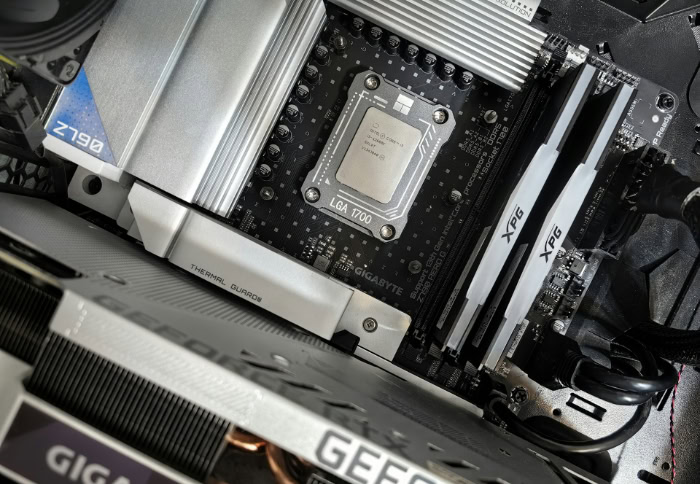
Adopting the latest memory standard involves more than simply purchasing new RAM sticks and plugging them into an existing computer. DDR5 represents a platform-level shift that necessitates a synchronized upgrade of the central processor and the motherboard.
Because the architectural changes are so fundamental, components designed for the previous generation are physically and electrically incompatible with this new technology.
Motherboard Dependencies
The most immediate barrier to entry is the physical interface on the motherboard. Although DDR5 DIMMs share the same 288-pin count as DDR4, the alignment notch on the bottom edge is located in a different position.
This physical keying prevents users from accidentally inserting a DDR5 stick into an older slot, which would cause immediate electrical damage. Consequently, users must purchase a motherboard specifically engineered for the new standard.
This includes boards based on Intel's 600 and 700 series chipsets, such as the Z690 and Z790, as well as AMD's 600 series platform, including the X670 and B650 chipsets. It is critical to note that while some Intel chipsets support both memory generations, the motherboards themselves are exclusive; a specific board will support either DDR4 or DDR5, never both simultaneously.
CPU Support
The central processing unit dictates the memory controller capabilities of the system. Support for DDR5 began with Intel's 12th Generation Core processors, codenamed “Alder Lake,” and continued through subsequent generations.
Intel adopted a transitional approach, designing their memory controllers to communicate with both DDR4 and DDR5. This allowed users to choose between retaining older memory or upgrading to the new standard depending on their budget and motherboard choice.
In contrast, AMD made a decisive switch with their Ryzen 7000 series processors on the “Zen 4” architecture. These chips function exclusively with DDR5, meaning anyone upgrading to this AMD platform or its successors must adopt the new memory standard immediately, as there is no backward compatibility with DDR4.
Cooling Considerations
Thermal management has taken on a new level of importance with this generation. In previous standards, memory modules generated relatively little heat, and heat spreaders were often cosmetic.
However, with the integration of the Power Management Integrated Circuit (PMIC) directly onto the module and the push for higher frequencies, DDR5 sticks can reach higher operating temperatures. If the memory gets too hot, it may throttle performance or cause system instability to prevent damage.
High-performance DDR5 kits now rely on robust metal heat spreaders to dissipate thermal energy effectively. Furthermore, builders must ensure their PC case provides adequate airflow over the memory slots, a region that was often overlooked in older system designs.
Real-World Applications and Benefits

While synthetic benchmarks and technical specifications provide objective data, the true value of DDR5 is found in how it enhances the daily computing experience. The massive increase in bandwidth and efficiency translates into tangible improvements across various workloads, from high-fidelity gaming to professional content creation.
Impact on Gaming
For gamers, the benefits of DDR5 are subtle but significant, particularly regarding frame rate stability. While average frame rates might see modest gains in some titles, the primary improvement lies in raising the “1% low” framerates.
This metric refers to the lowest dips in performance that occur during intense action sequences or when loading new areas. Higher bandwidth ensures the CPU can access game assets faster, reducing the stuttering that happens when the processor is waiting for data.
This is especially relevant in modern open-world games and titles with complex physics, where the CPU is heavily utilized. Additionally, as game developers begin to optimize engines for the new standard, the ability to stream high-quality textures and assets without hitching will become a standard requirement for high-end gaming.
Content Creation and Productivity
Professionals who work with large files or complex datasets stand to gain the most from the switch. Tasks such as video editing, 3D rendering, and file compression are notoriously bandwidth-hungry.
DDR5 allows these applications to move massive amounts of data between the RAM and the CPU with much less friction. For a video editor scrubbing through a 4K or 8K timeline, this results in smoother playback and faster application of effects.
Similarly, 3D artists benefit from the increased density of the modules. Being able to install 64GB or 128GB of high-speed memory allows for the manipulation of incredibly detailed models and scenes without the system swapping data to the slower storage drive, drastically speeding up the creative workflow.
System Responsiveness
Beyond specialized tasks, the upgrade contributes to the general “snappiness” of the operating system. Modern operating systems and background applications constantly access memory for small, random bits of data.
The dual-channel architecture per stick and improved burst length of DDR5 allow it to handle these simultaneous requests more efficiently than its predecessor. When paired with a high-speed NVMe solid-state drive, this reduces the latency in opening applications, switching between active windows, and waking the computer from sleep.
While this improvement might be harder to quantify than a benchmark score, it results in a computing environment that feels more fluid and immediate during everyday use.
Conclusion
DDR5 stands as a definitive leap forward rather than a simple iterative update. It is built upon three primary improvements: significantly higher speeds, vastly increased memory capacity, and superior power efficiency through on-module regulation.
These advancements collectively remove the bandwidth limitations that were beginning to stifle the performance of modern high-core-count processors. By restructuring how memory handles data, the industry has created a standard capable of supporting the computational demands of the next decade.
Adopting this technology requires a commitment to a new ecosystem. Since the modules are physically and electrically different from previous generations, users must invest in a modern motherboard and a compatible processor to utilize them.
While this makes the entry price higher than simply adding more RAM to an old system, it is a necessary step for anyone building a high-performance machine today. As operating systems and gaming engines evolve to demand more bandwidth, the gap between the old and new standards will widen.
Transitioning to DDR5 now ensures your system remains ready for these future requirements, securing a level of performance that will keep the computer relevant and responsive for years to come.
About the Author: Julio Caesar


