
What Is MicroLED? The End of Screen Burn-In

You stare at screens for the vast majority of your waking hours, meaning display quality directly impacts your daily productivity, eye comfort, and entertainment. The technology industry is actively racing to perfect the ultimate visual experience, and the definitive prize at the finish line is MicroLED.
This emerging innovation is an inorganic, self-emissive display format utilizing millions of microscopic light emitting diodes to produce images. Because each microscopic subpixel generates its own independent light and color, the architecture eliminates the need for bulky backlights or degradable organic materials.
Electronics manufacturers are currently pouring billions of dollars into its development because the format promises unparalleled brightness, perfect contrast, and extreme durability. Seeing exactly how this new hardware outshines current standards and recognizing the massive manufacturing hurdles keeping it from immediate mass production reveals exactly what to expect from the next generation of consumer devices.
Key Takeaways
- MicroLED uses microscopic, inorganic diodes that produce their own light and color, completely removing the need for traditional LCD backlights and color filters.
- The technology strictly avoids the permanent screen burn-in and physical pixel decay that eventually ruin organic OLED displays over time.
- Individual subpixels completely shut off to create true blacks and infinite contrast, while easily reaching extreme peak brightness levels for perfect outdoor visibility.
- Manufacturing costs remain exceptionally high due to the mechanical difficulty of transferring millions of microscopic diodes onto a single display backplane without alignment errors.
- Current commercial availability is heavily restricted to ultra-premium modular video walls, high-end smartwatches, and specialized automotive displays.
The Core Technology and Mechanics of MicroLED
The foundation of this new display technology relies on completely reengineering how pixels generate visible images. Rather than updating older systems with incremental improvements, engineers have built an entirely new architecture from the ground up using advanced inorganic materials.
Defining “Micro” in MicroLED
To appreciate the hardware, one must understand the absolute physical scale of the components. A single MicroLED is incredibly small, typically measuring under 100 micrometers across.
This makes them significantly smaller than a grain of sand and only a fraction of the size of standard commercial light emitting diodes. Furthermore, the manufacturing process shifts away from the organic compounds found in recent display tech and instead utilizes inorganic materials like gallium nitride.
This shift in raw materials fundamentally changes how the hardware behaves under electrical current.
The Self-Emissive Display Architecture
The system operates on a self-emissive architecture. This means each microscopic subpixel functions independently, generating its own specific red, green, or blue light.
Because the pixels create their own color and illumination, the design entirely eliminates the need for the traditional liquid crystal layer and the color filters found in older screens. To manage this vast array of tiny lights, the display relies on an advanced backplane, usually constructed with Thin-Film Transistor (TFT) or Complementary Metal-Oxide-Semiconductor (CMOS) technology.
This backplane acts as the brain of the screen, precisely driving and controlling the electrical current to illuminate or darken millions of individual pixels simultaneously.
MicroLED vs. Competing Technologies

Consumers often confuse emerging screen technologies due to similar acronyms and overlapping marketing terminology. Comparing the hardware directly against established industry standards clarifies exactly what makes this format distinct and structurally superior.
MicroLED vs. OLED
Both display types are self-emissive, but their chemical composition creates a massive difference in performance. OLED panels rely on organic carbon-based compounds to produce light. Over time, these organic materials naturally degrade, leading to pixel decay and permanent screen damage.
Because MicroLED utilizes inorganic semiconductor materials, it avoids the structural degradation completely, providing a much longer functional lifespan without the gradual loss of brightness or color accuracy.
MicroLED vs. Mini-LED
The naming conventions routinely cause confusion in the consumer market. Mini-LED is not a standalone display technology. It is simply an advanced backlighting system placed behind a standard LCD screen.
It uses arrays of tiny lights grouped into local dimming zones to improve contrast. MicroLED is fundamentally different because it is entirely pixel-emissive.
Instead of dimming a broad zone of backlight behind an LCD, it offers true pixel-level dimming by simply turning individual subpixels off completely.
MicroLED vs. QLED and Standard LCDs
Standard LCDs and their Quantum Dot variants (QLED) both require a continuous backlight shining through a layer of liquid crystals that act as microscopic shutters. These shutters physically block or allow light to pass through color filters to create an image.
MicroLED bypasses this bulky methodology entirely. By removing the need for a continuous light source and liquid crystal shuttering, the hardware becomes significantly thinner, more efficient, and structurally simpler.
Performance Advantages and Practical Benefits

Transitioning to an inorganic self-emissive architecture provides immediate, highly visible improvements to the user experience. The structural changes result in screens that perform significantly better in extreme environmental conditions while drawing far less power.
Unmatched Brightness and Contrast
Because the microscopic diodes are constructed from durable inorganic materials, they can be driven with much higher electrical currents. This allows them to achieve incredibly high peak luminance, measured in nits, making the screens exceptionally visible outdoors in direct, harsh sunlight.
Simultaneously, the displays achieve true black levels and infinite contrast ratios. Since each pixel operates independently, the screen simply shuts off power to areas that need to be black, resulting in absolute darkness right next to blindingly bright highlights.
Lifespan, Reliability, and Burn-in Resistance
The stability of inorganic materials allows the hardware to withstand prolonged, high-brightness usage without breaking down. The most significant benefit of this stability is the complete elimination of burn-in risk.
Burn-in permanently scars organic self-emissive displays when static images remain on the screen for too long, a problem that simply does not affect inorganic components. The display maintains uniform brightness and color consistency for years, even under heavy, continuous operation.
Energy Efficiency and Refresh Rates
Removing the backlight and physical liquid crystal layers creates massive power consumption advantages over LCD and OLED counterparts. The screen only draws power for the exact pixels that require illumination, heavily reducing energy drain.
Additionally, because there are no physical liquid crystals slowly changing state, the pixel response times are incredibly fast. The pixels change color and brightness in nanoseconds, effectively eliminating motion blur during fast-paced video playback or high-speed gaming.
Engineering Bottlenecks and Manufacturing Challenges
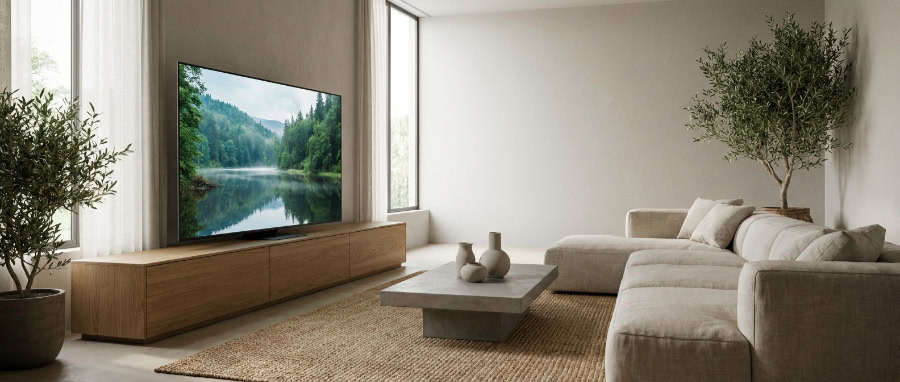
Translating a brilliant theoretical concept into a commercially viable product requires overcoming severe manufacturing hurdles. Building screens with millions of microscopic components introduces complex assembly problems that the electronics industry is currently striving to resolve.
The Mass Transfer Process
The single greatest hurdle in manufacturing is the mass transfer process. The microscopic LEDs are initially grown on semiconductor wafers and must be physically relocated to the display backplane.
A 4K television requires moving nearly 25 million individual subpixels. This process demands astonishingly high placement speed, exact precision, and microscopic alignment tolerances.
If the transfer machinery is even slightly misaligned, the entire display becomes unusable.
Defect Management and Yield Rates
With millions of subpixels being transferred, occasional failures during assembly are inevitable. The financial and practical impact of these sub-pixel failures heavily damages factory yield rates.
Creating reliable methodologies for identifying dead pixels, repairing them, and replacing faulty microscopic diodes without destroying the surrounding components is incredibly difficult and significantly drives up production costs.
Color Conversion and Material Heterogeneity
Creating pure red, green, and blue light requires growing different colored LEDs on completely different substrate materials. Combining these heterogeneous materials onto a single display backplane creates severe physical challenges.
To solve this, engineers are developing alternative solutions, such as using identical blue or ultraviolet MicroLEDs across the entire board and applying precise Quantum Dot color conversion layers over them to shift the light into red and green where necessary.
Current Commercial Status and Applications

Despite the immense manufacturing difficulties, early versions of the technology are currently available in select markets. Initial adoption is heavily restricted to specific commercial applications and premium devices where high production costs are acceptable.
Ultra-Premium, Large-Format Displays
Currently, the most prominent use of the technology is in massive, modular video walls. Because manufacturing large, seamless panels is difficult, companies create smaller squares and tile them together.
These ultra-premium, large-format displays are typically reserved for commercial installations, high-end retail environments, and luxury home cinemas where budgets are practically unlimited.
Wearables and Microdisplays
At the opposite end of the size spectrum, manufacturers are actively adapting the hardware for smartwatches and wearables. The technical suitability is obvious, as smartwatches desperately require the outdoor legibility and power savings that the format provides.
Furthermore, rapid development is occurring in close-eye microdisplays. Virtual Reality and Augmented Reality glasses benefit heavily from the high pixel density and intense brightness required to project images clearly into the human eye.
Automotive and Specialized Integrations
The modern automotive industry is aggressively pursuing the technology for passenger vehicles. The extreme brightness makes it perfect for Head-Up Displays that project dashboard information directly onto the windshield in broad daylight.
Additionally, the ability to build screens without backlights allows engineers to create highly transparent panels, integrating active data feeds directly into vehicle windows and digital instrument clusters.
Conclusion
MicroLED fundamentally advances modern display capabilities by blending the absolute best attributes of existing hardware formats. By relying on an architecture of self-emissive pixels, it achieves perfect contrast and vibrant color reproduction without the risk of pixel decay associated with organic materials.
The shift to durable inorganic compounds ensures these panels can push extreme brightness levels and last significantly longer under heavy use.
However, the immense difficulty of transferring millions of microscopic diodes with perfect precision continues to inflate production costs. Ultimately, resolving these persistent manufacturing bottlenecks and improving factory yield rates remains the defining factor for bringing this premium hardware out of luxury niches and into widespread consumer markets.
Frequently Asked Questions
What is the main difference between OLED and MicroLED?
The main difference is the specific chemical materials used to build the pixels. OLED uses organic carbon-based compounds that naturally degrade over time and suffer from permanent screen burn-in. MicroLED utilizes durable inorganic materials like gallium nitride to prevent degradation and vastly improve overall display lifespan.
Is Mini-LED the same thing as MicroLED?
These two terms represent completely different display technologies. Mini-LED is simply a modern backlighting system placed behind a standard LCD screen to improve contrast. MicroLED is a fully self-emissive format where every individual microscopic pixel generates its own independent light and color.
Will MicroLED screens get burn-in from video games?
You do not have to worry about permanent burn-in on these specialized displays. Because the microscopic diodes are constructed from stable inorganic materials, static images and heavy video game interfaces cannot permanently scar the screen. The hardware maintains uniform brightness and consistent color accuracy for years.
Why are MicroLED televisions so incredibly expensive right now?
The manufacturing process is incredibly slow and highly prone to expensive errors. Building a single 4K display requires factory machines to flawlessly transfer almost 25 million microscopic diodes onto a circuit board. Any slight misalignment creates dead pixels that ruin the panel and destroy factory yields.
Where can I actually buy a MicroLED screen right now?
Initial commercial adoption is heavily restricted to luxury products and specialized industrial applications. You can currently find the technology in massive custom video walls for high-end home theaters, ultra-premium smartwatches, and advanced automotive displays designed to project information onto passenger vehicle windshields.
About the Author: Julio Caesar


