
How Do Bluetooth Trackers Work? The Tech Explained

Misplacing your wallet or daily essentials causes instant panic, often forcing you to frantically retrace your steps to avoid a ruined schedule. Bluetooth trackers eliminate this daily anxiety by transforming ordinary objects into easily locatable smart items. Originally introduced over a decade ago as simple proximity beacons, these coin-sized devices quickly surged in popularity across consumer markets worldwide.
They function by emitting efficient radio frequencies that ping nearby mobile hardware to securely update their exact coordinates, helping owners effortlessly locate their lost belongings.
Key Takeaways
- Bluetooth Low Energy trackers operate for over a year on a single coin battery by utilizing intermittent, low-power radio broadcasts.
- These devices lack built-in GPS chips and instead rely entirely on the location data provided by paired or passing smartphones.
- Ultra-Wideband technology measures radio flight times to provide precise, inch-by-inch directional arrows when searching for nearby items.
- Vast crowdsourced networks securely update a lost item’s location using the internet connections of nearby anonymous smartphones without exposing personal data.
- Modern mobile operating systems include universal detection alerts that warn users if an unrecognized tracker follows them for an extended period.
Fundamentals of Bluetooth Low Energy (BLE)
The foundation of modern tracking devices relies entirely on a highly optimized wireless communication protocol. Bluetooth Low Energy operates differently than older wireless standards by prioritizing efficiency over high-capacity data transfers. This design allows manufacturers to create small, lightweight beacons that do not require frequent charging.
Signal Emission and Power Efficiency
The Bluetooth Low Energy protocol is a wireless personal area network technology designed specifically for devices that require minimal power consumption. Unlike standard Bluetooth connections that maintain a continuous link to stream music or handle phone calls, BLE operates in sleep mode for the majority of the time. It wakes up only for fractions of a second to broadcast short packets of data before immediately returning to a low-power state.
This intermittent broadcasting method conserves significant amounts of energy. Consequently, the typical battery life cycle for a tracker extends from several months to over a year on a single standard coin cell battery.
Efficient power management ensures the device remains active and ready to ping your smartphone without needing constant recharging.
Connection Limits and Signal Range
Wireless signals face strict physical boundaries based on both their technical specifications and the surrounding environment. The maximum theoretical range of a BLE signal can reach up to 300 feet (about 90 meters) in an open field with a clear line of sight.
However, practical ranges usually fall between 100 and 200 feet (about 30 to 60 meters) during daily use. Environmental factors heavily reduce signal propagation.
Thick walls, metal appliances, and water absorb or reflect radio frequencies, which drastically shrinks the effective distance. A tracker left inside a metal locker or dropped into a dense bush will struggle to broadcast its location as effectively as one left on an open table.
Comparison with Standard Bluetooth
Standard Bluetooth and BLE serve completely different purposes despite sharing similar names. Classic Bluetooth maintains constant communication streams to handle high data transfer rates, making it perfect for wireless headphones or transferring files.
In contrast, BLE transmits tiny amounts of data at much lower transfer rates. By utilizing different transmission frequency patterns and smaller data packets, BLE avoids the rapid battery drain associated with continuous audio streaming.
This specific optimization makes BLE perfect for localized proximity detection, where a device only needs to announce its presence rather than transmit large volumes of complex data.
Mechanisms of Location Determination

Finding a misplaced item requires a clever combination of localized radio signals and external processing power. Since tiny tracking beacons cannot perform complex geographical calculations on their own, they rely heavily on the hardware capabilities of paired smartphones.
The Role of Smartphone GPS
Bluetooth trackers do not contain integrated GPS chips because actual satellite tracking hardware requires substantial power, large antennas, and complex circuitry. Instead, these devices rely on the paired smartphone to provide location data.
When your phone connects to the tracker via Bluetooth, an application runs quietly in the background to monitor the connection status. If you leave your item behind and the connection breaks, the application simply records the exact GPS coordinates of your phone at that specific moment.
When you check the app to find your missing item, you are actually looking at the last known location where your phone and the tracker were still communicating.
Signal Strength Indicators
Once you return to the last known location, finding the exact spot involves interpreting the Received Signal Strength Indicator. RSSI provides a numerical measurement of how well your phone can hear the broadcasted beacon.
Applications translate this signal strength into a visual distance estimate, often displaying a warming or cooling circle to guide you closer. However, RSSI-based distance estimation carries inherent limitations.
Because radio waves bounce off walls or get absorbed by furniture, a weak signal might simply mean the tracker is buried under a heavy couch pillow rather than being far away. This makes RSSI a useful but occasionally imprecise tool for pinpointing items.
Precision Directional Guidance via Ultra-Wideband (UWB)
Modern premium trackers incorporate Ultra-Wideband technology to overcome the limitations of basic signal strength estimation. UWB operates at very high frequencies and emits short radio pulses to communicate with compatible smartphones.
By measuring the exact flight-time of these radio pulses as they travel between the phone and the tracker, the system can calculate distances with incredible accuracy. This technology enables precise, inch-by-inch directional assistance.
Supported smartphones can display an on-screen arrow pointing directly toward the hidden item while updating the exact distance down to the centimeter, making recovery significantly faster.
Architecture of Crowdsourced Networks
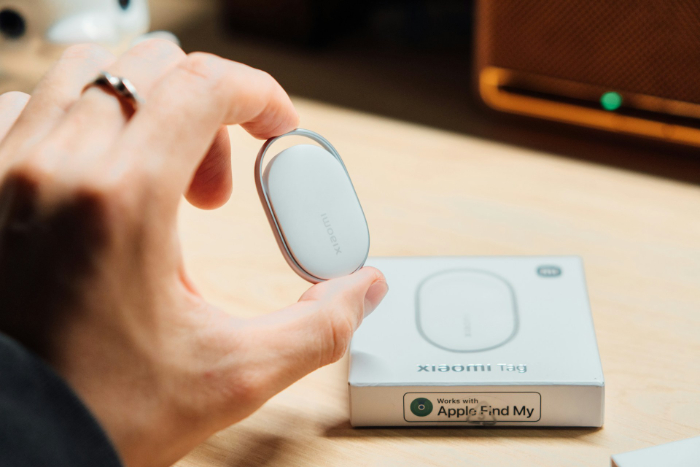
Losing an item outside of your immediate vicinity requires a broader search strategy. To solve this problem, manufacturers developed vast interconnected networks that utilize millions of everyday devices to scan for lost hardware anonymously.
Network Node Operations
When a tracker goes out of range from its owner, it continues to broadcast its unique Bluetooth signal. Third-party smart devices belonging to complete strangers act as anonymous detectors to pick up these signals.
If a person walks past your lost item, their smartphone will detect the broadcasted beacon in the background. The finder’s phone automatically logs its current GPS coordinates and quietly uploads that location data to the manufacturer’s central servers.
This entire process happens automatically without interrupting the passerby or notifying them that they just helped locate a missing object.
Secure and Anonymous Data Transmission
Sending location data through strangers’ phones requires strict privacy protocols. The location data is sent to the cloud utilizing end-to-end encryption protocols to protect owner privacy.
The encryption ensures that only the registered owner possesses the digital authorization required to decrypt and view the location on a map. Neither the manufacturer nor the helpful passerby can access the tracker’s location or the owner’s identity.
Furthermore, the helper’s identity remains completely hidden from the owner, ensuring secure and anonymous data transmission for everyone participating in the network.
Network Range Extension
The effectiveness of remote item recovery depends entirely on the size of the community network. A larger user base means more passing phones are available to detect a lost beacon.
For example, the Apple Find My network utilizes hundreds of millions of active iOS devices worldwide, creating a dense web of anonymous detectors that can quickly locate an item dropped in a busy city. In contrast, independent vendor networks like the Tile Network rely on users who have specifically installed their application.
While still effective, smaller network sizes can lead to slower recovery times in less populated areas compared to native operating system networks.
Comparison of Bluetooth and GPS Trackers
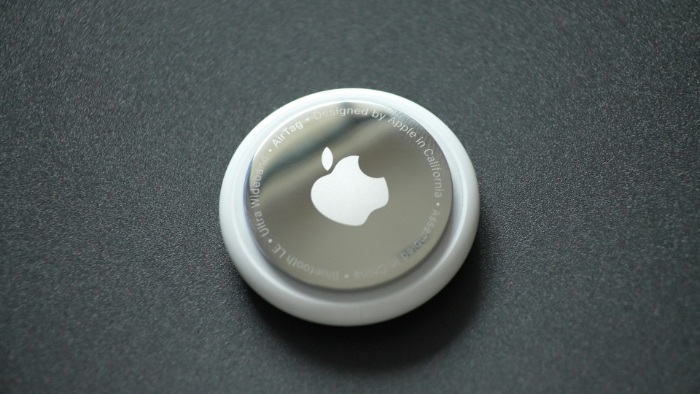
Selecting the appropriate hardware for securing personal property depends on recognizing the fundamental differences between local proximity alerts and global satellite positioning. Each technology addresses different needs based on power availability and operational range.
Technical Differences and Power Consumption
GPS trackers require robust internal hardware to function. They must contain heavy batteries, cellular antennas, and complex circuitry to communicate directly with satellites in orbit.
This heavy hardware demand results in large devices that consume massive amounts of energy. Consequently, the power consumption contrast is stark; an active GPS tracker typically drains its battery in a matter of days and requires frequent recharging.
Conversely, BLE trackers require only a tiny antenna and a basic microchip, allowing them to operate on a single coin battery for years without maintenance.
Subscription Costs and Network Dependencies
Active global positioning relies on cellular networks to transmit location data back to the user. This cellular connection requirement means GPS trackers operate essentially as basic mobile phones, necessitating active SIM cards and continuous data plans.
Users must pay monthly subscription fees to maintain the network dependency. Standard Bluetooth trackers lack this cellular hardware entirely.
Because they piggyback on the internet connection of passing smartphones, they completely bypass the need for direct cellular data. This results in a straightforward purchase with no ongoing monthly fee structures for the basic tracking functionality.
Ideal Use Cases for Each Technology
Because of their compact size and lack of subscription fees, BLE devices are best suited for everyday personal items. Scenarios involving daily carry items, wallets, household luggage, and easily misplaced fobs benefit greatly from localized tracking and crowdsourced networks.
On the other hand, active GPS devices provide continuous, real-time location updates regardless of who is nearby. This makes active GPS the superior choice for tracking stolen vehicles, monitoring cargo shipments, or facilitating long-distance wilderness retrieval where no passing smartphones will be available to act as anonymous detectors.
Security Measures and Privacy Protections

The ability to track physical objects inevitably introduces the risk of individuals using the technology for malicious purposes. To combat unauthorized surveillance, manufacturers and software developers implement strict security protocols to alert potential victims.
Detection of Unwanted Devices
If someone slips a tracker into your bag without your knowledge, modern mobile operating systems will intervene. Background security features constantly scan for moving, unrecognized trackers that remain consistently near your phone.
If an unknown device follows you for a certain period while separated from its registered owner, your smartphone will identify the threat and display a proactive warning notification. Additionally, manufacturers program the hardware to trigger audible alerts on unknown devices.
If a tracker remains separated from its owner for an extended duration, it will begin to beep loudly to reveal its hiding spot to anyone nearby.
Cross-Platform Compatibility and Alerts
Initially, unwanted tracking alerts only worked within closed ecosystems, leaving users of competing operating systems vulnerable. Recognizing the safety risk, major technology companies established industry-wide standards for alert sharing between Android and iOS.
This collaboration ensures that an iPhone user will be warned about an unrecognized Android-compatible tracker, and vice versa. Universal detection tools and applications are now integrated directly into system updates, providing seamless cross-platform compatibility that protects all smartphone owners without requiring them to download specialized third-party scanning software.
User Data Encryption
Beyond physical stalking protections, manufacturers implement software barriers to prevent unauthorized access to location history. All historical movement data remains encrypted on the device and the server.
To prevent bad actors from using fixed signals to track individuals remotely, trackers utilize MAC address randomization. This process involves the constant rotation of Bluetooth identifiers.
By changing its digital broadcast signature frequently, the tracker prevents external scanning devices from spoofing the signal or building a cohesive location profile based on a static identifier.
Conclusion
Bluetooth Low Energy allows modern trackers to operate for months on tiny batteries by emitting efficient, intermittent radio signals. When an item falls outside your immediate Bluetooth range, vast crowdsourced networks of anonymous smartphones quietly detect these signals and update the location on your device.
This technology offers an affordable and highly convenient method for protecting personal belongings without requiring expensive cellular subscriptions. By implementing strict encryption standards, universal unwanted tracking alerts, and randomized digital identifiers, manufacturers maintain a strong balance between everyday utility, financial accessibility, and personal privacy.
Frequently Asked Questions
How far away can you track a Bluetooth tag?
You can track an item globally as long as another compatible smartphone passes near it. While the direct connection range peaks around 300 feet in an open field, crowdsourced networks extend this reach entirely. Passing phones detect the localized signal and silently upload the new coordinates.
Do Bluetooth trackers need a monthly subscription?
Standard Bluetooth trackers do not require any monthly data fees to operate. Because they lack cellular hardware and piggyback completely on the internet connection of passing smartphones, your initial purchase covers everything. This makes them highly affordable for locating everyday personal belongings without recurring costs.
What happens if someone slips a tracker into my bag?
Your smartphone will automatically detect the unrecognized device and send you a warning notification. Both major mobile operating systems possess built-in security features that scan for unknown trackers moving alongside you. Eventually, the hidden device will also trigger a loud alarm to reveal its physical location.
Can a Bluetooth tracker find my stolen car?
These devices are poorly suited for tracking fast-moving stolen vehicles. Since they rely entirely on passing pedestrians with smartphones to ping their location, you receive severely delayed, intermittent updates. For accurate and continuous vehicle tracking, an active GPS device with a cellular connection works significantly better.
How often do you need to charge the battery?
You never need to charge standard tracker batteries because they use disposable coin cells that last up to a year. The specialized Low Energy protocol conserves massive amounts of power by remaining asleep most of the day. Once the battery dies, you simply replace the internal cell.
About the Author: Julio Caesar


