
Is JBL a Good Brand? Pros and Cons
Buying new audio gear often feels like a gamble where your hard-earned money is on the line. With JBL products dominating store shelves and online recommendations, choosing them can feel like the easiest path, but you deserve to know if their gear actually delivers on its promises of performance and durability.
Operating under the massive umbrella of Harman International and Samsung Electronics, the brand spans everything from pocket-sized Bluetooth speakers to professional concert hall sound systems. Looking past the bright logos and massive marketing campaigns reveals how these consumer products actually sound, how well they survive rough handling, and how they stack up against major industry rivals.
Key Takeaways
- JBL speakers are designed for extreme durability, utilizing tough fabric grilles, shock-resistant rubber end caps, and IP67 or IP68 water and dust resistance ratings.
- The brand’s signature sound profile heavily prioritizes an energetic bass response and clear vocals, which is highly suited for pop, hip-hop, and electronic music.
- Through its parent company, Harman International, a subsidiary of Samsung Electronics, the brand has access to advanced acoustic testing facilities and specialized engineering resources.
- Wireless speaker pairing is often limited by backward-compatibility issues because the company has repeatedly changed its proprietary pairing protocols from Connect to PartyBoost and Auracast.
- While excellent for outdoor activities and social gatherings, these products generally lack the flat, neutral sound response required by audiophiles or professionals for studio monitoring.
Brand Legacy, Audio Heritage, and Sound Philosophy
The reputation of an audio brand rests heavily on its history and its approach to sound design. Examining the origins of JBL reveals why its products carry a distinct acoustic personality, moving from specialized professional spaces to the living rooms and pockets of everyday listeners.
From Cinema to Consumer Audio
Founded by James B. Lansing in the mid-twentieth century, the company built its name by engineering speakers for movie theaters and large concert venues.
This heritage in high-output professional audio heavily influences how the company designs its consumer products today. The engineering principles required to fill a massive theater with clear, powerful sound are scaled down to fit into portable speakers and home audio gear, ensuring a dynamic presentation even at high volumes.
The Harman and Samsung Connection
The brand does not operate in isolation. It benefits from being part of Harman International, which was acquired by Samsung Electronics.
This corporate backing provides access to extensive research facilities, manufacturing power, and acoustic engineering resources. Instead of relying on off-the-shelf components, the company can design and tune its drivers, amplifiers, and digital signal processors using advanced testing facilities.
The “JBL Signature Sound”
This technical backing results in a highly recognizable sound profile often called the signature sound. This tuning emphasizes a punchy, energetic low-end combined with clear, forward vocals.
While it may not offer flat, clinical accuracy, it is highly optimized for popular music genres like hip-hop, electronic dance music, and pop, where driving bass and crisp vocals make the listening experience engaging and fun.
From Ultra-Portable to Home Audio

To accommodate different listening habits and environments, the brand maintains a diverse catalog of devices. These offerings range from tiny, pocketable designs meant for spontaneous use to powerful sound systems built for home entertainment and large social gatherings.
Portable Bluetooth Speakers
The portable speaker lineup is perhaps what the brand is most famous for. On the smaller end, models like the Go and Clip offer extreme portability, clipping onto backpacks for easy transport.
The Flip and Charge series represent the mid-sized options, balancing clear sound and stronger bass with a rugged, cylindrical form factor. For those who need maximum volume and bass depth, larger options like the Boombox provide substantial audio power in a carry-along design.
Headphones and True Wireless Earbuds
The personal audio division covers several distinct budgets and performance levels. The entry-level Tune series focuses on affordability and simple functionality, making it accessible to casual listeners.
Moving up, the Live series introduces smart assistance and improved active noise cancellation. At the top of the lineup, the flagship Tour series targets business travelers and enthusiasts with premium materials, highly advanced noise-blocking technology, and customizable spatial audio.
Party Speakers and Home Entertainment
Beyond personal and portable devices, the company manufactures high-output home systems. The PartyBox series features large, wheeled speakers with built-in light shows, designed to fill backyards or community halls with loud, bass-heavy audio.
For living rooms, the soundbar lineup offers simple television upgrades, with higher-end models featuring detachable wireless surround speakers to create an immersive theater experience without complicated wiring.
Durability, Build Quality, and Outdoor Performance

A major reason for the popularity of these products is their ability to withstand the demands of active, outdoor lifestyles. The physical design of the hardware is specifically engineered to handle environments that would ruin more delicate audio equipment.
Water and Dust Resistance (IP Ratings)
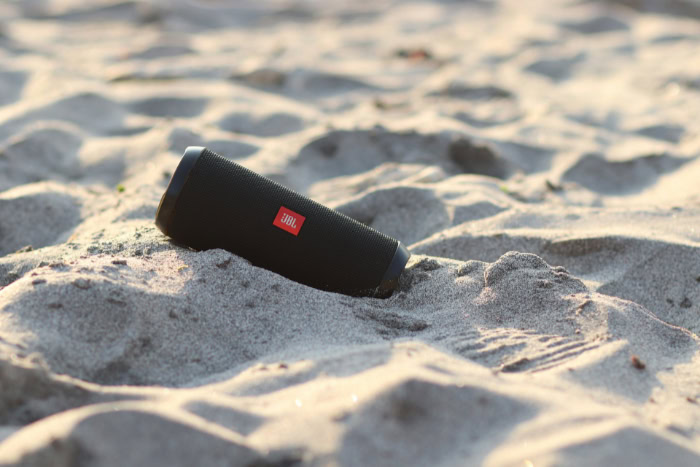
Many of the portable speakers feature high ingress protection ratings, such as IPX7 or IP67 and IP68. An IP67 rating, for instance, means a speaker is completely protected against dust and sand, and it can survive being submerged in water up to one meter deep for thirty minutes.
This high level of protection makes the speakers safe for use by the pool, at the beach, or in sudden rainstorms.
Rugged Construction Materials
The external build quality relies heavily on resilient materials. Instead of using easily scratched plastics, the brand wraps its speakers in a tightly woven, durable fabric grille that resists tearing and scuffs.
The ends of the cylindrical speakers are capped with thick, shock-absorbing rubber, which protects the internal transducers from drops and impacts when the device is accidentally knocked over.
Battery Longevity and Power Bank Functionality
Practical playback times are designed to last through full days of outdoor activity, with many models offering between twelve and twenty-four hours of continuous play depending on volume levels. To add utility, larger models in the Charge and Boombox lines double as external power banks.
Users can plug their mobile phones directly into the speaker’s USB ports to charge their devices while keeping the music playing.
How JBL Stacks Up Against the Competition

Evaluating a brand requires looking at how it performs against its direct competitors. While some brands focus on pristine, analytical sound quality, others compete primarily on price or visual style, placing this brand in a distinct middle ground.
JBL vs. Premium Brands
When compared to premium brands like Bose and Sony, the differences in target audience become clear. Sony and Bose generally prioritize advanced active noise cancellation, luxurious materials, and balanced, accurate sound tuning.
In contrast, this brand focuses on physical resilience, outdoor readiness, and a bass-heavy, energetic sound profile. While it may not match the sophisticated noise cancellation of a top-tier Sony headphone, it often offers more physical durability for a lower price.
JBL vs. Direct Lifestyle Competitors
Against lifestyle competitors like Ultimate Ears and Marshall, the brand holds a strong position. Ultimate Ears offers similar ruggedness and waterproof designs but sometimes lacks the deep bass presence found in comparable models here.
Marshall appeals to those who desire vintage, rock-and-roll aesthetics for home use, whereas this brand focuses on modern, athletic designs built to survive outdoor conditions.
JBL vs. Budget-Focused Brands
For budget-conscious buyers, brands like Anker Soundcore present a compelling alternative by offering packed spec sheets and lower price tags. Soundcore speakers often deliver impressive battery life and companion app features for less money.
However, this brand generally maintains an edge in overall build quality, structural rigidity, and maximum volume output without distortion, justifying its higher price tag for buyers who prioritize durable hardware.
Potential Drawbacks, Limitations, and Buying Considerations

No audio brand is perfect for every type of listener. While many people appreciate the rugged designs and energetic tuning, certain design choices and technical limitations might make these products less suitable for specific user needs.
Sound Signature Limitations for Audiophiles
The warm, bass-forward sound signature that makes these speakers popular can be a significant drawback for audiophiles or those working in audio production. Because the low frequencies are artificially boosted, the sound lacks the flat, neutral response required for critical listening or music mixing.
High-frequency details can sometimes feel masked or recessed behind the powerful bass and lower-midrange frequencies.
Ecosystem Compatibility Barriers
A common frustration among repeat buyers is the difficulty of connecting older and newer models together. The company has repeatedly changed its proprietary multi-speaker connection protocols, moving from Connect to Connect+, then to PartyBoost, and more recently adopting Auracast standards.
Because these protocols are rarely backward-compatible, a user cannot wirelessly link an older speaker with a newly purchased one, forcing them to stick within a specific generation of devices.
Customer Support and Out-of-Warranty Longevity
Some buyers express concern regarding long-term ownership and customer service. Over years of heavy use, battery capacity naturally degrades, and finding official replacement parts can be difficult.
Additionally, the unprotected USB charging ports on older models have been known to fail over time due to dirt accumulation or physical wear, and getting repairs outside of the standard warranty window can sometimes be challenging or costly.
Conclusion
JBL has solidified its position in the audio market by delivering exceptionally durable, weather-resistant speakers that produce an engaging and highly energetic sound. Features like IP67 waterproof ratings and shock-absorbing rubber components make these products ideal companion devices for outdoor recreation, travel, and social events.
However, this consumer-oriented focus comes with noticeable trade-offs, particularly a heavily boosted bass tuning that lacks the neutral accuracy required for critical listening. Additionally, the brand’s shifting wireless pairing standards present frustrating ecosystem compatibility barriers for those trying to link older and newer models.
For casual listeners, party hosts, and outdoor enthusiasts who need reliable hardware that can survive drops and splashes, the brand offers outstanding value. These buyers will find the powerful volume and punchy bass highly satisfying for everyday entertainment.
Conversely, audiophiles seeking pristine, flat acoustic reproduction, as well as budget-focused shoppers seeking the absolute cheapest specifications, should look elsewhere. Ultimately, the brand represents a reliable investment for those who prioritize ruggedness and high-energy performance over clinical studio accuracy.
Frequently Asked Questions
Can I drop my JBL speaker in the water without ruining it?
Yes, most portable JBL speakers can survive being submerged in water thanks to their high waterproof ratings. Models rated IPX7 or IP67 can handle being underwater up to one meter deep for thirty minutes. This makes them safe for pool parties, beach trips, or accidental drops in shallow lakes.
Do JBL speakers actually sound good or are they just loud?
JBL speakers sound very good for casual listening, delivering a highly energetic audio profile with deep, powerful bass. While they do not provide the flat, clinical accuracy that studio professionals require, their signature tuning is optimized for popular music. Vocals remain clear, and the output does not easily distort at high volumes.
Can I link two different JBL speakers together?
You can only link JBL speakers together if they use the exact same wireless connection protocol. The company has changed its pairing standards over the years, from Connect and Connect+ to PartyBoost and Auracast. Because these systems are not backward-compatible, an older speaker cannot connect wirelessly to a newer model.
Can I use my JBL speaker to charge my phone when I am outside?
Yes, you can use select JBL speakers as external power banks to charge your mobile devices. Mid-sized and larger models, such as the Charge and Boombox series, include dedicated USB ports for this purpose. You simply plug your phone’s charging cable directly into the speaker to draw power from its battery.
Is it worth paying more for a JBL speaker compared to cheaper brands?
Yes, the higher price is generally justified by superior physical durability and better structural engineering. While budget brands offer similar basic specifications, this brand uses high-grade shock-absorbing rubber and tightly woven fabric grilles. This heavy-duty construction ensures the hardware lasts much longer under harsh, demanding conditions.
About the Author: Julio Caesar


