
RTX 50-Series vs. RTX 40-Series: Worth the Upgrade?

Choosing a graphics card is the single most expensive decision you will make for your PC, directly dictating how your system handles next-generation games and heavy creative workloads. With Nvidia’s Blackwell RTX 50-series succeeding the Ada Lovelace RTX 40-series, deciding between premium new hardware or discounted last-generation silicon can save you hundreds of dollars while protecting your system from premature obsolescence.
Looking closely at the trade-offs of each architecture ensures you can confidently determine which GPU matches your performance targets and budget constraints.
Key Takeaways
- The Blackwell RTX 50-series upgrades to a custom TSMC 4NP process and GDDR7 memory, boosting bandwidth up to 1,792 GB/s on the flagship RTX 5090.
- Fourth-generation Ray Tracing Cores allow the new graphics cards to handle complex path tracing and 4K gaming with significantly better frame pacing than the older generation.
- DLSS 4 is exclusive to the RTX 50-series and uses a transformer-based neural model to generate multiple synthetic frames with far fewer visual artifacts.
- High-end models draw substantially more power, with the RTX 5090 reaching 575 watts, and all new cards utilize the safer 12V-2×6 power connector standard.
- Upgrading from an RTX 40-series card is largely unnecessary for standard gamers, but professionals running heavy local AI models will benefit massively from the 32 GB VRAM pool on the RTX 5090.
Architectural Foundations and Hardware Specifications
The transition to the Blackwell architecture represents Nvidia’s most comprehensive engineering overhaul in recent years. Instead of relying on incremental clock speed boosts, this generation addresses the fundamental structural bottlenecks limiting parallel processing, memory bandwidth, and high-precision calculations.
By redesigning core communication and data management, this architecture establishes a highly efficient standard for modern computing and gaming.
| Specification | RTX 5090 (Blackwell) | RTX 4090 (Ada Lovelace) | RTX 5080 (Blackwell) | RTX 4080 Super (Ada Lovelace) |
|---|---|---|---|---|
| GPU Die | GB202 | AD102 | GB203 | AD103 |
| Fabrication Node | TSMC 4NP | TSMC 4N | TSMC 4NP | TSMC 4N |
| Transistor Count | 92.2 Billion | 76.3 Billion | 45.6 Billion | 45.9 Billion |
| CUDA Cores | 21,760 | 16,384 | 10,752 | 10,240 |
| Tensor Cores | 680 (5th Gen) | 512 (4th Gen) | 336 (5th Gen) | 320 (4th Gen) |
| RT Cores | 170 (4th Gen) | 128 (3rd Gen) | 84 (4th Gen) | 80 (3rd Gen) |
| VRAM Capacity | 32 GB GDDR7 | 24 GB GDDR6X | 16 GB GDDR7 | 16 GB GDDR6X |
| Memory Bus Width | 512-bit | 384-bit | 256-bit | 256-bit |
| Memory Bandwidth | 1,792 GB/s | 1,008 GB/s | 960 GB/s | 737 GB/s |
| Total Board Power | 575 Watts | 450 Watts | 360 Watts | 320 Watts |
| Launch MSRP | $1,999 | $1,599 | $999 | $999 |
Microarchitecture Shift: Blackwell vs. Ada Lovelace
At the base of this architecture is a refined manufacturing process. While the Ada Lovelace RTX 40-series utilized TSMC’s custom 4N node, the Blackwell RTX 50-series moves to a custom TSMC 4NP process.
This fabrication refinement increases transistor density, packing more processing power into comparable silicon footprints. For example, the flagship Blackwell GB202 GPU houses roughly 92.2 billion transistors on a 744 square millimeter die, whereas the RTX 4090’s AD102 die contains 76.3 billion transistors on 609 square millimeters.
This density boost enables reconstructed Streaming Multiprocessors (SMs). The layout inside each SM has been optimized to improve pipeline efficiency, reducing clock cycles lost to thread scheduling.
Blackwell reorganizes execution units to process complex mathematical operations concurrently, boosting floating-point throughput while minimizing scheduling logic footprint. This design yields a streamlined execution pipeline that extracts greater instructions-per-clock output from every core.
Memory Subsystem Upgrades: GDDR7 vs. GDDR6X
To resolve a critical hardware bottleneck, the RTX 50-series upgrades from GDDR6X to GDDR7 memory. While GDDR6X was constrained by binary signaling, GDDR7 adopts PAM3 signaling, transmitting three data levels per cycle.
This structural change elevates memory speeds from 21 Gbps on high-end Ada Lovelace cards to 28 or 30 Gbps on Blackwell models.
This speed boost is paired with wider bus configurations and larger VRAM allocations. The RTX 5090 uses a massive 512-bit bus to support 32 GB of GDDR7, producing 1,792 GB/s of bandwidth, which is an eighty percent increase over the RTX 4090’s 1,008 GB/s.
Mid-range configurations scale proportionally. The RTX 5080 delivers 16 GB of VRAM over a 256-bit bus for 960 GB/s of bandwidth, and the RTX 5070 features 12 GB on a 192-bit bus at 672 GB/s.
These configurations ensure that every Blackwell tier comfortably outpaces its direct predecessor in data throughput.
Evolution of Ray Tracing and Tensor Cores
Blackwell utilizes fourth-generation Ray Tracing Cores to handle demanding lighting calculations. These updated units incorporate hardware execution blocks specifically engineered to accelerate ray-triangle intersection tests.
Through a system called RTX Mega Geometry, the GPU optimizes how complex geometric data is processed, lightening the computational load on the primary streaming multiprocessors.
Simultaneously, fifth-generation Tensor Cores enhance hardware-level machine learning calculations. While Ada Lovelace supported FP8 precision, Blackwell introduces native support for the FP4 numeric format.
This addition allows the Tensor Cores to process double the calculations per clock cycle by utilizing smaller, highly optimized data formats without sacrificing mathematical accuracy, resulting in faster and more resource-efficient artificial intelligence operations.
Gaming Performance Metrics across Resolutions

The practical value of these architectural changes is measured by actual performance in modern games. Upgrading to the RTX 50-series yields distinct performance profiles based on the rendering technologies used by different game engines.
Because modern games vary in computational demands, it is necessary to analyze performance across standard rendering, intensive ray tracing, and high resolutions.
Standard Rasterization Performance
In traditional games relying solely on standard rasterization, the performance gains of the Blackwell architecture are moderate. Traditional rendering depends mostly on raw clock speeds and CUDA core counts rather than neural units, yielding a generational uplift of roughly twenty to thirty percent when comparing comparable tiers.
This scaling indicates that standard graphics pipelines are restricted by physical silicon limits and processor bottlenecks. Upgrading from an RTX 4080 to an RTX 5080 yields a noticeable but not transformative framerate boost in standard multiplayer shooters.
While the extra CUDA cores and refined architecture offer a more stable baseline, rasterization alone is rarely enough to justify purchasing a Blackwell card over an Ada Lovelace alternative.
Ray Tracing and Path Tracing Throughput
The comparison shifts in games using intensive ray tracing or complete path tracing systems. Path tracing, which simulates physical light behaviors through thousands of calculations per pixel, quickly overburdens older hardware.
The fourth-generation RT cores inside Blackwell manage these intensive workloads with excellent efficiency, allowing the RTX 5090 to deliver massive performance advantages over the RTX 4090 in path-traced environments.
These changes mean Blackwell can handle global illumination, reflections, and shadows concurrently without the severe framerate penalties of the RTX 40-series. Architectural upgrades in ray sorting allow Blackwell GPUs to maintain high rendering speeds in geometrically complex scenes.
For running modern graphical showcases with every ray tracing feature fully enabled, the physical improvements in Blackwell provide a substantial step forward.
Performance Scaling at 1440p and 4K Resolutions
Resolution dictates how well these graphics cards scale. At 1440p, many setups are bottlenecked by the central processor, compressing the performance gap between generations.
However, at a full 4K resolution, the massive processing power and wide memory bandwidth of Blackwell are fully utilized, widening the performance delta.
This scaling is heavily supported by the GDDR7 memory subsystem. At 4K, high-resolution textures must flow constantly between system memory and the GPU frame buffer; minor delays cause noticeable stutters and uneven frame pacing.
The wide bandwidth of Blackwell ensures a highly consistent data stream, resulting in much better 1% low framerates and a smoother playing experience. At high resolutions, this consistent pacing is often more valuable than raw average framerates.
AI Features, Software Advancements, and Productivity
Modern graphics hardware is no longer designed strictly for game rendering, as local artificial intelligence and creative software acceleration have become central pillars of modern computing. Nvidia uses architectural updates to deliver next-generation software features.
For creators and developers, the choice between generations depends heavily on how these software and hardware features align with their specific workloads.
Next-Generation DLSS Capabilities and Frame Generation
A primary software update arriving with Blackwell is DLSS 4. Unlike previous versions of Deep Learning Super Sampling that relied on convolutional neural networks, DLSS 4 transitions to a transformer-based neural model.
This shift enables more complex artificial intelligence algorithms, including Dynamic Multi Frame Generation, which can construct multiple synthetic frames for every rendered frame. This capability is tied to Blackwell’s fifth-generation Tensor Cores, making DLSS 4 exclusive to the RTX 50-series.
Compared to the DLSS 3 technology on the RTX 40-series, the difference in frame generation quality is noticeable. By leveraging the fast processing capabilities of Blackwell, DLSS 4 generates frames with fewer visual artifacts in fast-moving scenes.
Additionally, the updated hardware works with Nvidia Reflex to maintain low latency, mitigating the sluggish control response that sometimes affected frame generation on Ada Lovelace graphics cards.
Hardware-Accelerated Local AI and Machine Learning Workloads
For local machine learning tasks like image generation or running large language models locally, the RTX 50-series offers a massive functional upgrade. While the RTX 4090 was respected for its 24 GB of VRAM, the RTX 5090 increases this to 32 GB of GDDR7 memory.
This expansion allows developers to run larger models, such as 13B parameter networks at full precision or 32B quantized models, on a single consumer-grade desktop card.
Beyond capacity, the massive bandwidth of GDDR7 speeds up token generation and model training times. Fifth-generation Tensor Cores, with native support for FP4 quantization, double the computing throughput for models running at ultra-low precision.
This ensures local inference processes in a fraction of the time required by Ada Lovelace hardware, making the RTX 50-series a highly capable platform for local researchers.
Creator Workflows: 3D Rendering and Video Encoding
Professional creators will see notable efficiency gains when migrating to Blackwell. In 3D rendering suites like Blender, the combination of faster CUDA cores, fourth-generation RT cores, and wide memory bandwidth reduces rendering times.
Projects that once exceeded the 24 GB buffer of the RTX 4090 fit into the 32 GB memory pool of the RTX 5090, avoiding slow fallbacks to system memory.
Video production workflows benefit from updated media engines. The RTX 50-series includes ninth-generation NVENC hardware encoders and sixth-generation NVDEC decoders.
For the first time in consumer-class hardware, these engines support hardware-accelerated encoding and decoding for the 4:2:2 color format. This native support is highly valuable for videographers editing mirrorless camera footage, as it eliminates the need for slow software decoding in programs like DaVinci Resolve.
Electrical and Physical Specifications

Adopting a more advanced architecture introduces major changes to physical and electrical demands. Managing increased performance requires careful attention to power distribution, thermals, and physical dimensions.
As graphics cards grow in power consumption, system builders must evaluate how these new components will integrate into existing desktop configurations.
Total Board Power (TBP) and Power Supply Demands
The Blackwell architecture increases power consumption, particularly at the enthusiast tier. The flagship RTX 5090 features a maximum rated power draw of 575 watts, representing a 125-watt increase over the RTX 4090’s 450-watt limit.
This requirement necessitates robust system power supplies, with Nvidia recommending at least a 1000-watt power supply for standard configurations.
Conversely, mid-range and high-end consumer tiers show a more conservative power curve. The RTX 5080 operates at 360 watts, slightly higher than the 320-watt rating of the original RTX 4080.
The RTX 5070 Ti draws roughly 300 watts, and the RTX 5070 sits at 250 watts. While these options are relatively efficient, builders must ensure cases have proper ventilation and power supplies capable of managing transient power spikes.
Power Delivery: The Transition to 12V-2×6 Connectors
Power delivery safety is addressed directly in the RTX 50-series through a complete transition to the updated 12V-2×6 power connector standard. While some late-model RTX 40-series cards adopted this layout, older Ada Lovelace cards used the older, more delicate 12VHPWR design.
The 12V-2×6 standard introduces vital structural changes to prevent the connection failures and overheating issues associated with the older format.
The primary differences exist in the internal pins and connector housing. The 12V-2×6 connector features shorter sense pins, ensuring the graphics card will not draw full power unless the cable is completely and securely inserted.
Additionally, the power terminals are thicker to lower electrical resistance, reducing heat buildup at the contact points. This design substantially improves electrical safety and reliable power delivery under sustained workloads.
Thermal Management, Dimensions, and Case Compatibility
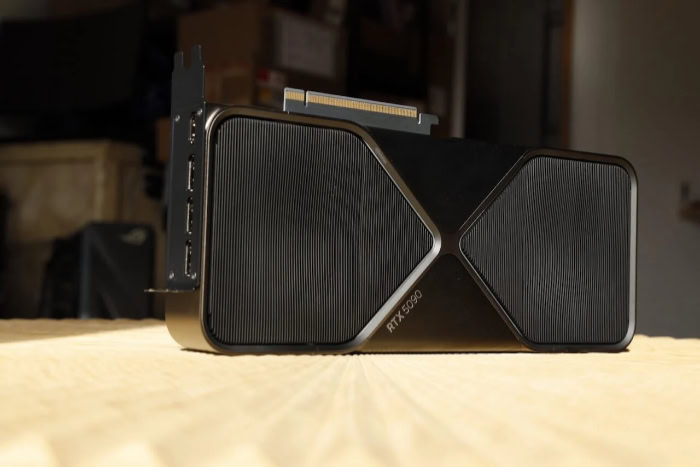
Cooling designs have grown steadily more complex, though physical sizes vary by model. The Founders Edition of the RTX 5090 uses a remarkably compact dual-slot cooling solution, achieved by separating internal power components and optimizing airflow through a vapor chamber.
However, custom models from partner manufacturers remain massive, with some triple-fan designs spanning three to four expansion slots in width and exceeding thirteen inches in length.
For the RTX 5080 and RTX 5070, physical dimensions are generally comparable to their RTX 40-series counterparts. However, these heavy cooling assemblies still require careful consideration regarding case compatibility.
Heavy cards place physical stress on motherboard PCIe slots, making reinforcing brackets or sag-support columns highly recommended. System builders must also verify ample clearance between the side panel and the power connector to avoid putting undue stress on the cable.
Market Economics and Upgrade Pathways

Investing in new computer hardware is an economic decision that balances performance gains against initial costs. The arrival of a new GPU family alters the value proposition of the preceding generation, creating a complex buying environment.
Succeeding in this market requires a clear-eyed evaluation of pricing, performance requirements, and logical upgrade steps based on your current hardware.
Price-to-Performance Comparison at Current Market Rates
The current price-to-performance equation remains highly nuanced. The RTX 5090 entered the market at a retail price of 1,999 dollars, a substantial premium over the RTX 4090’s original 1,599-dollar launch price.
While the RTX 5090 delivers unmatched rendering capabilities and a massive VRAM buffer, its high cost keeps the cost-per-frame high, making it a luxury purchase rather than a value-driven choice.
Conversely, the mid-range Blackwell options present a more competitive pricing structure. The RTX 5080 launched at 999 dollars, aligning with the pricing of the older RTX 4080 Super while offering superior GDDR7 bandwidth.
As retailers work to clear out remaining inventories of the RTX 40-series, buyers can find discounted last-generation cards at attractive prices. When calculating cost-per-frame in standard rasterized games, a discounted RTX 4070 Super or RTX 4080 often represents a more cost-effective option than a brand-new Blackwell equivalent.
Upgrading from RTX 40-Series: Is the Jump Justified?
For owners of an Ada Lovelace RTX 40-series card, a generation-to-generation upgrade is rarely justified. Because the RTX 40-series remains highly capable with mature driver support, most users will not observe a transformative difference in standard gaming scenarios.
Upgrading from a card like the RTX 4080 or RTX 4090 to a Blackwell equivalent is generally unnecessary for 1440p or moderate 4K gaming.
The main exception applies to specific professional and development scenarios. If your daily work involves running complex local machine learning models that require more than 24 GB of VRAM, the RTX 5090’s 32 GB frame buffer provides a vital capability that cannot be replicated on older hardware.
Similarly, 3D animators requiring maximum rendering speeds or editors needing native hardware support for the 4:2:2 color format will find that the time saved quickly offsets the cost of the upgrade.
Upgrading from Older Architectures: Bypassing vs. Buying the 40-Series
Users upgrading from older graphics architectures like the Ampere RTX 30-series or the Turing RTX 20-series face a much clearer choice. For these individuals, skipping the RTX 40-series and moving directly to a Blackwell GPU is often the most logical path.
By leaping directly to the RTX 50-series, you gain access to the GDDR7 memory standard, fourth-generation RT cores, and advanced DLSS 4 capabilities, ensuring long-term system viability.
However, the secondary market and retail clearance of the RTX 40-series remain highly attractive. For budget-focused builders, purchasing a discounted previous-generation card like the RTX 4070 Ti Super offers a massive performance leap over older architectures at a fraction of the cost of a Blackwell system.
If your budget is tight, opting for the older platform allows you to allocate those savings toward other critical system components like a faster processor or more RAM.
Conclusion
The generational leap from the Ada Lovelace RTX 40-series to the Blackwell RTX 50-series marks a major milestone in graphic engineering, emphasizing neural-accelerated computing and memory throughput. Instead of relying on clock speed enhancements, this architecture bridges the gap between traditional rendering and modern machine learning capabilities.
Evaluating these structural advancements reveals a divided market where absolute performance must be weighed against practical value.
For enthusiasts seeking a compromise-free system, the Blackwell architecture offers unmatched capabilities in path tracing, local artificial intelligence processing, and professional content creation. However, for mainstream gamers, the discounted prices of the mature Ada Lovelace family remain a compelling and financially sound alternative.
Choosing between these platforms ultimately comes down to whether your daily requirements demand the massive bandwidth of GDDR7 and modern software features, or if last-generation’s proven silicon continues to satisfy your performance standards.
Frequently Asked Questions
Do I really need to upgrade from my RTX 40 series graphics card?
You generally do not need to upgrade if you already own an older RTX 40 series card for standard desktop gaming. The overall performance leap is not transformative for traditional games, but professionals running heavy local AI models will clearly benefit from the larger memory pools.
What makes DLSS 4 different from older versions?
DLSS 4 uses a new neural model to construct multiple synthetic frames for every single rendered frame on your screen. This updated technology reduces visual artifacts in fast scenes and operates exclusively on the fifth generation Tensor Cores found inside the RTX 50 series graphics cards.
Will I need to buy a new power supply for the RTX 5090?
You will likely need a new power supply if your current unit falls below the recommended 1000 watts. The flagship RTX 5090 features a maximum power draw of 575 watts, which is a massive increase requiring robust power delivery to handle sudden transient spikes safely.
Is the RTX 5080 a good deal compared to older cards?
The RTX 5080 offers great value at its launch price by matching older hardware costs while delivering much faster GDDR7 memory speeds. However, budget focused buyers might find better overall deals by purchasing heavily discounted RTX 40 series hardware on the clearance or secondary market.
Why is the new memory standard important for high resolution gaming?
The newly introduced GDDR7 memory standard provides massive bandwidth to keep large visual textures flowing smoothly between your system and the GPU. This prevents frustrating delays and stuttering at 4K resolution, ensuring a consistent framerate that feels noticeably smoother during heavy graphical workloads.
About the Author: Julio Caesar


