
SMS vs. MMS: What’s the Difference?

Every time your phone buzzes, you participate in a communication system that has spanned decades. Most people use the terms texting and messaging interchangeably, but the technology driving those blue and green bubbles varies significantly.
Short Message Service (SMS) acts as the foundation of mobile reach, offering a 160 character limit that ensures your words land on any device. Multimedia Messaging Service (MMS) builds on that foundation, allowing for high resolution images and videos that turn a simple notification into a visual experience.
Selecting the right format is not just a technical choice. It is a strategic decision that affects delivery speeds, operating costs, and how your audience interacts with your content.
Key Takeaways
- SMS is limited to 160 characters but works on all mobile devices without needing a data plan or internet access.
- MMS allows for 1,600 or more characters and supports media files including images, videos, and audio.
- Message deliverability is typically higher with SMS because it relies on standard cellular signals rather than data packets.
- While SMS is more affordable per unit, MMS often generates higher engagement and better interaction rates from users.
- Effective communication strategies often combine both formats to balance operational costs with visual branding and message depth.
Content and Format Differences
The primary distinction between these two formats lies in the type of data they carry and how much information fits into a single transmission. One favors brevity and speed while the other focuses on visual impact and detailed information.
Text vs. Multimedia
SMS functions as a plain text protocol. It does not support formatting like bolding or italics, and it cannot carry attachments.
Its purpose is to deliver short, alphanumeric strings. MMS works as a multimedia carrier that allows for the transmission of images, audio clips, short videos, and animated GIFs.
This capability allows for a more interactive experience where visual context is necessary.
The 160 Character Limit and Concatenation
SMS follows a strict limit of 160 characters per message. If a message exceeds this limit, the system splits the text into multiple parts.
This process is known as concatenation. The carrier breaks the long message into chunks and reassembles them on the receiver’s phone so they appear as one continuous thread.
However, because each chunk is technically a separate message, this can sometimes lead to parts arriving out of order on older devices.
Expanded Space for Detailed Content
MMS offers significantly more room for text alongside media files. Most providers allow for 1,600 characters or more in a single message.
This expanded space provides enough room for detailed descriptions, long instructions, or storytelling without the risk of splitting the message into multiple segments. It removes the pressure of character counting and allows for a more natural writing style.
Technical Requirements and Delivery Performance

Behind every sent message is a technical framework that determines whether a text reaches its destination. Differences in network usage and device requirements influence how reliably these messages perform in various environments and on different types of hardware.
Network and Data Requirements
SMS travels over the control channel or signaling path of a cellular network. It is a lightweight protocol that does not require a data plan or an internet connection to function.
MMS is different because it treats content like a data packet. This means both the sender and the receiver must have an active data connection through a cellular provider or a Wi-Fi network to process the message.
Device Compatibility and Hardware
SMS is the most universal communication tool available. It works on every mobile phone ever made, from basic legacy phones to the latest smartphones.
MMS requires a device that can process media files and handle data connections. While almost all modern phones support MMS, some older hardware or specific restricted devices might fail to display the media correctly or may require the user to click a link to view the content in a web browser.
Delivery Reliability and Speed
SMS is highly efficient because the file sizes are incredibly small. This makes it the better choice for areas with weak signals or during times of high network traffic.
MMS files are much larger, so they take more time to upload and download. If a user has a poor data connection or is in a congested area, an MMS might fail to download or could be delayed significantly compared to a standard text.
Costs and Resource Management

Financial planning for messaging involves more than just looking at a flat rate. Understanding how providers calculate costs for different formats helps in managing budgets and avoiding unexpected expenses when sending large volumes of messages.
Unit Pricing and Credits
Most mobile carriers and messaging platforms charge more for MMS than for SMS. Often, a single MMS costs two or three times as much as a single SMS.
This price reflects the extra bandwidth and processing power required to transmit images and large blocks of data across the network infrastructure.
Segmentation and Multi-Part Messaging
A long text message might appear as one single bubble on a smartphone, but the carrier often bills it as several separate SMS segments. If a message is 300 characters long, it counts as at least two units.
In some cases, sending one MMS can be more cost effective than sending a very long, segmented SMS that uses four or five units of credit. Monitoring character counts is essential for maintaining a predictable budget.
Global Pricing Variations
Costs change significantly when sending messages to other countries. Many carriers have separate rates for international SMS and might not support international MMS at all.
Because different regions use different protocols and pricing tiers, sending media across borders often requires a higher budget and careful checking of local carrier rules to ensure the message is actually delivered.
Engagement and Performance Metrics
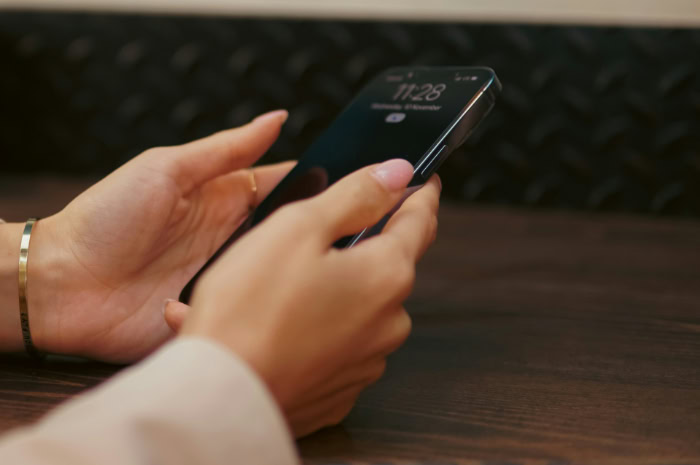
How a recipient reacts to a notification often depends on its format. While both types of messaging offer high visibility, the way a person interacts with the content changes based on whether they see a simple block of text or a colorful image.
These differences in perception can change the effectiveness of a message depending on what the sender wants the audience to do next.
Comparison of Open and Interaction Rates
Both formats share a nearly universal open rate of 98 percent, meaning almost every message sent reaches the eyes of the recipient. However, the interaction rate tells a different story.
Multimedia messages often result in a 20 percent higher click-through rate compared to standard text. This happens because media naturally draws the eye toward a link or a call to action, making the user more likely to engage with the content rather than just reading and dismissing the notification.
Visual Influence on Branding
Images and branding provide a psychological advantage by establishing immediate recognition. When a recipient sees a logo or a high quality photo, they can identify the sender before reading a single word.
This visual context makes the message feel more professional and personal. A well-designed graphic can convey a mood or a brand identity more effectively than a string of characters, helping a message stand out in a crowded inbox.
Urgency and the Text-Only Experience
Despite the high engagement of media, plain text remains the primary choice for urgency. For time-sensitive alerts like flight delays, security codes, or emergency updates, the simplicity of a text is an advantage.
It delivers essential information immediately without requiring the user to wait for a file to load or a data connection to stabilize. In these moments, the lack of visual distraction helps the recipient focus entirely on the information provided.
Practical Applications and Strategies

Choosing the right tool requires matching the message format to the specific objective. Some interactions require the speed and clarity of a quick text, while others need a more visual approach to drive interest or provide detailed instructions.
A thoughtful approach ensures that resources are used efficiently while still meeting the needs of the audience.
Best Scenarios for SMS
Plain text is the most effective choice for transactional messages that prioritize utility over appearance. This includes appointment reminders, shipping updates, and two-factor authentication codes.
These messages are meant to be read and acted upon in seconds. Because they do not require a data plan, they are the most reliable way to ensure a critical alert reaches every possible user, regardless of their device or location.
When to Prioritize MMS
Multimedia messaging excels in marketing and complex communication. Launching a new product with a photo or sending a digital coupon with a scannable barcode makes the message more valuable to the user.
It is also helpful for customer support scenarios where a detailed diagram or a short instructional video can explain a process better than a long paragraph. The extra space for text also allows for a more descriptive and persuasive tone.
Balancing Both Approaches
A smart strategy often involves using both formats together to manage costs and impact. A person might receive a quick text to announce a seasonal event and then receive a follow-up multimedia message a few days later with specific gift ideas or a QR code for a discount.
This hybrid method uses the lower cost of text for the initial reach and the high engagement of media for the final conversion, ensuring the budget is used effectively.
Conclusion
The selection between these two protocols represents a balance between reach and richness. SMS remains the most reliable way to ensure a message is seen by anyone with a mobile phone, regardless of their location or device type.
Its simplicity is a major strength, making it the perfect choice for quick alerts and essential notifications. MMS provides the visual depth needed to build a brand and drive meaningful interaction.
While it comes with higher costs and more technical requirements, the ability to share media and longer narratives makes it a powerful tool for deeper engagement. Success relies on identifying the specific goals of a message and selecting the format that matches the expectations of the audience.
By identifying the limitations and advantages of each, you can ensure that every notification serves a clear purpose.
Frequently Asked Questions
How much more does MMS cost compared to SMS?
Most service providers and mobile carriers charge a premium for multimedia messages. Typically, a single MMS costs between two and three times the price of a standard SMS segment. These higher rates account for the increased bandwidth and data processing required to transmit high resolution images and longer blocks of text.
Can I send an MMS to someone who does not have a smartphone?
While older feature phones might receive a notification of an incoming multimedia message, they often cannot display the content directly. In these cases, the carrier usually provides a web link for the recipient to view the media in a browser. This extra step can significantly lower the overall engagement rate.
Do I need a data plan to receive text messages?
Standard SMS messages only require a cellular signal to function, meaning they do not use your mobile data or Wi-Fi. However, receiving an MMS requires an active data connection. If your mobile data is turned off or you are out of range for internet access, the media will not download.
What happens if my text message exceeds 160 characters?
When a text message goes over the 160 character limit, the network splits it into smaller segments through a process called concatenation. Modern smartphones usually reassemble these segments so they appear as one long message to the reader. You will still be charged for each segment as an individual message.
Why would a business choose SMS over MMS?
Businesses choose SMS when the priority is speed and certain delivery. Since it works without data and has universal compatibility, it is the superior choice for critical notifications like login codes or appointment reminders. It also remains the most budget friendly option for large scale communications that do not require visuals.
About the Author: Elizabeth Baker


