
Sonos vs. Bose: Choosing Your Sound

The moment you connect a single smart speaker to your home network, you commit to a closed ecosystem that dictates how you listen for years to come. Because mixing Sonos and Bose hardware across rooms is highly impractical, expanding your setup with soundbars or portable units forces you to double down on your first purchase.
This lock-in makes choosing between these two audio giants a high-stakes decision. While Sonos relies on a centralized, app-driven architecture focused on acoustic realism, Bose favors dynamic warmth and versatile direct-casting.
Comparing how both brands handle network synchronization, sound tuning, and physical system integration clarifies which platform matches your domestic layout and listening habits.
Key Takeaways
- Sonos uses a localized Wi-Fi mesh network to stream music directly from cloud servers, preventing phone calls or system notifications from interrupting your audio playback.
- Bose smart speakers rely primarily on direct casting standards like Apple AirPlay 2 and Google Cast, allowing you to completely bypass the proprietary Bose mobile app.
- Sonos speakers target a neutral sound signature for realistic instrumentation, whereas Bose favors a warm tuning profile with rich bass and dedicated dialogue-boosting technology.
- The Sonos Ace headphones utilize a direct, low-latency Wi-Fi connection to swap audio from a Sonos soundbar, while Bose relies on a Bluetooth-based SimpleSync connection.
- Bose portable speakers like the SoundLink Flex feature rugged silicone frames and IP67 ratings that allow them to absorb impacts and float in water during outdoor use.
Ecosystem Architecture and Whole-Home Synchronization
Building a multi-room audio network requires a reliable foundation to prevent playback delay and dropouts. While both brands aim to keep your speakers playing in perfect sync across multiple rooms, they approach network management and software control from completely different engineering philosophies.
The Sonos App-Centric Model
Sonos builds its ecosystem on a dedicated network structure. When multiple Sonos speakers are active, they can communicate using a local Wi-Fi mesh network, which offloads the audio traffic from standard home internet routers.
This local network configuration minimizes latency and keeps multiple speakers synchronized. Additionally, the centralized Sonos app does not simply stream music from your phone.
Instead, the app acts as a remote control, telling the speakers to retrieve audio streams directly from cloud servers. With native integration for over 100 music services, your phone remains free to handle calls and other tasks without interrupting the music.
Bose’s Unified Smart Ecosystem
Bose has shifted away from its older, proprietary software ecosystems to rely more on open casting standards. Modern Bose smart speakers rely primarily on Apple AirPlay 2 and Google Cast to group speakers and stream audio directly from mobile devices.
The Bose Music app allows users to configure speaker groupings, customize preset buttons on specific hardware, and manage audio sources directly. This casting-forward approach means you can bypass the manufacturer’s native app entirely, streaming music directly from your preferred applications like Spotify or Apple Music.
Cross-Generational Compatibility
Legacy hardware support is a critical factor for long-term satisfaction. Sonos historically faced criticism during its transition to the S2 app platform, which separated older legacy products from modern ones.
However, Sonos still supports many older devices through separate S1 controller apps or legacy bridges, though mixing generations on a single, unified S2 system remains limited. Bose has historically retired older proprietary platforms, such as SoundTouch, to focus on its current smart audio line.
This means older Bose speakers do not easily group with their modern smart speakers unless you rely on physical inputs or Bluetooth adapters.
Sound Tuning Philosophy and Acoustic Calibration

How a speaker sounds out of the box reflects the manufacturer’s distinct acoustic philosophy. Beyond physical hardware, both brands use distinct equalization profiles and digital signal processing to shape how music and movies feel in your home.
Sonos: Balanced Neutrality and Acoustic Realism
Sonos targets a balanced, neutral soundstage designed to reproduce audio exactly as the original studio engineers mixed it. By avoiding dramatic boosts in the bass or treble, the speakers maintain flat response curves that favor realistic instrumentation and vocals.
This neutrality is particularly beneficial for spatial audio tracks, where clean channel separation and spatial accuracy are necessary to create a convincing three-dimensional soundstage without artificial coloration.
Bose: Warmth, Dynamics, and Dialogue Optimization
Bose utilizes a warm sound profile characterized by rich, punchy low-end frequencies and crisp high frequencies. This dynamic tuning helps speakers sound full and powerful even at lower listening volumes.
To complement this, proprietary processing technologies like SpeechClarity work to isolate and boost dialogue frequencies in real time, making speech easier to understand without needing to raise the overall volume. TrueSpatial processing also artificially expands stereo tracks to simulate a wider, deeper physical listening area.
Room Calibration Technologies
Because room shapes and furniture heavily affect acoustic performance, both brands offer software to correct room-specific anomalies. Sonos uses Trueplay, a system that utilizes the microphone on an iOS device, or built-in speaker microphones in newer models, to measure sound reflections as you walk around the room.
In contrast, Bose uses the ADAPTiQ calibration system, which requires wearing a specialized headset with built-in microphones while sitting in your favorite listening positions, allowing the speaker to measure and adjust its output specifically for those seats.
Home Theater and Dolby Atmos Performance

Setting up a home theater system requires balancing physical space with complex multi-channel audio processing. Creating an immersive theater experience highlights how differently these two brands build physical soundbars and handle wireless satellite expansion.
Flagship Soundbars in Action
The Sonos Arc Ultra represents a significant shift in acoustic design by incorporating SoundMotion technology. This proprietary transducer configuration allows the soundbar to deliver deeper, more impactful bass directly from its slim frame without relying solely on a separate subwoofer.
It handles spatial audio by using multiple drivers to bounce sound off the walls and ceiling. On the other side, the Bose Smart Ultra Soundbar uses a nine-driver array that includes two dedicated upward-firing dipole speakers.
Bose relies heavily on its TrueSpace technology to upmix non-Atmos content, while its A.I. Dialogue Mode automatically balances whispering and action sequences to keep vocals intelligible without constant volume adjustments.
Surround Sound and Subwoofer Expansion
Expanding either system into a full physical surround-sound network is straightforward but highly brand-specific. Sonos allows users to pair the Arc Ultra with the Sub 4 and dedicated rear speakers, such as the Era 300, which feature upward-firing drivers for a true physical Dolby Atmos experience.
Bose systems expand by pairing the Smart Ultra soundbar with the Bose Bass Module 700 and Surround Speakers 700. While Sonos emphasizes a true physical multi-channel layout with dedicated height drivers in the rear, Bose relies on a mix of compact physical satellites and digital processing to simulate height and depth, which appeals to users who prefer smaller, less conspicuous rear speakers.
Physical Inputs and TV Handshake Reliability
Both manufacturers use HDMI eARC as the primary connection method to transmit uncompressed Dolby Atmos signals from the TV. While HDMI eARC supports Consumer Electronics Control (CEC), allowing you to adjust the volume with your television remote, connection handshakes can vary.
Sonos soundbars are designed to be almost entirely screen-free, relying on the TV and the mobile app to negotiate audio formats. Bose provides a more traditional physical remote alongside the app, which can make troubleshooting handshake glitches easier when switching between game consoles, streaming sticks, and older television models.
Portable Audio and Outdoor Versatility

Taking your music outside the living room introduces environmental hazards and changes how your devices communicate. Portable speakers must manage wireless connections on the fly while surviving exposure to water, dust, and unexpected drops.
Dual-Connectivity Architectures (Wi-Fi vs. Bluetooth)
Sonos handles the transition between indoor and outdoor listening through dual-mode wireless systems. Speakers like the Sonos Move 2 and Roam 2 operate as standard Wi-Fi speakers when within range of your home router, grouping with your home system.
When you step outside, they can transition to Bluetooth mode. Bose approaches this with two distinct product styles.
The Bose Portable Smart Speaker mirrors the Sonos model by offering both Wi-Fi and Bluetooth capabilities. However, for purely outdoor and on-the-go scenarios, the Bose SoundLink line, which includes the SoundLink Max and SoundLink Flex, ditches Wi-Fi entirely to prioritize a stable, direct Bluetooth connection with aptX support for high-quality mobile streaming.
Durability and Weatherproofing
Outdoor performance requires physical resilience against the elements. The compact Sonos Roam 2 features an IP67 rating, meaning it is dust-tight and can survive being fully submerged in water for short periods, while the larger Move 2 carries an IP56 rating, making it resistant to splashes and dust but not immersion.
Bose speakers are built with a strong focus on ruggedness. The SoundLink Max and SoundLink Flex both feature IP67 ratings, steel grilles, and thick silicone enclosures designed to absorb impacts.
Additionally, the SoundLink Flex is uniquely engineered to float in water, ensuring it does not sink to the bottom of a pool or lake during an accidental drop.
Battery Management and Charging Solutions
Battery efficiency determines how long you can listen away from an outlet. The Sonos Move 2 offers up to 24 hours of playback on a single charge and comes with a wireless charging base for home use, alongside a USB-C port for portable charging.
The smaller Roam 2 provides up to 10 hours. Bose matches these demands with the SoundLink Max, which delivers up to 20 hours of battery life and includes a USB-C port that can double as a power bank to charge your phone while streaming.
While Bose’s Portable Smart Speaker offers a shorter 12-hour battery life, its standby power drain is highly optimized, ensuring the battery does not completely deplete when sitting idle for several days.
Personal Audio and Ecosystem Synergies
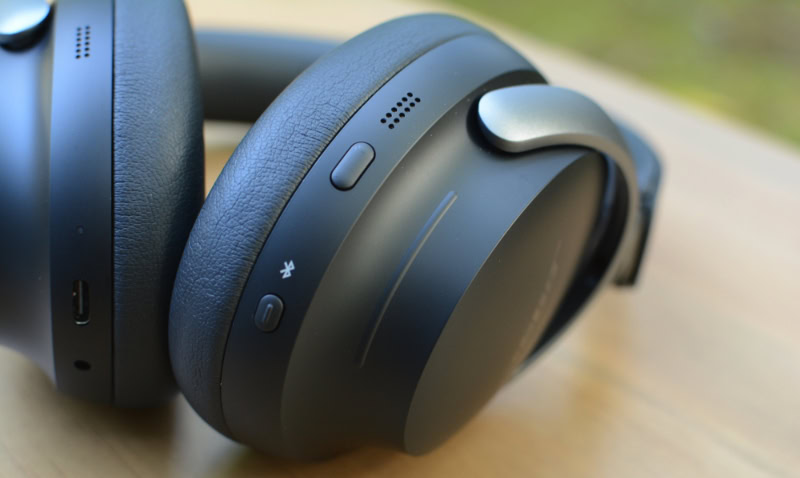
Extending your audio setup to personal listening allows you to enjoy high-fidelity sound without disturbing others in your home. Integrating headphones into a larger home ecosystem reveals distinct priorities in sound design, active noise cancellation, and private connectivity.
Over-Ear Noise-Cancelling Flagships
The battle between the Sonos Ace and the Bose QuietComfort Ultra highlights two different approaches to premium personal audio. Bose has spent years refining its Active Noise Cancellation (ANC), and the QuietComfort Ultra remains the industry benchmark for isolating the listener from low-frequency hums and office chatter.
It also features Immersive Audio, which uses on-board processing to add spatial depth and head-tracking to any stereo source. The Sonos Ace enters this space with a sleek, modern aesthetic, highly competitive ANC, and support for Bluetooth 5.4 with lossless audio.
While the Sonos Ace offers a highly balanced, polite sound signature, the Bose QuietComfort Ultra leans into a warmer, more energetic tuning with robust bass.
Private Home Theater Audio Handoffs
Both brands offer proprietary methods for transferring TV sound from a family soundbar to a personal pair of headphones, but they do so through different wireless technologies. Sonos uses TV Audio Swap, allowing a user to press a physical button on the Sonos Ace to instantly transfer audio from an active Sonos soundbar (like the Arc Ultra or Beam Gen 2) directly to the headphones.
This handoff relies on a direct, low-latency Wi-Fi connection from the soundbar to process and encode multi-channel spatial audio with head tracking. Bose handles this through SimpleSync, which uses a Bluetooth connection to pair the QuietComfort Ultra headphones with a Bose smart soundbar.
While highly convenient for late-night viewing, the Bluetooth-based SimpleSync can occasionally suffer from minor audio synchronization lag compared to the direct Wi-Fi transmission used by Sonos.
Voice Control and Smart Integration
Integrating voice commands into personal and home audio systems differs based on platform openness. Bose smart speakers and soundbars integrate seamlessly with Amazon Alexa, and they feature Voice4Video technology, which lets users control their television, cable box, and streaming devices entirely through voice prompts.
Sonos supports Amazon Alexa alongside its own localized, on-device voice assistant, Sonos Voice Control. By processing commands locally on the speaker rather than sending them to the cloud, Sonos Voice Control prioritizes user privacy and quickly executes basic playback adjustments, though it lacks the broader smart-home management capabilities found in Alexa.
Conclusion
Choosing Sonos is highly recommended if you prioritize a unified, app-centric whole-home system with a balanced, neutral soundstage designed to reproduce audio exactly as the artist intended. This platform excels in multi-room synchronization and dedicated physical home theater expansions.
Alternatively, Bose is ideal if you value plug-and-play simplicity, robust direct-casting capabilities via AirPlay 2 or Google Cast, a warmer sound profile with punchy bass, and top-tier active noise cancellation for personal audio. In the end, your choice depends on your preference for a highly structured home streaming network versus highly versatile, portable, and personal listening devices.
Frequently Asked Questions
Can I play music on Sonos and Bose speakers at the same time?
No, you cannot synchronize Sonos and Bose speakers to play the exact same music simultaneously. Because both manufacturers rely on proprietary, closed software platforms, their speakers cannot communicate over a shared network group. You must manage them as two completely separate audio networks using their respective mobile applications.
Do Bose headphones work with a Sonos soundbar?
Yes, you can connect Bose headphones to a Sonos soundbar, but only through a basic Bluetooth connection. Unlike the Sonos Ace, which offers a direct Wi-Fi handoff via TV Audio Swap, Bose headphones must pair manually with your television or Apple TV. This means you will miss out on the low-latency, spatial audio features designed specifically for the Sonos ecosystem.
Which brand is better for outdoor use?
Bose is generally the better choice for outdoor listening due to its more rugged designs and floating capabilities. While the Sonos Move 2 is a capable portable speaker, Bose’s SoundLink Flex and SoundLink Max feature steel grilles, impact-absorbing silicone, and IP67 water resistance. This makes Bose hardware much more resilient against sand, drops, and accidental submersion in water.
Do I need an internet connection to use these speakers?
You need an internet connection for Sonos, but Bose speakers can operate purely on Bluetooth without Wi-Fi. Sonos requires an active network connection to stream music directly from cloud servers through its app. Conversely, many Bose speakers prioritize direct Bluetooth pairing, allowing you to play offline audio tracks stored on your smartphone anywhere.
Which system is easier to set up for home theater surround sound?
Sonos offers the easier and more immersive setup process for building a home theater. The Sonos app guides you through pairing a soundbar with wireless rear speakers and subwoofers in minutes. Additionally, Sonos utilizes Trueplay tuning to calibrate your entire surround system using your phone, whereas Bose requires wearing a specialized headset to map your room.
About the Author: Julio Caesar


