
Surface Web vs. Deep Web vs. Dark Web: Explained Simply

Most people believe a Google search provides access to the entire internet, but those results represent only about four percent of the actual data circulating online. Every time you log into your bank account or check a private medical portal, you are interacting with a massive infrastructure that exists entirely out of public view.
Think of the internet as an iceberg where the visible tip is just the surface. Below the water lies a vast expanse of private databases and encrypted networks that keep modern society running.
This hidden space is not a single entity; it is a complex hierarchy of visibility and security. While some areas protect your financial records, others provide a shield for activities requiring total anonymity.
Key Takeaways
- The Surface Web accounts for only about 4% of all online content and consists of pages indexed by search engines like Google.
- Approximately 90% to 95% of the internet exists on the Deep Web, which includes private data like your bank accounts and medical records.
- Accessing the Dark Web requires specialized software like the Tor browser to provide total anonymity for both the user and the website host.
- Accessing the Deep Web or Dark Web is not inherently illegal, as these layers host essential services like private email and platforms for political activists.
- Protecting your data across all layers requires using tools like Multi-Factor Authentication and end-to-end encryption to prevent unauthorized access.
The Surface Web: The Visible Layer
The Surface Web consists of every page that can be found through a standard search engine. This is the portion of the internet most people interact with during their daily routines, consisting of linked pages that are publicly accessible without special software or login credentials.
It functions as the front door of the internet, providing a space for businesses, news organizations, and individuals to share information with a global audience.
How Search Engines Index Information
Search engines like Google and Bing use automated programs known as spiders or crawlers to organize this layer. These programs move from one link to another, recording the content and structure of every page they encounter.
This data is then cataloged in a massive index. When a user types a query into a search bar, the engine scans its pre-existing index to provide relevant results in seconds.
If a page is not linked to any other public site or is specifically blocked from crawlers, it remains invisible to these search tools.
Everyday Uses of Public Data
Most common online activities occur within this visible layer. This includes reading articles on news portals, shopping on e-commerce platforms, and viewing public profiles on social media.
Because these sites want to be found, they are optimized for search engines to ensure high visibility. Any information posted here is essentially public record, meaning it can be saved, shared, and archived by anyone with a browser.
The Costs of Open Access
While the Surface Web offers convenience and instant information, it comes with a significant trade-off regarding personal privacy. Because these pages are designed for easy access, they are also highly tracked.
Companies use cookies and various data harvesting techniques to monitor user behavior and build advertising profiles. In this environment, transparency is high, but anonymity is nearly impossible for the average user.
The Deep Web: Private Digital Infrastructure

The Deep Web is the massive portion of the internet that search engines cannot see. Unlike the public layer, the Deep Web consists of content hidden behind security walls, passwords, or specific technical barriers.
It is not a place for illegal activity; rather, it is a functional necessity for modern life. This layer ensures that personal, financial, and corporate data remains protected from public scrutiny.
Understanding Non-Indexed Content
Content on the Deep Web is non-indexed, meaning spiders cannot crawl or list it. This happens for several reasons.
Some pages are protected by authentication, while others are stored in databases that only generate a page in response to a specific search within a site. Without a direct link or the proper credentials, a search engine has no way to find or categorize this information.
Daily Services and Critical Data
Most of the internet activities that require privacy occur here. When you log into your online banking portal to check your balance, you are on the Deep Web.
Your personal email inbox, private cloud storage folders, and password-protected school portals also reside in this layer. Medical records and internal company intranets are other examples of data that must remain hidden from the public to maintain security and comply with privacy laws.
Methods of Securing Private Information
Accessing this layer requires more than just a URL. It typically demands authentication, such as a username and password, or perhaps a biometric scan.
Some parts of the Deep Web are hidden behind paywalls, such as academic journals or premium news sites. Others use unique, unlinked URLs that are only shared with specific individuals.
These security measures prevent sensitive data from appearing in a random Google search.
The Immense Scale of the Deep Web
While the Surface Web seems vast, it is dwarfed by the Deep Web. Experts estimate that the Deep Web makes up approximately 90% to 95% of the entire internet.
This scale is logical when considering the sheer volume of private data generated every second. Every private message, bank transaction, and corporate database entry adds to this hidden expanse, making it the primary storage room for the world’s digital information.
The Dark Web: Anonymity and Encryption
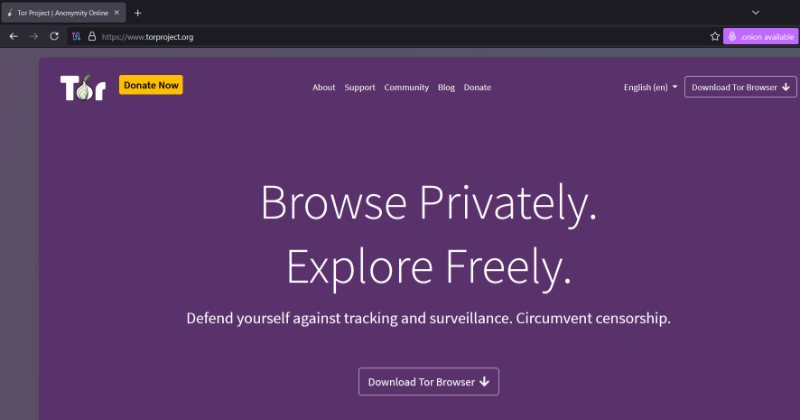
The Dark Web is a small, intentional subset of the Deep Web that requires specific software to access. It is built on overlay networks that prioritize total anonymity over speed or convenience.
While the Surface Web is open and the Deep Web is private, the Dark Web is obscured. It uses layers of encryption to hide both the identity of the user and the location of the server hosting the content.
Software and Tools for Access
To enter the Dark Web, users must use specialized tools like the Tor browser, which stands for The Onion Router. Tor works by routing a user’s connection through several different servers around the world, encrypting the data at each step.
This process makes it extremely difficult for anyone to trace the origin of the traffic. Because of this complex routing, browsing speed is often much slower than what users experience on the standard web.
The Function of Onion Addresses
Addresses on the Dark Web do not look like standard websites. Instead of ending in .com or .org, they use the .onion suffix.
These URLs are often long strings of random letters and numbers that are not hosted on traditional DNS servers. They are not intuitive and cannot be found through Google.
Users typically find these addresses through word of mouth, specialized directories, or encrypted forums.
The Balance of Private Communication
Anonymity serves a dual purpose. For journalists, whistleblowers, and political activists living under oppressive regimes, the Dark Web is a vital tool for communication.
It allows them to share information and organize without fear of government surveillance or retaliation. In these contexts, the ability to remain hidden is a matter of physical safety and freedom of speech.
Underground Markets and Digital Crime
The same anonymity that protects activists also attracts criminal elements. The Dark Web is home to underground marketplaces where illegal goods, stolen data, and prohibited services are traded using cryptocurrencies.
Cybercrime forums exist here for the sale of malware and login credentials harvested from data breaches. While it is only a small fraction of the total internet, the lack of regulation makes it a significant hub for illicit transactions.
Deep Web vs. Dark Web: Clearing Up Misconceptions

People often use the terms Deep Web and Dark Web interchangeably, but they refer to very different things. The confusion stems from the fact that both are hidden from search engines.
However, the reason they are hidden and the way they are accessed sets them apart. One is a standard part of everyday internet utility, while the other is a specialized environment for those seeking to disappear from the digital record.
Privacy Versus Total Anonymity
The Deep Web is hidden for the sake of protection. Your bank hides your account details so that only you can see them.
The Dark Web is hidden for the sake of anonymity. It is designed so that no one, including the service provider, knows who is accessing the information.
On the Deep Web, your identity is known to the service you are using; on the Dark Web, the goal is for your identity to remain unknown to everyone.
Legal Realities and Ethical Uses
A common myth is that anything below the Surface Web is illegal. In reality, the Deep Web is entirely legal and necessary for modern society to function.
Without it, there would be no way to secure private communications or financial data. Even the Dark Web is not inherently illegal to browse.
The legality depends on the actions of the user. Accessing a forum to discuss privacy is legal, while purchasing stolen credit card numbers is a crime.
Comparing Total Volume and Impact
The scale of these two layers is vastly different. The Deep Web is a massive ocean containing almost all of the world’s digital data.
In contrast, the Dark Web is estimated to be less than 1% of the total internet. It is a tiny, specialized niche.
While the Dark Web gets more media attention due to its association with crime, the Deep Web is the layer that actually supports the global economy and personal privacy.
Security and Risk Management

Interacting with different layers of the web requires different levels of caution. Even on the Surface Web, users face constant threats to their personal information.
As data moves between the visible and hidden layers, the nature of the risks changes.
Common Threats to Public Information
On the Surface and Deep Web, the most common threats are phishing and data breaches. Phishing involves deceptive emails or websites designed to trick users into revealing their Deep Web credentials, such as bank passwords.
Data breaches occur when hackers break into a company’s private servers to steal customer information. Because our lives are so connected to the Deep Web, a single stolen password can provide a criminal with access to a wealth of personal data.
Danger and Volatility in Encrypted Spaces
The Dark Web is often described as a digital Wild West because it lacks any form of regulation or consumer protection. Users who browse this layer face a high risk of encountering malware that can infect their devices.
Exit scams are also common, where marketplace operators disappear with users’ funds. Additionally, law enforcement agencies heavily monitor these networks, meaning that even accidental interaction with illegal content can have serious legal consequences.
Proactive Habits for Data Safety
Regardless of which layer you are on, certain practices can significantly reduce your risk. Using Multi-Factor Authentication (MFA) adds a layer of security that protects your Deep Web accounts even if a password is stolen. End-to-end encryption ensures that your messages cannot be read by third parties.
Maintaining cautious browsing habits, such as avoiding suspicious links and using updated security software, remains the most effective way to stay safe online.
Conclusion
The internet is a single, integrated ecosystem where each layer performs a specific function for modern life. While the Surface Web facilitates the open exchange of ideas, the Deep Web provides the security necessary for personal and financial stability.
Even the Dark Web, despite its risks, offers a sanctuary for those who truly need anonymity. Recognizing these distinctions is not just a technical exercise; it is a vital part of staying safe in an interconnected world.
By learning how these layers interact, you can better control your data and make more informed choices about your digital presence. Knowledge is the most effective tool for staying secure in any environment.
Frequently Asked Questions
Is it illegal to go on the Dark Web?
Browsing the Dark Web is generally not illegal in most countries, although the activities you perform there certainly can be. Many people use it for legitimate privacy reasons, such as whistleblowing or avoiding censorship. However, buying illegal goods or accessing prohibited content remains a criminal offense that law enforcement actively monitors.
Can someone find my bank account on Google?
No, your banking information is stored on the Deep Web and is hidden from search engine crawlers for security reasons. Search engines can only index public pages, while your financial records require a password and authentication to access. This separation ensures that your sensitive personal data does not appear in public search results.
How do I get onto the Dark Web?
You need a specialized browser like Tor to access the Dark Web because standard browsers cannot read .onion addresses. Tor anonymizes your traffic by routing it through multiple servers across the globe. While the software is free to download, users should exercise extreme caution due to the high prevalence of malware and scams.
Why is the Deep Web so much bigger than the normal web?
The Deep Web is massive because it contains every private database, email, and password-protected file on the internet. Every time a company stores internal records or an individual uploads a private photo, that data adds to the Deep Web. Since most digital information is private, it naturally outweighs the public content found on the Surface Web.
Is the Deep Web the same thing as the Dark Web?
No, the Deep Web is a broad category for all non-indexed content, while the Dark Web is a tiny, encrypted subset focused on anonymity. Most of the Deep Web consists of boring, legal data like your utility bills or cloud storage. The Dark Web is a much smaller space that requires specific software to enter.
About the Author: Julio Caesar


