
The Evolution of Bluetooth: How We Went Wireless

Every day, we rely on wireless connections to stream music to our earbuds, unlock our vehicles, and sync fitness trackers without a second thought. This effortless convenience is made possible by Bluetooth, a technology that has silently transformed from a basic cable replacement into a sophisticated networking system.
Originally designed to eliminate physical wires, its steady progression of technical enhancements has quietly redefined how modern devices communicate over short distances.
Key Takeaways
- Bluetooth evolved from a basic cable replacement with a 1 Mbps transfer rate to a versatile protocol capable of high-precision spatial tracking and multi-stream audio broadcasting.
- Bluetooth Low Energy (BLE) reduced power consumption by utilizing brief data packet bursts and duty-cycle management, allowing sensors to run for long periods on button-cell batteries.
- Bluetooth 5.0 introduced flexible physical layer options, enabling developers to choose between a doubled data rate of 2 Mbps or a quadrupled operational range using forward error correction.
- Bluetooth 6.0 introduces Channel Sounding to calculate distance down to the centimeter using phase-based ranging, which prevents relay attacks on secure digital lock systems.
- Adaptive Frequency Hopping preserves wireless performance in the crowded 2.4 GHz band by dynamically identifying and avoiding channels suffering from heavy interference.
Historical Genesis and Early Development (Bluetooth 1.0 to 3.0)
The foundation of modern short-range wireless communication rests on a cooperative effort initiated in the late twentieth century. To move past the limitations of proprietary cables, industry leaders recognized the need for a unified, open standard.
This cooperative approach shaped the early standard, setting the stage for a dramatic shift in how consumer electronics interact.
Origin of Name and Initial Purpose
The trademark “Bluetooth” originated from tenth-century Scandinavian history, named after King Harald Bluetooth, who was famous for uniting warring Scandinavian tribes. This historical reference mirrored the technology’s primary objective: to unite disparate devices, such as mobile phones, computers, and accessories, under a single, globally compatible communication standard.
The Bluetooth Special Interest Group (SIG) was established in 1998 by a consortium of telecommunications and computing companies to oversee the development and licensing of this open standard. By establishing shared protocols, the SIG aimed to replace the tangled web of proprietary cables that constrained mobile and desktop computing, fostering a cohesive ecosystem where devices could connect automatically without user-configured drivers.
Technical Limits of Early Iterations
Despite its ambitious goals, the early versions of the standard, from 1.0 to 1.2, faced severe operational hurdles. Data throughput was capped at a theoretical maximum of 1 megabit per second (Mbps), though actual usable speeds were far lower.
Power demands were unsustainably high for small portable devices, as early transmitters required constant active states to maintain connections. Furthermore, the technology suffered from substantial connection instability.
Early implementations struggled with packet collisions, slow device discovery, and highly sensitive link budgets, meaning even minor physical obstructions could completely sever a wireless link.
Architectural Features of Classic Bluetooth
To address these early performance gaps, the SIG introduced Basic Rate (BR) and Enhanced Data Rate (EDR) in Bluetooth 2.0 and 2.1. Basic Rate established the fundamental radio architecture, utilizing a continuous stream of data packages to maintain steady audio and synchronous connections.
Enhanced Data Rate introduced phase-shift modulation schemes, which boosted the theoretical throughput to 3 Mbps. This architecture was optimized for continuous, heavy data pipelines, making it highly effective for streaming high-quality stereo audio and transferring files.
These classic protocols prioritized high-bandwidth stability over power conservation, locking the transmitter into an active, high-power state for the duration of the data session.
Paradigm Shift to Low Energy (Bluetooth 4.0 to 4.2)
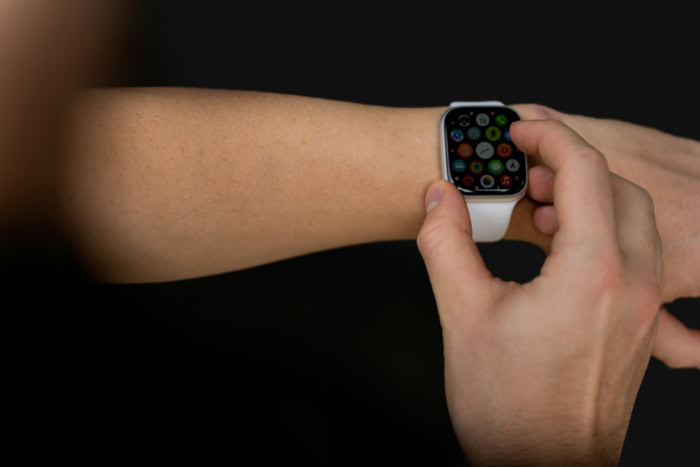
As portable consumer electronics shrank and wearable technology emerged, the continuous power draw of Classic Bluetooth became a significant design bottleneck. Devices required a brand-new approach to wireless transmission that prioritized energy conservation over continuous streaming capacity.
This requirement led to a fundamental redesign of the protocol stack, allowing miniature devices to remain connected for months or years.
Architecture of Bluetooth Low Energy (BLE)
Bluetooth 4.0 introduced Bluetooth Low Energy, a completely distinct protocol stack designed to run alongside or independently of Classic Bluetooth. While Classic Bluetooth relies on a continuous connection model with complex physical channels, BLE utilizes a streamlined architecture built around the Attribute Protocol (ATT) and the Generic Attribute Profile (GATT).
Rather than maintaining a persistent, high-overhead connection, BLE devices transmit brief packets of structured data only when necessary. The physical layer is optimized with forty channels spaced 2 megahertz apart, compared to the seventy-nine channels of Classic Bluetooth, simplifying the frequency-hopping process and reducing the time a device must spend scanning the airwaves.
Power Conservation and Battery Lifespan
The remarkable power efficiency of BLE stems directly from its aggressive duty-cycle management and state machine design. Devices remain in an ultra-low-power sleep state for the vast majority of their operational lives, waking up for mere milliseconds to transmit a burst of advertising packets or handle a brief connection event.
This approach allows devices to run on tiny, low-voltage button-cell batteries. The protocol minimizes transmitter active time by utilizing rapid connection establishment and fast frequency changes, ensuring that the radio transceiver is powered down the instant data transfer completes.
Integration within the Internet of Things (IoT)
This low-energy architecture enabled a vast expansion of interconnected devices, particularly in the smart home, industrial monitoring, and health sectors. Wearable sensors, such as heart rate monitors and fitness trackers, could now continuously sync data to smartphones without draining either device’s battery.
Smart home networks leveraged BLE to connect light switches, door locks, and environmental sensors. Additionally, the technology supported the deployment of beacon systems, which broadcast localized identification packets to nearby smartphones, facilitating precise indoor navigation and context-aware public information services.
Enhancements to Speed, Range, and Audio (Bluetooth 5.0 to 5.4)

With the foundation of low-energy communication established, succeeding iterations aimed to remove the trade-offs between range, transfer speed, and audio quality. Innovations introduced in versions 5.0 through 5.4 systematically dismantled these limits, expanding the footprint of wireless networks.
These updates transitioned the technology from a short-range personal network into an adaptable platform for broad spatial distribution and high-fidelity multi-user audio.
Modifications to Range and Data Transfer Speed
Bluetooth 5.0 introduced flexible physical layer (PHY) configurations that allowed developers to choose between maximum speed and maximum range. The double-speed mode (2 Mbps PHY) doubled the data throughput of BLE by compressing the transmission window, which also reduced overall power consumption by shortening radio active times.
Conversely, the Coded PHY mode quadrupled the theoretical range without increasing transmission power. This was achieved by employing forward error correction, which adds redundant bits to the data packets, allowing receivers to reconstruct weak, degraded signals at far greater distances, even through solid walls and electromagnetic noise.
Innovations in Audio (LE Audio and LC3 Codec)
A major milestone was achieved with the introduction of LE Audio, which operates over the low-energy radio framework rather than the power-hungry Classic Bluetooth stack. Crucial to this architecture is the Low Complexity Communication Codec (LC3), which replaces the decades-old Subband Codec (SBC).
LC3 utilizes advanced compression algorithms to deliver vastly improved audio quality at half the bitrate of SBC. This efficiency significantly reduces power consumption during audio playback, enabling smaller earbud designs and longer playback times while maintaining pristine, high-fidelity sound.
Multi-Stream Broadcast Capabilities (Auracast Technology)
Building on LE Audio, Auracast broadcast audio introduced the ability to transmit one or more audio streams to an unlimited number of receivers within range. Operating through a one-to-many broadcast architecture, an Auracast transmitter sends audio packets to any nearby receiver without establishing a formal bidirectional connection.
This capability allows public spaces, such as airports, gyms, and theaters, to broadcast silent television audio, multilingual translations, or assistive listening streams directly to users’ compatible hearing aids and headphones, redefining personal audio accessibility.
Spatial Awareness and Architecture (Bluetooth 6.0)

Modern wireless networking demands more than just data transmission; it requires precise physical awareness of surrounding devices. The introduction of Bluetooth 6.0 addresses this need by incorporating specialized spatial tracking capabilities into the standard.
These architectural upgrades transition the protocol into an instrument for highly secure, centimeter-level spatial calculations.
Centimeter-Level Precision via Phase Measurement
At the forefront of Bluetooth 6.0 is Channel Sounding, which introduces highly accurate physical distance estimation between devices. Unlike older signal strength indicators, which are easily skewed by obstacles and environmental conditions, Channel Sounding calculates distance using Phase-Based Ranging (PBR).
By measuring the phase shift of radio signals transmitted across multiple frequencies between two devices, the system determines distance with centimeter-level precision. This is often supplemented by Round-Trip Time (RTT) measurements, which compute the time of flight of radio packets to confirm the physical distance.
Protection Measures against Relay Attacks
Relay attacks, where unauthorized parties intercept and forward wireless credentials to bypass secure access points, pose a significant vulnerability to digital entry systems. Bluetooth 6.0 mitigates this risk by integrating security protocols directly into the Channel Sounding process.
By cross-referencing Phase-Based Ranging data with strict Round-Trip Time calculations, the system can detect when a signal has been artificially delayed or retransmitted. Additionally, the protocol utilizes cryptographic security mechanisms, such as a Distributed Random Bit Generator, to ensure that the ranging signals themselves cannot be predicted or simulated by interceptors, securing digital vehicle keys and building entryways.
Efficiency Optimizations (Decision-Based Frame Selection)
To preserve battery resources on host processors, Bluetooth 6.0 implements Decision-Based Advertising Filtering. In extended advertising networks, scanning devices must typically scan multiple primary and secondary channels to receive full data payloads, which drains power.
With decision-based filtering, the scanning hardware analyzes the initial packet received on a primary advertising channel to determine if the subsequent secondary packets contain relevant information. If the initial packet is irrelevant to the application, the scanner ignores the secondary channels entirely, allowing the host processor to remain in a low-power state and significantly improving overall scanning efficiency.
Integration Challenges and Protocol Solutions

Operating a global wireless standard requires maintaining compatibility across billions of diverse devices while managing congested radio bands. As new features are introduced, the protocol must seamlessly integrate with legacy technologies and withstand external signal interference.
Addressing these challenges requires a robust set of fallback mechanisms, adaptive signaling techniques, and advanced security configurations.
Backward Compatibility in Mixed-Version Networks
To ensure that older hardware does not become obsolete, the Bluetooth protocol enforces strict backward compatibility. When a modern Bluetooth 6.0 or 5.4 device initiates a connection with an older peripheral, they perform a link-layer feature exchange during the initial handshake.
This negotiation allows the modern device to identify the capabilities of the host hardware and fall back to older, mutually supported protocols. For instance, if an advanced transceiver connects to a Bluetooth 4.0 headset, it disables features like LE Audio or Channel Sounding, reverting to Basic Rate or standard BLE to maintain a stable, functional connection.
Coexistence and Interference Mitigation in the 2.4 GHz Band
The 2.4 gigahertz frequency band is highly congested, shared by Wi-Fi networks, baby monitors, microwave ovens, and various industrial systems. To prevent packet collisions and signal degradation, Bluetooth relies on Adaptive Frequency Hopping (AFH).
This technique dynamically maps the available radio channels and flags those suffering from high interference. The system then automatically excludes these congested channels from its hopping sequence, shifting active transmissions to cleaner frequencies in real time.
This adaptive shifting ensures stable data transfers and prevents Bluetooth signals from disrupting adjacent Wi-Fi networks.
Device Authentication Security (Secure Connection Protocols)
As wireless interactions handle more personal data, securing device pairing from interception is paramount. The protocol employs Secure Simple Pairing (SSP) alongside cryptographic secure connections to establish encrypted links.
During pairing, devices utilize Elliptic Curve Diffie-Hellman (ECDH) cryptography to generate shared cryptographic secrets without transmitting them over the air, neutralizing passive eavesdropping. To combat active tracking and sniffing attacks, devices also employ cryptographic address randomization, frequently changing their private hardware addresses so that external trackers cannot monitor their physical movements.
Conclusion
The progression of Bluetooth from a basic cable replacement to a sophisticated micro-location and audio platform demonstrates the power of collaborative technical standards. What began as a simple tool to eliminate desktop cord clutter has matured into an adaptive protocol capable of high-fidelity broadcasts, centimeter-level spatial calculations, and highly efficient low-power operations.
This continuous refinement of architectural protocols ensures that modern devices remain securely and reliably connected. By adapting to shifting hardware requirements and crowded radio spectrums, the standard maintains the invisible wireless infrastructure that underpins contemporary portable technology.
Frequently Asked Questions
Can Bluetooth 6.0 really tell exactly how far away my phone is?
Yes, Bluetooth 6.0 can measure the physical distance between devices with centimeter-level precision. It achieves this through a technology called Channel Sounding, which calculates distance by measuring the phase shift of radio signals sent across multiple frequencies. This phase-based tracking is highly accurate and far more reliable than older signal strength measurements.
Why does my new Bluetooth device still work with my really old computer?
Your new device works with older hardware because the Bluetooth protocol enforces strict backward compatibility. During the initial connection handshake, both devices perform a feature exchange to negotiate their capabilities. If one device is older, the newer device automatically falls back to mutually supported legacy protocols to maintain a stable, functional link.
How does Bluetooth keep Wi-Fi from messing up my music streaming?
Bluetooth avoids Wi-Fi interference by using a clever technique called Adaptive Frequency Hopping. This process constantly scans the 2.4 GHz radio spectrum to identify channels experiencing heavy traffic or noise. It then dynamically changes its signal transmission path, moving active connections only to clean frequencies and entirely bypassing congested Wi-Fi channels.
Is it true that Bluetooth can now broadcast audio to multiple headphones at once?
Yes, a new feature called Auracast allows one transmitter to share audio with an unlimited number of nearby receivers. Operating on a one-to-many broadcast architecture, Auracast sends synchronized audio streams to any compatible headphone or hearing aid in range. This lets users tune in to public screens or listen to shared personal music.
How do wireless tracking tags run for a year on a tiny watch battery?
Tracking tags achieve long lifespans by using Bluetooth Low Energy, which keeps the radio transmitter asleep most of the time. The device remains in an ultra-low-power state, waking up for only a few milliseconds to transmit short bursts of advertising data before immediately shutting down. This rapid communication cycle preserves battery power for months.
About the Author: Julio Caesar


