
What Is a Data Center? Explained

Every time you stream video, make an online payment, or access cloud applications, specialized physical infrastructure processes that data behind the scenes. Without these dedicated facilities, routine corporate operations and everyday consumer connectivity would instantly stall.
Centralized processing hubs drive modern commerce by hosting enterprise server racks, directing high-volume network traffic, and guaranteeing continuous operational uptime. As organizational reliance on heavy computational workloads expands, recognizing how this physical foundation functions becomes essential for technical teams and executive leaders alike.
Continuing offers a practical perspective on building resilient, scalable, and energy-efficient environments capable of sustaining enterprise growth while managing significant capital expenses and power demands.
Key Takeaways
- Data centers consolidate compute power, network infrastructure, and enterprise data storage into centralized, managed physical facilities to ensure continuous digital availability.
- Power reliability depends on multi-tiered electrical backups, utilizing battery-driven Uninterruptible Power Supply systems for immediate power and secondary generators for extended grid outages.
- Advanced environmental architecture, including hot-aisle and cold-aisle air containment and targeted liquid cooling, protects server hardware from thermal failure and static damage.
- Infrastructure models accommodate diverse needs through single-tenant enterprise buildings, shared colocation spaces, mass-scale hyperscale cloud campuses, and low-latency edge nodes.
- Performance evaluation relies on Uptime Institute Tier standards (Tier I through IV) for availability and Power Usage Effectiveness (PUE) metrics to gauge energy efficiency.
Definition and Fundamental Purpose of a Data Center
Modern society relies heavily on continuous data processing to power commercial software, financial transactions, and global communication networks. Behind these daily activities sits specialized physical infrastructure engineered specifically to process, manage, and protect massive volumes of information without interruption.
Core Concept and Definition
A data center is a dedicated physical building or designated room within a facility that houses computer systems, networking equipment, and associated software. It serves as a central repository where organizations consolidate their information technology equipment.
The primary purpose of this infrastructure is to aggregate data storage, compute power, and networking capabilities into a single managed location. By centralizing these operations, businesses can store enormous datasets, execute heavy computing tasks, and distribute information efficiently to users located anywhere in the world.
Primary Function in Digital Infrastructure
Data centers support critical business and internet operations that modern organizations require to function. They host core enterprise applications, such as customer management databases, financial accounting platforms, and internal collaboration software.
Additionally, these facilities manage automated data backups, ensuring that critical information remains preserved and recoverable in the event of software corruption or operational errors. Every time a user streams media, submits an online payment, or accesses a web application, the request travels across high-speed internet connections directly to server equipment housed inside a data center, which processes the request and returns the required data.
Evolution from Enterprise Server Rooms
In the early decades of commercial computing, businesses typically managed their technology infrastructure within localized server closets or small rooms built inside office buildings. As software applications expanded and data volumes grew, these makeshift spaces proved inadequate.
Equipment required far more power, precise cooling, and physical security than standard office spaces could provide. This led organizations to move away from isolated in-house server rooms toward high-density, purpose-built facilities.
Modern facilities incorporate advanced engineering standards, centralized power systems, and specialized operational staff to maximize efficiency and guarantee uptime at scale.
Core Components and Infrastructure
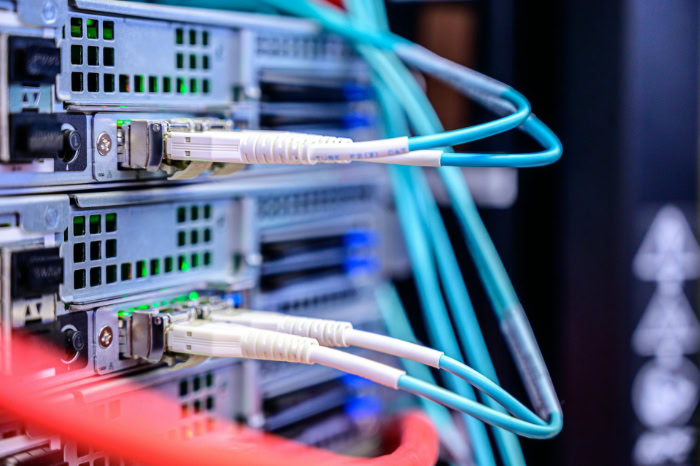
Operating a facility capable of hosting thousands of servers requires a complex combination of computing hardware, power equipment, climate systems, and multi-layered security measures. Each sub-system must work in harmony to ensure that data remains accessible every second of the day.
Hardware, Storage, and Network Systems
The foundational layer of data center infrastructure consists of compute hardware, including physical servers organized in standardized vertical racks. These servers contain microprocessors, memory modules, and motherboard components optimized for continuous enterprise workloads.
Data storage relies on centralized architectures such as Storage Area Networks (SAN) and Network Attached Storage (NAS). SAN systems deliver high-speed block-level storage across dedicated networks, while NAS units provide file-level storage accessible over standard network protocols.
High-performance switches, enterprise routers, physical firewalls, and structured fiber-optic cabling interconnect these devices, routing data packets swiftly across internal networks and out to external destinations.
Power Distribution and Energy Backup
Continuous power is critical to prevent hardware damage and service interruptions. Facilities receive high-voltage electrical feeds directly from local power utilities, which pass through transformers and distribution units to reach individual equipment racks.
To guard against instantaneous utility failures, Uninterruptible Power Supply (UPS) systems act as a bridge, utilizing battery banks to maintain continuous electrical flow without a millisecond of power loss. If an outage extends beyond several minutes, secondary diesel or natural gas generators automatically start, supplying sufficient electrical power to run the entire facility for days if necessary.
Environmental and Climate Control Systems
Computer hardware generates substantial heat during operation, making precise thermal control essential. Facilities employ high-capacity heating, ventilation, and air conditioning (HVAC) systems alongside hot-aisle and cold-aisle air containment architectures to separate intake air from exhaust streams.
In high-density installations, liquid cooling infrastructure circulates coolant directly past processing chips to remove heat more effectively than air alone. These environmental systems constantly monitor ambient temperature and relative humidity levels to prevent hardware overheating, static electricity accumulation, or condensation damage.
Physical and Cyber Security Frameworks
Protecting valuable data requires comprehensive defenses across both physical and digital vectors. Physical security begins at the facility perimeter with security fencing, guarded vehicle checkpoints, video surveillance, and biometric access controls at server room entrances.
Detailed visitor logs track every person who enters sensitive areas. Simultaneously, digital security frameworks protect internal systems using next-generation firewalls, intrusion detection systems, end-to-end encryption, and strict network segmentation, preventing unauthorized access to corporate datasets.
Classification and Types of Data Centers

Organizations have varied technological requirements, financial budgets, and operational goals, leading to several distinct models for constructing and operating data infrastructure. Depending on business size, regulatory needs, and workload demands, companies choose from proprietary enterprise sites, shared environments, massive hyperscale facilities, or localized edge setups.
Enterprise Facilities
Enterprise facilities are custom-built data centers owned, built, and managed directly by a single organization for its sole internal use. Corporations with specialized security mandates, unique compliance requirements, or custom technology stack requirements often choose this model.
Operating an enterprise facility gives a company complete operational control over system architecture, maintenance schedules, hardware upgrades, and security protocols, though it requires substantial capital investment and dedicated operational personnel.
Colocation and Managed Services
Colocation facilities offer a shared model where a third-party commercial provider owns and maintains the physical building, power infrastructure, cooling systems, and physical security. Multiple tenant companies rent floor space, racks, power, and high-speed network bandwidth within the building.
Under this arrangement, the facility provider manages the physical structure and environmental support systems, while client organizations remain responsible for installing and maintaining their own server hardware and software applications.
Cloud and Hyperscale Infrastructure
Cloud and hyperscale data centers represent massive industrial-scale infrastructure built and operated by global cloud service providers. These vast campuses contain tens of thousands of servers managed through advanced automation software.
Hyperscale environments utilize multi-tenant virtualization, allowing thousands of business clients to provision compute power, database storage, and software tools dynamically. This architecture offers practically unlimited scalability, enabling clients to expand or reduce technological capacity instantly without purchasing physical hardware.
Edge Infrastructure
Edge data centers are compact, localized facilities positioned close to where data is actively generated and consumed, such as manufacturing plants, smart cities, telecom towers, or retail centers. Traditional data facilities may reside hundreds of miles away, introducing minor transmission delays.
By performing compute functions near the end user or machine source, edge infrastructure dramatically reduces latency, supporting time-sensitive applications like autonomous driving, industrial automation, and real-time video analytics.
Industry Standards and Performance Evaluation

Evaluating how well a facility functions requires objective benchmarks for power performance and system uptime. Standardized classification systems and efficiency ratios allow facility managers and business executives to measure operational quality, compare facility capabilities, and design infrastructures that meet specific organizational requirements.
Tier Classification System
The Uptime Institute developed a widely recognized Tier classification system that categorizes data center infrastructure into four distinct levels:
- Tier I: Provides basic site infrastructure with a single non-redundant distribution path, offering approximately 99.671% availability (equating to up to 28.8 hours of annual downtime).
- Tier II: Introduces redundant capacity components, raising availability to 99.741%.
- Tier III: Features concurrently maintainable infrastructure with multiple distribution paths, ensuring 99.982% availability and allowing planned maintenance without stopping operations.
- Tier IV: Represents the highest standard, offering fully fault-tolerant infrastructure with redundant systems that yield 99.995% availability (resulting in less than 26.3 minutes of unexpected disruption per year).
Key Metrics and Power Usage Effectiveness
Energy management remains a central focus for modern facility operations, making quantitative metrics essential for tracking power consumption. The most prominent benchmark is Power Usage Effectiveness (PUE), which calculates the ratio of total energy entering the facility to the energy delivered directly to IT computing equipment.
A lower PUE indicates a more efficient site, with a theoretical ideal score of 1.0. A complementary metric is Data Center Infrastructure Efficiency (DCiE), which is calculated as the inverse of PUE and expressed as a percentage.
Facilities use these calculations to identify energy waste in cooling and lighting systems, driving targeted improvements to reduce operational costs.
Redundancy Models and Reliability Standards
To maintain uninterrupted operations during equipment failure or routine maintenance, facilities rely on specific redundancy architectures. An N architecture represents the baseline capacity required to support the facility’s full computing load without any spare components.
An N+1 model adds a single backup component for every core system unit, allowing one transformer, UPS, or cooling unit to fail without impacting service. A 2N model doubles the entire infrastructure, creating two completely independent and parallel utility paths.
This fully redundant structure guarantees operational continuity even when an entire primary system shuts down unexpectedly or undergoes major repairs.
Strategic Benefits and Operational Challenges

Consolidating compute workloads into dedicated facilities offers significant operational control and performance advantages, but it also introduces complex financial commitments and resource requirements. Organizations must evaluate these benefits alongside the capital demands, security risks, and environmental considerations associated with continuous computing operations.
Business Advantages and Centralized Control
Centralizing technological infrastructure allows corporations to maintain tight control over their software, databases, and physical hardware. High uptime guarantees and robust disaster recovery protocols minimize service disruptions, protecting companies from financial losses and reputational damage caused by unexpected system downtime.
Furthermore, aggregating servers into managed environments simplifies software updates, streamlines regulatory compliance oversight, and enables security teams to enforce consistent policies across all corporate data repositories.
Capital Investment and Expense Structure
Building and running compute infrastructure involves balancing Capital Expenditure (CapEx) against Operational Expenditure (OpEx). Constructing an enterprise-grade facility or purchasing server hardware requires substantial upfront CapEx, which covers property acquisition, high-density power equipment, generators, and heavy-duty cooling units.
Conversely, ongoing OpEx includes continuous electricity consumption, facility staffing, software licensing, and routine hardware repairs. Choosing between owning proprietary sites or renting colocation space often depends on whether an organization prefers large upfront investments or predictable monthly operational costs.
Operational Risks and Environmental Impact
Maintaining continuous operations involves managing severe operational threats and significant environmental resources. Unplanned power outages, hardware failures, physical breaches, and cyberattacks can disrupt operations and compromise critical corporate data.
Beyond operational vulnerabilities, data facilities place heavy demands on local resource networks. Server clusters consume vast amounts of electricity, while evaporative cooling systems require millions of gallons of water annually.
Managing carbon footprints, optimizing energy consumption, and adopting sustainable cooling technologies have consequently become primary mandates for infrastructure operators worldwide.
Conclusion
Data centers serve as the backbone of modern digital operations by organizing compute power, high-speed networking, and mass storage into highly controlled environments. From single-tenant corporate facilities to massive hyperscale cloud campuses and localized edge nodes, these physical sites rely on standardized tier classifications and metrics like Power Usage Effectiveness to ensure high availability and energy efficiency.
Safeguarding these environments requires multi-layered physical security, advanced cybersecurity, and redundant power systems that prevent hardware failures from disrupting global services. As global reliance on cloud computing, artificial intelligence, and automated data processing expands, dedicated data center infrastructure remains indispensable for sustaining commercial software, international trade, and daily online communications.
Frequently Asked Questions
What is the main purpose of a data center?
A data center centralizes an organization’s IT operations and equipment to store, process, and distribute large amounts of data securely. These dedicated facilities house physical servers, storage networks, and networking hardware that run daily business software. They also provide redundant power backups and climate controls to guarantee continuous operational uptime.
What happens if a data center loses power?
When primary grid power fails, battery-based backup systems immediately engage to keep equipment running without missing a beat. Uninterruptible Power Supply systems provide instant electrical current during short disruptions. If utility outages last longer, secondary diesel or natural gas generators automatically start up to supply full electrical power, preserving system uptime and preventing server damage or data loss.
How do colocation data centers work?
A colocation data center is a shared facility where businesses rent physical space, electrical power, cooling, and internet bandwidth for their servers. The commercial provider owns and maintains the physical building, security perimeter, and power infrastructure. Meanwhile, client companies supply, install, and manage their own proprietary server hardware, operating systems, and software applications within that shared facility.
What is Power Usage Effectiveness in a data center?
Power Usage Effectiveness is a benchmark metric that measures how efficiently a data center facility uses electrical energy. It is calculated by dividing the total energy entering the facility by the energy used exclusively by compute equipment. A score closer to 1.0 indicates higher efficiency, showing that minimal electricity is wasted on cooling, lighting, and non-computing support systems.
Why are edge data centers becoming popular?
Edge data centers are growing in popularity because they process data closer to end users, significantly reducing network latency. Placing compact facilities near data sources shortens physical transmission distances across the internet. This ultra-fast response time is essential for time-sensitive modern technologies, including self-driving vehicle systems, real-time video streaming, industrial automation, and smart city infrastructure.
About the Author: Julio Caesar


