WireGuard vs. OpenVPN: Which Is Faster?

Selecting the right virtual private network protocol directly impacts your connection speed, device battery life, and online security. As modern cyber threats grow more sophisticated, your protocol of choice determines how safely and efficiently you can access remote networks.
For years, OpenVPN served as the trusted, highly flexible industry standard for secure tunneling. However, WireGuard has emerged as a lightweight competitor, promising radical code simplicity and faster performance.
To make an informed choice, one must analyze how architecture, cryptography, and network compatibility differ between them.
Key Takeaways
- WireGuard features a highly compact codebase of about 4,000 lines, making security audits fast and straightforward compared to OpenVPN’s complex architecture of over 70,000 lines.
- WireGuard operates directly within the operating system kernel, delivering significantly faster download speeds and lower latency than OpenVPN, which runs in user space.
- Mobile devices consume less battery using WireGuard because its silent protocol does not transmit data when idle, unlike OpenVPN’s continuous keep-alive handshakes.
- Standard WireGuard requires providers to implement custom double Network Address Translation systems to prevent the permanent storage of user IP addresses in server memory, an issue OpenVPN avoids through dynamic allocation.
- OpenVPN is much better suited for bypassing strict firewalls and censorship because it can run over TCP port 443 to mimic secure web traffic, whereas WireGuard is restricted to easily blocked UDP ports.
Protocol Architecture and Design Philosophies
The fundamental design philosophy of a virtual private network protocol shapes its security, efficiency, and long-term maintainability. Modern protocols often prioritize lean, modern structures, whereas older standards maintain compatibility with legacy systems through modular architectures.
Codebase Complexity and Security Audits
The size of a protocol’s codebase directly affects its vulnerability surface and the ease with which security researchers can identify bugs. WireGuard features a remarkably compact codebase consisting of roughly 4,000 lines of code. This streamlined structure makes it possible for a single security researcher to review and audit the entire protocol in a matter of days.
In contrast, OpenVPN relies on a substantial codebase exceeding 70,000 lines of code, which increases to hundreds of thousands of lines when factoring in its dependency on external cryptographic libraries like OpenSSL. This immense complexity creates a much larger attack surface.
Consequently, comprehensive security audits of OpenVPN require substantial teams, extended periods of time, and a higher budget, meaning subtle bugs can remain undetected in the code for years.
Cryptographic Standards
OpenVPN and WireGuard approach cryptography from entirely different perspectives. OpenVPN is designed with cryptographic agility, meaning it supports a wide variety of cryptographic algorithms, hashes, and ciphers provided by libraries like OpenSSL or mbedTLS.
Users can choose between AES-GCM, Blowfish, or ChaCha20, along with various handshake and authentication methods. While this flexibility allows OpenVPN to adapt to new standards without rewriting the protocol, it frequently leads to configuration errors.
Administrators may inadvertently select weak or outdated combinations, exposing the network to downgrade attacks and increasing protocol negotiation overhead.
WireGuard rejects this agility in favor of cryptographic opinionation. It uses a fixed, modern set of cryptographic primitives, including ChaCha20 for symmetric encryption, Poly1305 for authentication, Curve25519 for handshake negotiation, and BLAKE2s for hashing.
Users cannot change these parameters, which eliminates the risk of choosing weak configurations. If a vulnerability is discovered in one of these primitives, WireGuard developers must release a protocol update rather than relying on users to manually adjust their settings.
This approach minimizes protocol overhead and prevents human error during deployment.
Performance and Resource Efficiency
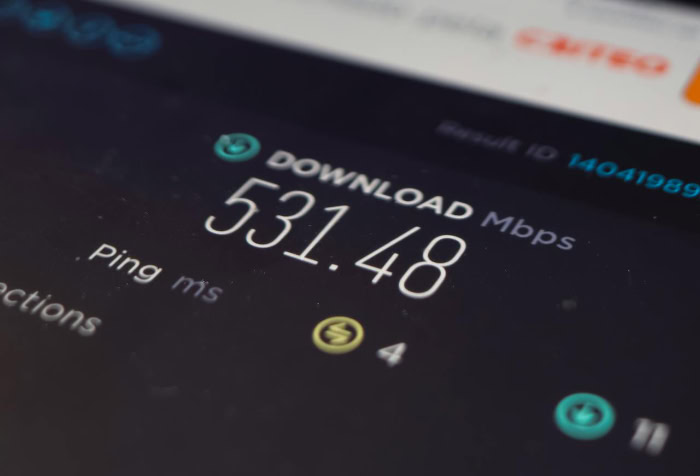
The underlying interaction between a tunnel protocol and the operating system determines how fast data travels and how much energy the hardware consumes. Efficiency is particularly noticeable when comparing protocols designed for modern system kernels against older models built for user-space operation.
Throughput and Latency Metrics
WireGuard operates entirely within kernel space, which is the most privileged level of the operating system. When network packets arrive, WireGuard processes them directly inside the kernel, bypassing the need to pass data back and forth to user space.
This direct path minimizes context switching and CPU usage, resulting in lower latency, reduced ping times, and higher raw download and upload speeds.
OpenVPN, by default, operates in user space. Every packet transmitted must be passed from the physical network interface, through the operating system kernel, up to the OpenVPN application running in user space, and then back down to the kernel to be sent out.
This constant back-and-forth context switching creates a significant processing bottleneck. Especially on high-speed internet connections, OpenVPN struggles to match the throughput of WireGuard and places a much heavier load on the host processor.
Mobile Device Impact and Battery Consumption
The resource footprint of a protocol heavily influences battery performance on smartphones and tablets. OpenVPN maintains a persistent connection state by continuously sending keep-alive packets between the client and the server.
This continuous exchange prevents the mobile device’s processor from entering a low-power sleep state, leading to noticeable battery drain even when no data is actively being sent.
WireGuard uses a silent state protocol, which means it only communicates when there is actual data to transmit. In the absence of network traffic, both the client and the server remain completely silent, allowing the mobile processor to sleep and conserving battery.
Additionally, WireGuard handles IP address transitions seamlessly. If a user moves from a Wi-Fi network to a cellular data network, WireGuard updates the endpoint address immediately upon receiving a cryptographically verified packet from the new IP.
The transition is instantaneous, whereas OpenVPN must detect the timeout, renegotiate a handshake, and re-establish the tunnel, a process that can take several seconds and interrupt active streams.
Privacy, Data Storage, and Identity Management

While cryptographic security ensures that third parties cannot read transmitted data, the way a tunnel protocol manages identity and address assignments affects overall user anonymity. Balancing performance with strict privacy policies requires different architectural approaches for each protocol.
IP Address Allocation and Anonymity
WireGuard utilizes a static IP routing mechanism called Cryptokey Routing, which maps each user’s public credential to a specific, static internal IP address. To facilitate this mapping, the WireGuard server must store the public credential, the internal IP, and the user’s last known public IP address in its active memory.
By default, this data remains in memory indefinitely, even if the user disconnects. For commercial privacy-focused providers, this design poses an inherent challenge to maintaining a strict zero-logs policy, as physical or memory forensic analysis could potentially link a user’s actual identity to their VPN session.
OpenVPN employs a dynamic IP address allocation model. When a user connects, the server assigns an IP address from a dynamic pool.
Once the user disconnects, OpenVPN terminates the session and immediately purges all temporary connection logs and IP assignments from active memory. This model aligns easily with zero-logs standards, requiring no extra engineering to prevent the accumulation of user identification data on the server.
Mitigation Strategies for Privacy Concerns
To make WireGuard viable for privacy-first environments, commercial providers have engineered custom software solutions. One common method is a Double Network Address Translation (NAT) system.
Under this setup, the VPN server dynamically assigns a unique internal IP address for each session and removes the association from memory as soon as the user disconnects, ensuring the user’s real public IP address is never permanently linked to their active internal IP.
Furthermore, many server operators utilize custom scripts designed to erase memory periodically or configure RAM-only servers. By running the entire operating system in volatile memory and utilizing automated data purging, providers ensure that temporary session details, cryptographic states, and IP mappings are completely unrecoverable the moment a server restarts or a connection closes.
Network Compatibility and Firewall Circumvention
The ability of a protocol to function across diverse network environments depends on how it packages and transmits data. Network administrators and restrictive firewalls often target specific ports and packet formats, which can hinder secure connections.
Transport Layer Protocol Options
WireGuard is strictly designed to operate over the User Datagram Protocol (UDP). This UDP-only architecture is a deliberate choice to maximize speed and efficiency, as UDP does not suffer from the overhead of error-checking and connection handshakes.
However, this design can lead to compatibility issues on public, corporate, or academic networks. Administrators on these networks often block UDP traffic entirely to control bandwidth, which completely prevents WireGuard from establishing a connection.
OpenVPN offers complete flexibility by supporting both UDP and TCP transport layers. While UDP is the recommended default for optimal performance, OpenVPN can easily switch to TCP.
Running over TCP provides a reliable connection on unstable networks because TCP guarantees packet delivery through verification checks. If UDP packets are blocked or dropped, switching to TCP ensures that a stable connection can still be made.
Censorship Resistance and Deep Packet Inspection
Under restrictive firewalls or national censorship systems, standard VPN traffic is frequently targeted. WireGuard’s traffic possesses a distinct, easily recognizable packet structure.
Because it relies entirely on UDP and lacks built-in obfuscation, Deep Packet Inspection (DPI) systems can quickly identify and block WireGuard handshakes. Bypassing these filters requires wrapping WireGuard inside third-party tools like Shadowsocks or UDP tunnels, which adds configuration complexity and reduces connection speed.
OpenVPN is highly effective at bypassing network restrictions because it can be configured to run over TCP port 443. This port is the standard channel for secure web traffic (HTTPS), making OpenVPN traffic look like ordinary web browsing to basic firewalls.
Blocking port 443 would disable secure web browsing for the entire network, so administrators rarely do so. For more advanced DPI firewalls, OpenVPN can be integrated with obfuscation patches, such as Scramble, or run through proxy tools like Obfsproxy, making the VPN traffic indistinguishable from normal, un-tunneled web traffic.
Implementation, Configuration, and Use Cases

Deploying a VPN protocol involves weighing administrative overhead against the specific requirements of the target audience. The choice between a lightweight, modern protocol and a robust, legacy standard depends on the desired balance of simplicity and control.
Setup Complexity and Administrative Overhead
For system administrators and self-hosters, WireGuard dramatically simplifies deployment. Because it uses a simple asymmetric encryption model, configuring a connection is very similar to setting up SSH.
Administrators only need to generate public and private security tokens for the server and client, list the permitted IP addresses, and establish the connection. There is no need for complex configuration files, making deployment quick and straightforward.
OpenVPN involves a much higher level of administrative overhead. Establishing an OpenVPN connection requires setting up and maintaining a complete Certificate Authority (CA).
Administrators must generate, sign, and distribute certificates, private credentials, and Diffie-Hellman parameters for every single client. Managing these certificates over time, especially when revoking access for compromised devices, requires significant administrative effort and a solid understanding of public infrastructure security.
Protocol Selection Guide
For consumer applications, WireGuard is generally the preferred choice. Its low latency and high speed make it exceptionally well-suited for high-bandwidth activities like streaming high-definition media and online gaming.
Additionally, its lightweight design and seamless network switching make it the ideal option for mobile devices, where battery life and uninterrupted connectivity are highly valued.
OpenVPN remains the standard for complex enterprise deployments. Organizations that require integration with existing directory services, such as Active Directory or LDAP, rely on OpenVPN because it supports external multi-factor authentication modules natively.
Furthermore, its ability to run over TCP port 443 ensures that remote employees can reliably connect to the corporate network even when working behind strict hotel, airport, or corporate firewalls. OpenVPN is also highly suited for legacy site-to-site tunnels where routing complexity and certificate-based access control are already established.
Conclusion
The architectural differences between these two protocols highlight a clear technological transition. WireGuard provides a highly streamlined framework focused on speed, cryptographic modernism, and extreme codebase simplicity.
Its kernel-level operation and minimalist code make it incredibly efficient for consumer applications, reducing processing bottlenecks and battery consumption on mobile platforms. However, this minimalist approach leaves privacy mapping and firewall bypass to be handled by external custom configurations.
OpenVPN remains a robust, highly adaptable standard that excels in enterprise environments. Its dynamic IP assignment natively supports zero-logs policies, while its support for both UDP and TCP transport layers allows it to bypass restrictive network firewalls on port 443.
Ultimately, the choice involves prioritizing raw speed and modern design against maximum flexibility, legacy system compatibility, and advanced network traversal options.
Frequently Asked Questions
Is WireGuard faster than OpenVPN?
Yes, WireGuard is generally much faster than OpenVPN because it operates directly inside the operating system kernel. This design eliminates the processing delays associated with passing network traffic back and forth between kernel and user space. As a result, users experience lower latency, faster download speeds, and reduced processor loads.
Will using WireGuard drain my phone battery?
WireGuard will consume significantly less battery on your phone compared to older protocols like OpenVPN. It uses a silent connection protocol that only transmits data when you are actively using the network. This allows your device’s processor to remain in a low-power state when no data is being sent.
Can network administrators block WireGuard easily?
Yes, network administrators can block WireGuard quite easily because it only runs over the User Datagram Protocol. Many public, corporate, or hotel networks block this protocol completely to manage bandwidth or security. OpenVPN avoids this issue because it can run over Transmission Control Protocol ports that mimic standard web traffic.
Is OpenVPN safer than WireGuard because it is older?
No, OpenVPN is not inherently safer than WireGuard, although its long history means it has undergone extensive testing. WireGuard actually offers a smaller vulnerability surface because its codebase is only 4,000 lines long, compared to OpenVPN’s 70,000 lines. This compact size makes it much easier for security professionals to audit.
Does WireGuard keep logs of my IP address?
WireGuard does require the server to store your IP address in memory by default, but commercial VPN providers use custom workarounds to prevent logging. Providers often set up dual network address translation systems or use volatile RAM servers. These setups automatically wipe your connection details as soon as you disconnect from the network.
About the Author: Julio Caesar