
What Is a Surge Protector? How It Works

Standard household outlets deliver an alternating current of roughly 120 volts to run modern appliances and electronics. While this flow is usually reliable, unexpected power spikes can occur without warning.
Severe weather, sudden utility grid shifts, or high-draw appliances cycling on and off can create rapid voltage spikes that overwhelm sensitive microchips in computers, televisions, and game consoles. A surge protector serves as an essential electrical defense, diverting hazardous excess energy safely into the ground path before it destroys delicate hardware.
Key Takeaways
- Surge protectors differ fundamentally from basic power strips: Standard power strips only add extra outlets and trip during sustained amperage overloads, whereas surge protectors contain metal oxide varistors that divert millisecond voltage spikes safely into the ground wire.
- Match energy absorption ratings to equipment value: Select a rating between 1,000 and 2,000 Joules for desktop computers and home office gear, aim for 2,000 Joules or higher for gaming systems and home theaters, and look for clamping voltages near 330V or 400V.
- Keep high-draw heating and motor appliances off multi-outlet units: Appliances like space heaters, hair dryers, refrigerators, and microwaves draw continuous currents between 10A and 15A, which overheats internal suppression circuits and creates severe fire hazards.
- A dedicated three-prong ground path is mandatory: Protective components rely strictly on a functioning ground wire to dump excess electrical pressure away from connected hardware; using two-prong adapters or daisy-chaining strips disables surge defense.
- Protective components degrade silently and require periodic replacement: Internal varistors wear down incrementally with every surge they absorb; replace protectors every three to five years, right after major electrical storms, or whenever the “Protected” status light goes dark.
Definition and Operation of Surge Protectors
Electrical utility networks deliver power to residential wall receptacles, but alternating current does not always maintain an even rate of flow. Voltage spikes can introduce sudden, destructive pulses of electricity into home circuits.
Equipment built for surge protection serves as an active barrier against these events, intercepting excessive voltage and diverting it away before it reaches delicate electronic components.
Core Purpose and Electrical Role
A surge protector functions as a safety barrier between a wall outlet and valuable electronics. Standard electrical outlets in North America provide alternating current at approximately 120V, fluctuating in a smooth wave pattern.
Electronic devices expect this steady voltage level for regular operation. A transient voltage spike occurs when electrical pressure suddenly increases well beyond 120V for a fraction of a second.
Without an intermediary defense, that burst enters connected equipment directly. A surge protector monitors this incoming electrical line and shunts excess voltage directly into the ground wire, allowing only normal operating voltage to reach plugged-in equipment.
Causes of Sudden Voltage Spikes
Voltage disturbances originate from both outside and inside the home. External spikes are often the most severe.
Lightning strikes during severe weather can inject millions of volts into local power lines, while utility grid adjustments, power station switching, and fallen tree limbs on neighborhood transformers generate sudden line surges. Internal triggers are far more frequent.
Whenever high-power household appliances cycle on and off, they create inductive electrical ripples. Air conditioners, refrigerators, and heat pumps draw substantial current when their compressors start, producing momentary voltage jumps across shared household wiring.
Although these internal ripples rarely cause instant device failure, frequent small fluctuations cause cumulative wear on sensitive microchips, gradually degrading silicon pathways until a component breaks.
Internal Components and Energy Redirection
The primary defensive element inside a surge protector is the Metal Oxide Varistor, commonly abbreviated as an MOV. An MOV behaves as a variable resistor that alters its electrical resistance according to the line voltage.
Under standard 120V conditions, the MOV maintains high resistance, preventing current from leaking away from the primary circuit. When voltage rises above a predetermined threshold, the resistance inside the MOV drops drastically.
This change creates an alternate, low-resistance route that channels dangerous current straight to the grounding wire. Alongside varistors, manufacturers install thermal fuses that disconnect the circuit if an MOV becomes dangerously hot from continuous absorption.
Advanced units also incorporate gas discharge tubes, which use ionized gas to absorb massive, rapid voltage surges that might overwhelm standard varistors.
Distinction Between Surge Protectors and Power Strips

Shoppers frequently mistake ordinary power strips for surge protectors due to their nearly identical physical designs. While both accessories allow multiple electronics to plug into a single wall receptacle, their underlying purposes diverge significantly.
Physical and Structural Differences
Basic power strips and surge protectors share several external traits, including long plastic housings, a standard power cord, an illuminated rocker switch, and multiple outlets. Despite their external similarities, their internal assemblies are vastly different.
A standard power strip contains nothing more than a plastic casing, internal copper bus bars, and a basic power switch. True protective units contain a dedicated printed circuit board populated with varistors, thermal fuses, and diagnostic indicator lights.
Packaging details also reveal this difference. Authentic protective hardware lists specifications such as Joule absorption capacity, clamping voltage, and protective agency certifications.
In contrast, basic power strips only mention simple electrical ratings like 15A and 125V or describe the product as a relocatable power tap. These component differences explain the price discrepancy, as basic strips usually retail for $5 to $10, whereas genuine protective units sell for $20 to $50 or more.
Circuit Breakers Versus Surge Diverters
The integrated switch on an inexpensive power strip often houses a mechanical circuit breaker, which many users mistake for surge suppression. A circuit breaker protects against sustained current overloads, tripping only when connected hardware draws more current than the strip can handle over several seconds or minutes.
For instance, drawing 18A through a 15A strip causes internal bi-metal strips to heat up, bending and cutting power before wires overheat and start a fire. In contrast, a voltage spike involves an immediate surge in voltage rather than sustained amperage draw.
Transient spikes travel at near light speed, striking connected devices in microseconds or nanoseconds. A mechanical circuit breaker cannot react fast enough to block a millisecond spike, allowing the full force of the electrical surge to enter connected devices unimpeded.
Hazards of Device Misidentification
Relying on an ordinary power strip creates a false sense of security. Users often assume that because their computer equipment is connected to a multi-outlet strip with an integrated switch, their gear is protected against utility grid problems and thunderstorms.
When a power event occurs, an unrated power strip allows the raw voltage surge to travel straight into motherboards, power supplies, and external storage drives. The resulting damage can melt microchips, corrupt stored data, or render an entire computer system permanently unusable.
Without dedicated suppression components, a basic strip functions only as an extension cord, leaving expensive hardware completely vulnerable to electrical line disruptions.
Key Technical Specifications and Performance Metrics
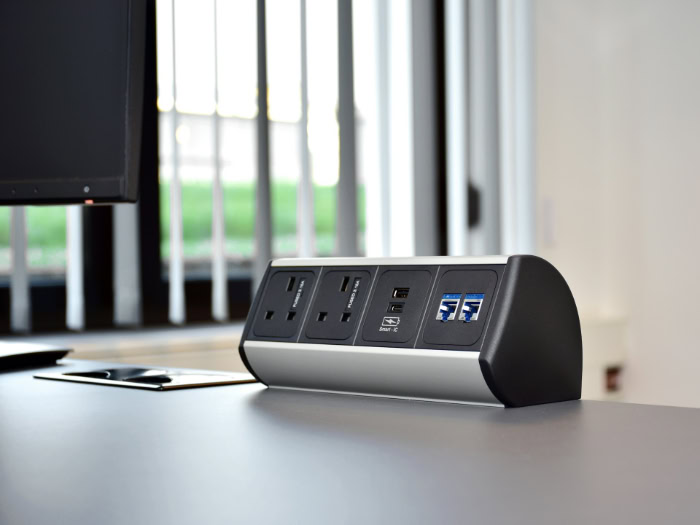
Selecting an effective surge protector requires an evaluation of published technical ratings. Manufacturers measure protective capabilities through standardized engineering metrics that describe energy absorption limits, activation thresholds, and reaction speeds.
Evaluating these figures ensures that chosen hardware provides sufficient defense for sensitive equipment.
Joule Capacity and Energy Absorption
A Joule is a measurement unit that quantifies energy dissipation over time, equivalent to one watt of power applied for one second. In protective hardware, the Joule rating indicates the total cumulative amount of energy varistors can absorb before failing.
Different categories of electronics require distinct tiers of protection. Small accessories like desk lamps and alarm clocks require less than 1,000 Joules.
Home office hardware, including desktop computers, monitors, and network gear, requires 1,000 to 2,000 Joules for adequate coverage. High-end entertainment setups, gaming consoles, and audio receivers should connect to units rated for 2,000 Joules or higher.
Joule ratings are cumulative, meaning a 2,000-Joule protector can absorb a single massive burst or withstand repeated smaller electrical spikes over its service life before its protection depletes entirely.
Voltage Thresholds and Response Time
Clamping voltage defines the precise voltage level that triggers protective varistors to conduct and redirect excess energy away from connected equipment. On standard 120V household lines, a lower clamping voltage delivers superior protection by reacting before voltage climbs to dangerous levels.
The preferred clamping threshold for consumer hardware is 330V or 400V, whereas ratings of 500V or higher allow excessive electrical pressure to reach delicate electronics before suppression activates. Response time measures how rapidly the internal circuitry responds to a detected surge.
High-quality protectors feature response speeds under 1 nanosecond. Because electrical surges travel through wiring instantaneously, nanosecond-level diversion is critical to prevent incoming spikes from burning sensitive microprocessor junctions.
Independent Safety Standards and Certifications
Legitimate protective devices undergo rigorous evaluations by independent safety laboratories. The benchmark certification for transient voltage suppression is UL 1449, established by Underwriters Laboratories.
This safety standard evaluates clamping performance, thermal endurance, and fire safety during catastrophic electrical events. Consumers can confirm authentic certification by locating printed or holographic marks from accredited testing labs, such as UL, ETL, or CSA, on product labels.
Trustworthy manufacturers also reinforce their compliance by providing connected-equipment warranties. These policies offer financial compensation, often ranging from $25,000 to $250,000, to replace electronics that suffer damage while properly plugged into a functional, certified protector.
Device Compatibility and Safety Rules

Not all household equipment should connect to a surge protector. Proper electrical safety requires distinguishing sensitive electronic devices that need voltage defense from high-wattage mechanical appliances that overload multi-outlet circuits.
Recommended Electronics for Dedicated Protection
Any hardware containing sensitive microprocessors and memory modules benefits from dedicated surge suppression. High-value computer hardware tops this list, including desktop workstations, gaming systems, and expensive monitors.
Networking hardware, such as Wi-Fi routers, cable modems, and network-attached storage units, also requires uninterrupted protection, as these devices remain powered continuously and link directly to external service lines. Home office peripherals like printers, powered laptop docks, and external hard drives also possess delicate internal circuitry that suffers from minor voltage fluctuations.
Safeguarding these devices prevents expensive hardware replacements and guards against catastrophic data loss.
Incompatible High-Draw Household Appliances
Major appliances and heating devices should never connect to surge protectors or multi-outlet power strips. High-wattage heating products, such as space heaters, hair dryers, curling irons, and toasters, draw immense current that approaches the upper limit of residential branch circuits.
Motor-driven major appliances, including refrigerators, clothes washers, and microwave ovens, likewise demand substantial current during compressor startup. When high-draw appliances run continuously through a surge protector, the sustained current of 10A to 15A causes internal bus bars, solder connections, and protective fuses to overheat.
This continuous thermal stress degrades varistors and can melt the outer plastic housing, creating severe fire hazards. Major appliances must plug directly into dedicated wall outlets.
Electrical Overload Hazards and Outlet Limits
Safe operation requires respecting standard electrical limitations. Daisy-chaining, the practice of plugging one surge protector or power strip into another, violates national electrical safety codes.
Connecting multiple strips in a chain increases electrical resistance, creates excessive heat, and easily overloads the initial wall receptacle. Standard residential wall circuits in North America support 15A or 20A, corresponding to roughly 1,800W or 2,400W of total capacity across all outlets on that breaker.
Exceeding this limit can trip building breakers or cause electrical fires within wall cavities. Additionally, surge protectors require a grounded three-prong wall outlet to function.
The third prong connects directly to the home ground path, which serves as the escape route for diverted voltage. Plugging a surge protector into an ungrounded two-prong outlet using an adapter eliminates its ability to divert surges, leaving connected devices without defense.
Component Degradation and Replacement Protocols

Surge protectors are consumable safety devices that gradually wear out over time. Every absorbed voltage spike damages internal varistors slightly, eroding their ability to redirect future surges.
Developing a clear plan for inspecting and replacing these devices ensures that home electronics never operate without adequate defense.
Wear of Internal Varistors Over Time
Metal oxide varistors degrade incrementally as they absorb electrical energy. Each minor surge alters the internal chemical structure of the varistor, reducing its resistance threshold and lowering its remaining Joule absorption capacity.
A massive electrical event, such as a direct lightning strike or utility transformer failure nearby, can instantly burn out varistors in a single burst. When this occurs, thermal fuses melt to prevent the overheated varistor from igniting.
The most deceptive aspect of this wear is the silent failure mode. When internal varistors burn out or disconnect, standard power continues to flow through the outlets to connected equipment.
The strip continues operating as a basic extension cord, leaving plugged-in computers completely exposed to subsequent surges without any outward sign of damage.
Interpretation of Status Indicator Lights
Modern protective devices include diagnostic light-emitting diodes to communicate internal component health. The “Protected” indicator light, often labeled as “Surge” or “Protection Working,” indicates that internal varistors and thermal safety fuses remain intact.
If this light turns off, the internal suppression components have worn out and can no longer intercept electrical spikes. The “Grounded” indicator light confirms that the unit is connected to a properly wired three-prong outlet with an active ground path.
If the “Grounded” light remains dark, the wall outlet lacks an effective ground wire or suffers from reversed polarity. When the “Protected” light turns off, owners should disconnect their hardware and replace the protector immediately.
If the “Grounded” light turns off, a qualified electrician should inspect the home electrical panel and outlet wiring.
Optimal Replacement Timelines
Most protective units maintain reliable suppression for three to five years under standard residential conditions. However, severe weather conditions or unstable regional power grids can shorten this lifespan considerably.
Homeowners should replace any surge protector immediately following a severe lightning storm, a major neighborhood power outage, or an electrical event that caused nearby utility transformers to blow. Even without obvious weather events, regular inspections are good practice.
Homeowners should inspect diagnostic LED lights twice a year, such as when adjusting clocks for daylight saving time. Replacing protectors every three to five years guarantees that sensitive electronics remain shielded by fresh, fully functional protective components.
Conclusion
Surge protectors serve as a vital defensive line between unpredictable household electrical currents and valuable electronic devices. By intercepting sudden voltage spikes and redirecting excess power safely into the ground path, these units prevent catastrophic burnout and minimize hidden microchip degradation caused by daily power fluctuations.
Securing equipment effectively depends on thoughtful application: pairing computers and entertainment systems with units providing at least 1,000 to 2,000 Joules, while plugging high-draw motor and heating appliances directly into dedicated wall sockets. In an environment filled with sensitive microprocessors, investing in certified surge protection provides an affordable, dependable insurance policy for your home hardware.
Frequently Asked Questions
Can a surge protector survive a direct lightning strike?
No, a standard household surge protector cannot withstand a direct lightning strike. A direct strike delivers millions of volts, which easily overwhelms and incinerates the internal varistors. While the protector may sacrifice itself to save connected gear from nearby indirect strikes, a direct hit requires professional whole-house lightning arrestors to prevent complete equipment loss.
How do I know if my surge protector is still working?
Check the status indicator lights on the front or top of the unit. A glowing “Protected” LED confirms that the internal varistors and thermal fuses are functioning properly. If this light turns off or flickers, the suppression components have absorbed their maximum capacity, meaning you must replace the unit immediately to keep hardware safe.
Can I plug a space heater into a surge protector?
No, you should never plug a space heater into a surge protector. Space heaters draw a continuous current of 12A to 15A, which rapidly overheats the protector’s internal wiring and thermal components. This sustained electrical load can melt the plastic housing and ignite a house fire, so heaters must always connect directly to wall outlets.
What happens if you plug a surge protector into another surge protector?
Plugging surge protectors together creates an electrical hazard and violates standard fire safety regulations. Known as daisy-chaining, this practice increases resistance across the connections and easily overloads the wall receptacle. It can also cause the units to trip unpredictably, damage their internal components, and automatically void the manufacturer’s connected-equipment warranty policy.
Do surge protectors work in older two-prong outlets?
No, surge protectors cannot redirect voltage spikes without a functional three-prong grounded outlet. Surge suppression relies specifically on the third ground wire to divert dangerous excess electrical current away from your electronics. Using a two-prong adapter allows power to pass through, but leaves your connected equipment completely unprotected against sudden power surges.
About the Author: Julio Caesar


