
What Is an AirTag and How Does It Work?
Misplacing essential items like passports, wallets, or luggage causes immediate stress and disrupts daily routines. Apple’s AirTag offers a practical remedy by transforming how people monitor and recover their misplaced belongings.
This small, disc-shaped accessory integrates seamlessly with a massive network of active devices to locate lost items with reliable accuracy. Behind its simple physical design lies a sophisticated combination of hardware, crowd-sourced tracking technology, and robust privacy measures.
Key Takeaways
- AirTags are compact trackers measuring 1.26 inches across and weighing 0.39 ounces, making them easy to slip into pockets or mount to gear.
- The device uses a user-replaceable CR2032 coin cell battery that lasts roughly one year and features IP67 dust and water protection.
- It relies on a global, crowdsourced Find My network of hundreds of millions of Apple devices to silently locate missing items from miles away.
- Close-range tracking uses Ultra-Wideband technology for precise, live on-screen directional guidance and a built-in speaker for audio chimes.
- Strong privacy and safety protections are built-in, including automatic alerts for unrecognized trackers traveling with you and simple battery removal to disable unwanted surveillance.
Product Definition and Physical Design
Apple designed the AirTag to be as unobtrusive as possible, balancing a small physical footprint with a durable build. Understanding its physical properties, power requirements, and mounting necessities is essential for incorporating it into your daily routine.
Dimensions and Materials
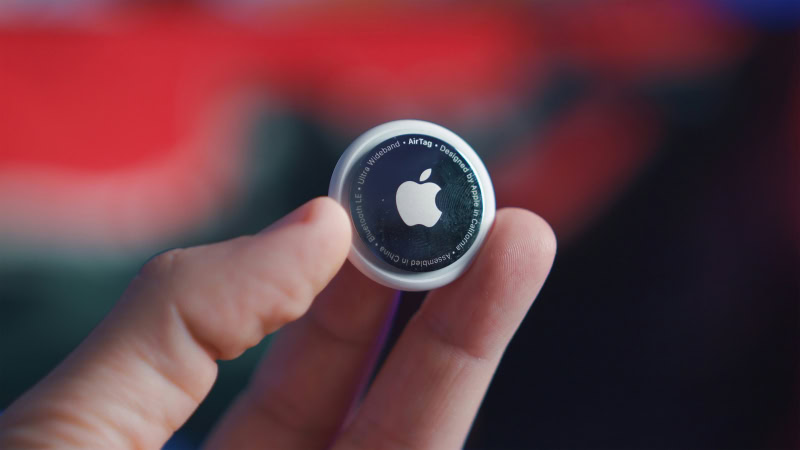
The tracker is a small, circular disc measuring 1.26 inches (31.9 mm) in diameter and 0.31 inches (8.0 mm) in height. Weighing just 0.39 ounces (11 grams), it is light enough to attach to small items without adding noticeable bulk.
The exterior features a glossy white plastic front and a polished stainless steel backplate. Underneath the cover, the compact housing encloses the circuit board, antennas, and power source, protected by a sturdy frame designed to withstand daily wear.
Battery Life and Water Resistance
Powering the device is a standard, user-replaceable CR2032 lithium 3V coin cell battery. On average, this battery provides about a year of operation before needing a replacement.
Users receive a notification on their paired Apple device when the battery runs low. For protection against environmental elements, the tracker carries an IP67 dust and water resistance rating.
This means it can survive submersion in up to one meter of water for up to 30 minutes, ensuring it remains operational if dropped in a puddle or exposed to rain.
Accessory Requirements for Attachment
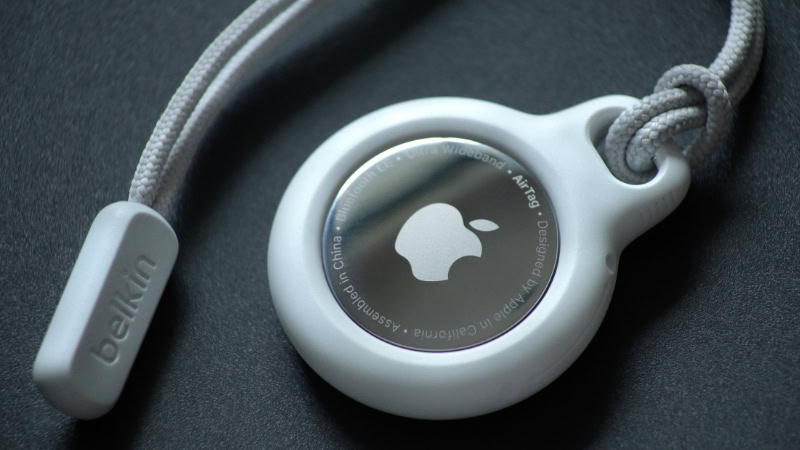
A notable aspect of the physical design is its completely smooth, rounded shape, which lacks any built-in loop, attachment hole, or clip. To attach the device to items like luggage, backpacks, or lanyards, users must purchase separate accessories.
Apple and various third-party manufacturers offer a wide selection of leather and silicone loops, secure holders, and rugged rings. These accessories securely encase the disc, allowing it to hang or strap onto personal belongings.
Core Technology and the Find My Network

The practical utility of the AirTag relies on a massive, secure infrastructure that allows it to be located even when miles away from its owner. By combining low-energy wireless signals with a vast network of consumer electronics, it bridges the gap between local and global tracking.
Bluetooth Signal Transmission
The tracker operates primarily by transmitting a secure Bluetooth Low Energy (BLE) signal. Instead of maintaining a constant, high-power connection, it broadcasts brief, periodic beacon signals to conserve battery life.
This passive method ensures the tracker can run efficiently for months on end while remaining constantly audible to nearby receiving devices.
The Role of Crowdsourced Apple Devices
When an item goes missing beyond Bluetooth range, the device utilizes the Find My network. This crowdsourced network consists of hundreds of millions of active Apple devices globally, including iPhones, iPads, and Mac computers.
If a stranger’s Apple device passes within range of the lost tracker, it detects the Bluetooth beacon. The passing device then automatically and silently updates the location coordinates of the tracker, sending the data to iCloud so the owner can view it on a map.
Encryption and Privacy of Location Data
To prevent unauthorized tracking and surveillance, Apple secures this entire transmission process with end-to-end encryption. The location data is encrypted at the beacon level, and only the owner of the tracker possesses the private cryptographic token required to decrypt and view the location.
The helper devices that detect and relay the signal do so completely anonymously. Neither Apple nor the owners of the helper devices can view the tracker’s location, the identity of the helper device, or the owner’s personal details.
Close-Range Location Methods
When you are in the immediate vicinity of a lost item, finding it still requires precise guidance, especially if it is hidden under cushions or slipped behind furniture. The system uses multiple overlapping technologies to direct you directly to your item.
Ultra-Wideband Technology and Precision Search
Equipped with Ultra-Wideband technology, the tracker utilizes spatial awareness chips, such as the U1 chip, to communicate with compatible iPhones. When you are within a few dozen feet of the tracker, your phone screen transitions to a dedicated direction finder.
It displays an arrow pointing toward the item, accompanied by live distance measurements down to feet and inches. This precise spatial guidance makes finding small items much faster.
Audio Alerts via the Built-In Speaker
For situations where visual cues are not enough, the tracker features a built-in speaker. Users can trigger an acoustic alert directly from the Find My application.
The speaker plays a sequence of clear, distinct chimes designed to cut through background noise. These audio alerts are particularly helpful when searching in low-light environments or looking for items buried under blankets, inside drawers, or within deep pockets.
Apple Watch Integration for Proximity Location
Owners can also locate their tracker using their Apple Watch. The watch operates within the Find My ecosystem, allowing users to initiate sound alerts and view the approximate distance to their item directly from their wrist.
Additionally, compatible Apple Watch models can provide haptic feedback and simple visual indicators to guide users as they get closer to the tracker’s physical location.
Compatibility and Ecosystem Integration

The tracker is designed to fit naturally into a broader suite of hardware and software, making setup and daily management smooth. However, its effectiveness is closely tied to specific platform requirements and sharing parameters.
iPhone and iPad Setup Requirements
Setting up the tracker requires an iOS or iPadOS device running a compatible, updated operating system version. Pairing is straightforward: holding an unconfigured tracker near an unlocked iPhone or iPad triggers a pop-up prompt.
From there, users follow on-screen instructions to link the tracker to their Apple ID and assign it a name, such as “Wallet” or “Backpack.” Once registered, the tracker appears in the “Items” tab of the native Find My application.
Limitations and Safety Features for Android Users
Standard location tracking and precision searching are not natively supported on Android systems. Android users cannot use an AirTag to track their own belongings.
However, to maintain safety, cross-platform mechanisms exist. Android users can download specific applications, such as Apple’s Tracker Detect, to scan for nearby trackers that may be moving with them.
Additionally, standard industry protocols ensure Android devices receive automatic alerts if an unrecognized tracker remains in their proximity over time.
Item Share Capabilities for Families and Third Parties
To make tracking shared items more convenient, Apple supports item sharing through its operating systems. Users can share a single tracker with multiple contacts, allowing family members or trusted friends to view its location without triggering unwanted tracking alerts.
Furthermore, integrations exist with external partners, allowing users to safely share temporary location data with entities like commercial airlines to expedite the recovery of lost luggage during travel.
Security, Safety, and Unwanted Location Prevention

As with any location-tracking technology, preventing misuse and protecting personal safety are paramount. The tracking network is designed with proactive security measures to deter stalking and notify individuals of unauthorized tracking attempts.
Automated Alerts for Unrecognized Devices
If an unrecognized tracker is separated from its owner and is detected moving with another individual over time, the system triggers automated warnings. The traveling individual receives a push notification on their device, which states that an unknown accessory is traveling with them.
This alert system works natively on iOS devices and functions on Android devices through joint industry safety specifications, ensuring timely warnings regardless of the user’s mobile platform.
Manual Search Tools for Safety
For individuals who suspect they are being tracked but have not received an automatic notification, manual search options are available. Users can open the Find My app on Apple devices or use compatible detection apps on Android to actively sweep their immediate area for active, unregistered trackers.
These tools help users confirm if a beacon is nearby and guide them in physically finding it.
Hardware Protection against Unauthorized Surveillance
If a tracker remains separated from its owner for an extended period, it will automatically emit a recurring sound when moved. This audible alert draws attention to the hidden tracker even if the person being followed does not have a smartphone.
If an unauthorized tracker is found, the finder can disable it by pressing down on the backing and rotating it counter-clockwise to remove the battery, which immediately halts all location transmission.
Conclusion
The AirTag serves as a practical passive tracking device, leveraging the strength of a global mesh network to keep tabs on everyday objects. By sending encrypted signals to nearby Apple devices, it offers a convenient, low-maintenance way to monitor belongings without requiring a cellular plan.
In assessing its overall utility, the device displays clear strengths in its close-range precise navigation, straightforward setup, and strong user-privacy protocols. However, these benefits are countered by certain limitations, particularly its strict reliance on the Apple ecosystem and its lack of live GPS tracking when isolated from other devices.
For users already committed to Apple hardware, it represents a reliable and secure accessory for managing personal property.
Frequently Asked Questions
Will an AirTag work with my Android phone?
No, you cannot use an Android phone to set up or track an AirTag. However, you can download Apple’s Tracker Detect app on your Android device to scan for nearby trackers moving with you. This cross-platform security feature helps prevent unauthorized tracking if someone hides a device in your belongings.
How long does the battery last and can I change it myself?
The battery lasts for about a year and you can easily replace it yourself. The device runs on a standard CR2032 coin cell battery, which is widely available in retail stores. To replace it, you simply press down on the metallic backplate, rotate it counter-clockwise, and swap out the old battery.
What happens if my AirTag gets wet?
The tracker is water-resistant and can survive splashes, rain, and brief submersions. It carries an official IP67 rating, meaning it can withstand being submerged in up to one meter of water for 30 minutes. If your tracker gets wet, simply wipe the exterior dry with a lint-free cloth before using it again.
Can I use it to track my dog or cat?
Apple does not recommend using this tracker to monitor pets because it lacks live GPS capabilities. The device relies on passing Apple devices to update its location, meaning it will not update if your pet wanders into an isolated area without people nearby. For active pet tracking, dedicated GPS collars are much more reliable.
How do I share an AirTag with someone else in my family?
You can share the tracker’s location with other people through the Find My app on your iPhone or iPad. By selecting the item and adding a contact under the sharing menu, both users can see its location without triggering unwanted tracking alerts. This is ideal for managing shared items like car remotes or family luggage.
About the Author: Elizabeth Baker


