
NFC vs. Bluetooth: Comparing Range, Speed, and Power

Every single time you tap a smartphone to pay for groceries or stream audio to wireless headphones, short-range wireless protocols keep your devices seamlessly connected. Selecting the wrong technology for a specific device or product design can lead to rapid battery drain, frustrating connection lag, or exposed personal data.
Near Field Communication and Bluetooth both eliminate physical cables, yet they rely on fundamentally different underlying radio foundations. One specializes in instant, touch-distance data exchanges, while the other maintains continuous high-speed wireless links across an entire room.
Key Takeaways
- NFC operates at extreme physical proximity: Near Field Communication functions within 1.5 inches (4 centimeters) using 13.56 megahertz magnetic induction, completing data connections in under 0.1 seconds.
- Bluetooth covers wider physical areas: Bluetooth radiates 2.4 gigahertz radio signals across distances reaching 33 feet to 328 feet (10 meters to 100 meters), supporting high data speeds up to 3 megabits per second.
- Passive NFC tags require zero battery power: NFC client tags harvest electrical energy directly from an active reader’s magnetic field, allowing unpowered sticker tags to transmit data indefinitely.
- Bluetooth Low Energy optimizes battery life: Bluetooth Low Energy uses low duty cycles and deep sleep states to allow continuously linked sensors and beacons to run for years on a single coin-cell battery.
- Hybrid setup combines NFC speed with Bluetooth bandwidth: Out-of-band handshakes use a single NFC tap to share cryptographic credentials instantly, allowing devices to establish high-speed Bluetooth channels automatically.
Core Technology Foundations and Protocols
Modern short-range wireless systems rely on distinct physical mechanisms to connect hardware components without physical wiring. Understanding how electromagnetic fields and radio frequencies operate helps explain why specific technologies suit brief physical taps while others maintain active, long-distance communication links.
Overview of Near Field Communication (NFC)
Near Field Communication traces its origins directly to Radio Frequency Identification technology, which originally allowed passive targets to return data when exposed to scanner signals. NFC refined this radio frequency framework by operating specifically at a frequency of 13.56 megahertz.
The communication relies on electromagnetic induction, where a primary magnetic coil in an active device creates a short-range magnetic field that induces an electric current in a secondary coil nearby.
NFC devices operate across three standard modes based on the interaction model. In reader/writer mode, an active device reads information from or writes data to a static tag.
Peer-to-peer mode enables two powered devices to exchange data bidirectionally across a shared connection. Card emulation mode allows an active electronic device, such as a smartphone, to mimic a passive contactless smart card for access terminals or payment readers.
Overview of Bluetooth and Bluetooth Low Energy (BLE)
Bluetooth operates using radio frequency transmission across the 2.4 gigahertz Industrial, Scientific, and Medical spectrum. Unlike induction-based systems, Bluetooth radiates radio waves across seventy-nine dedicated channels in its original design, constantly hopping between frequencies to prevent signal conflict with other wireless equipment.
The technology evolved from Bluetooth Classic, designed for continuous data streams and high throughput, to Bluetooth Low Energy. Introduced to handle periodic transmissions, Bluetooth Low Energy conserves power by sending small packets of information and remaining in a low-power state between bursts.
The connection framework relies on a master-slave architecture within a localized network topology called a piconet. In a piconet, a single master device coordinates timing and frequency hopping for up to seven active slave devices.
This hierarchy allows a single central hardware hub to maintain individual radio communication channels with multiple peripheral accessories simultaneously.
Fundamental Operational Differences
The structural distinction between single-tap proximity interactions and sustained connections lies in physical distance and session maintenance. NFC requires physical proximity within a fraction of an inch to establish an immediate link, tearing down the session instantly once devices separate.
Bluetooth requires an initial pairing procedure to authenticate hardware before sustaining an active wireless link across distances reaching dozens of yards.
Network establishment models also differ significantly. NFC establishes temporary sessions automatically upon physical touch without user configuration or authentication delays.
Bluetooth requires device discovery, authorization checks, and link encryption setup before data transfer can proceed. On a hardware level, host devices require dedicated baseband controllers and antenna loops tuned specifically to 13.56 megahertz for NFC, whereas Bluetooth hardware requires specialized 2.4 gigahertz transceivers capable of dynamic frequency management.
Technical Performance Metrics
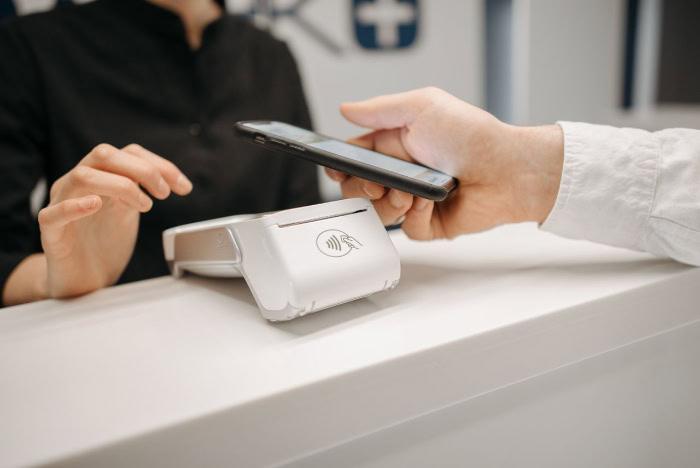
Evaluating wireless protocols requires measuring their operational boundaries, transfer capacities, and response times. Hardware engineering and software development choices depend heavily on how far signals travel, how rapidly data moves, and how quickly connections establish.
Transmission Range and Operational Distance
Near Field Communication functions under extreme physical proximity constraints, maintaining an operational boundary under 1.5 inches (4 centimeters). Signals drop off sharply beyond this distance, preventing unintentional connection attempts from nearby hardware.
In contrast, Bluetooth Classic and Bluetooth Low Energy offer expanded coverage capabilities ranging from 33 feet (10 meters) to over 328 feet (100 meters) depending on transmission power classes and receiver sensitivity.
Physical obstacles and environmental conditions affect both standards differently. NFC signals pass through non-metallic solid barriers like clothing or plastic casings easily due to near-field magnetic induction, but metal surfaces distort magnetic fields and disrupt communication.
Bluetooth signals penetrate walls and furniture but suffer from signal attenuation, reflection, and interference from structural concrete, metal framing, and competing 2.4 gigahertz Wi-Fi networks.
Data Transfer Rates and Bandwidth Capacity
Data throughput in NFC remains modest, peaking at maximum transmission rates of approximately 424 kilobits per second. Payload constraints make NFC unsuitable for large files, restricting its use to small packets such as cryptographic tokens, contact cards, or web addresses.
Bluetooth offers significantly higher bandwidth capacity designed for complex data formats. Bluetooth Classic achieves data transfer rates up to 3 megabits per second using Enhanced Data Rate extensions, making it capable of delivering high-quality audio streams.
Bluetooth 5 and newer revisions offer Bluetooth Low Energy data rates up to 2 megabits per second, supporting rapid firmware updates and rich sensor data streams while preserving power efficiency.
Connection Setup Speed and Latency
Connection setup speed represents a major operational difference between the two technologies. NFC features ultra-low latency, establishing links in less than 0.1 seconds.
Bringing a device within range triggers instantaneous recognition, allowing immediate data exchange without human intervention.
Bluetooth connection procedures require substantially more time. Device discovery, initial pairing protocols, and cryptographic handshakes typically take between 1 and 6 seconds to complete.
While modern revisions reduce reconnect times for previously paired devices, the latency remains noticeably higher than NFC, making Bluetooth ideal for continuous sessions rather than rapid, transient interactions.
Power Consumption and Efficiency Profiles

Managing energy consumption is essential for portable electronics and embedded sensors. The contrast in power architectures between induction-based systems and active radio transceivers dictates battery requirements and system operational lifespans.
Active versus Passive Power Requirements
A primary technical advantage of Near Field Communication is its support for passive nodes. Passive NFC tags contain no internal battery, operating entirely on energy harvested from the active reader’s electromagnetic field.
When an active reader generates a 13.56 megahertz magnetic field, the passive tag’s internal antenna converts that field into electrical power to run its internal microchip and transmit stored data.
Bluetooth transceivers cannot operate passively. Both transmitting and receiving nodes require active power sources to run internal microcontrollers, synthesize radio frequencies, and amplify broadcast signals.
Even low-power Bluetooth beacons require coin-cell batteries or wired power to operate.
Battery Impact on Host Devices
In mobile hardware like smartphones, NFC radios consume negligible energy while idle. The controller remains in a low-power listening state, drawing microscopic amounts of current until an active magnetic field is detected.
Active transaction states consume minimal energy because data exchanges complete within milliseconds.
Bluetooth radios exert a larger battery footprint on host devices due to continuous background scans, beacon broadcasts, and sustained connection maintenance. Modern operating systems apply aggressive power management techniques, such as adjusting broadcast intervals and putting transceivers into low-power states between packet bursts, to reduce overall energy drain.
Energy Profiles of Bluetooth Low Energy (BLE) versus NFC
Bluetooth Low Energy achieves high efficiency by maintaining extended sleep states. Rather than keeping a radio link open continuously, BLE devices remain asleep for long intervals, waking up for milliseconds to broadcast advertising packets or exchange data before returning to sleep.
This duty cycle design allows low-power broadcast beacons and sensor nodes to operate for years on a single coin-cell battery.
Comparing BLE to NFC highlights distinct efficiency profiles. Active NFC tags consume slightly higher peak power during an actual scan than BLE, but their active duration is brief.
Passive NFC tags require zero battery power on the client side, granting them an indefinite operational lifespan. BLE remains the optimal choice when devices must broadcast information autonomously without requiring physical user contact.
Security Architecture and Vulnerabilities

Securing wireless communication involves protecting data against unauthorized access, interception, and tampering. Both technologies implement distinct security structures based on physical interaction mechanics and cryptographic frameworks.
Proximity-Based Security Mechanics in NFC
Physical proximity serves as Near Field Communication’s first line of defense. Because signals drop off beyond 1.5 inches (4 centimeters), intercepting signals remotely requires specialized hardware located in immediate physical proximity to the user.
For sensitive transactions like mobile payments, NFC relies on layered security protocols. Tokenization replaces primary card account numbers with unique numerical tokens during transmission. Hardware-level Secure Elements and software-based Host Card Emulation store cryptographic credentials in isolated execution environments, shielding financial credentials from host system compromises.
Despite these layers, NFC remains vulnerable to eavesdropping via high-gain directional antennas, data alteration by signal manipulation, and relay attacks where signal extenders bridge distances between an authentic reader and a victim’s card.
Encryption and Authentication Protocols in Bluetooth
Bluetooth secures long-range transmissions using robust cryptographic standards. Pairing routines use Advanced Encryption Standard algorithm implementations with 128-bit security codes (AES-128) to encrypt data traveling between nodes.
Security modes dictate pairing procedures depending on hardware display capabilities. Just Works mode establishes connections without user verification for headless devices like fitness bands.
Passcode Entry requires typing a numerical code displayed on one device into another, while Numeric Comparison requires users to confirm matching six-digit numbers on both screens. Modern Bluetooth standards enforce Secure Simple Pairing and Secure Connections models to protect connections against Man-in-the-Middle attacks.
Common Security Risks and Risk Mitigation Strategies
Bluetooth networks face specific attack vectors due to their expanded range. Bluejacking involves sending unsolicited messages to accessible devices, while Bluesnarfing allows unauthorized access to private device data.
Bluetooth Low Energy tracking exposes static device addresses to location monitoring, though randomized address changing mitigates this threat. NFC threats center around public access points, where malicious readers could capture unencrypted tag data or attempt unauthorized relay transactions.
Mitigating these security risks requires strict system configurations. Administrators and hardware designers should enforce short pairing windows, implement mandatory cryptographic authentication, disable automatic discovery modes when not in use, and keep device firmware updated to block known exploits.
Application Domains and Synergy Models

The practical adoption of short-range protocols depends on matching technical capabilities with specific functional needs. Combining proximity mechanics and sustained data channels enables seamless user interactions across modern software and hardware ecosystems.
Short-Range Proximity Use Cases
Near Field Communication excels in scenarios requiring quick, deliberate actions. Contactless point-of-sale payment networks, including platforms like Apple Pay, Google Wallet, and contactless credit cards, utilize NFC to complete payment authorization within a fraction of a second.
Access control systems rely on NFC for security and speed. Smart locks, office entry readers, and transit turnstiles read digital credentials from physical badges or mobile devices instantly.
Interactive posters, retail display tags, and transit cards use passive tags to send web links or transit balance updates directly to smartphones without requiring initial device setup.
Continuous Connection Use Cases
Bluetooth powers applications that demand continuous, high-volume, or ongoing background communication. Wireless audio streaming to headphones, automotive entertainment displays, and multi-room speaker systems relies on Bluetooth Classic’s bandwidth to deliver uninterrupted sound.
Continuous biometric telemetry systems utilize Bluetooth Low Energy to send data over long periods. Smartwatches, health trackers, and continuous glucose monitors harvest biological metrics and push real-time updates to mobile applications. Computer peripherals like wireless keyboards, mice, game controllers, and smart home automation hubs depend on Bluetooth to manage concurrent data channels across large room spaces.
Hybrid Implementation and NFC-Assisted Bluetooth Handshake
Hybrid connectivity models combine the rapid connection setup of NFC with the high bandwidth of Bluetooth. Out-of-Band pairing architecture uses NFC to pass connection parameters, public cryptographic credentials, and network identifiers instantly upon physical contact.
The step-by-step handshake process simplifies device setup. A user taps an NFC-enabled phone against a Bluetooth speaker.
The devices exchange cryptographic parameters and Bluetooth MAC addresses via NFC within 0.1 seconds. The operating system then hands off the connection to Bluetooth automatically, establishing a high-bandwidth audio session without forcing the user to search through device menus or enter pairing PINs manually.
Industrial equipment and consumer electronics widely adopt this hybrid model to streamline setup procedures while maintaining fast transfer speeds.
Conclusion
Selecting between Near Field Communication and Bluetooth requires balancing range, transfer speed, power supply, and setup latency. NFC prioritizes physical proximity under 1.5 inches (4 centimeters) to achieve instant connection speeds under 0.1 seconds and uncompromised touch-based physical security.
Bluetooth sacrifices instant physical connection for extended range up to 328 feet (100 meters) and higher bandwidth capacities suitable for continuous data streams.
| Technical Specification | Near Field Communication (NFC) | Bluetooth Classic | Bluetooth Low Energy (BLE) |
| Operational Frequency | 13.56 MHz | 2.4 GHz | 2.4 GHz |
| Maximum Range | Under 1.5 inches (4 cm) | 33 to 328 feet (10 to 100 meters) | 33 to 328 feet (10 to 100 meters) |
| Data Transfer Rate | Up to 424 kbps | Up to 3 Mbps | Up to 2 Mbps |
| Latency / Setup Time | Under 0.1 seconds | 1 to 6 seconds | 1 to 6 seconds |
| Client Power Needs | Passive or Active | Active Battery Required | Active Battery Required |
| Primary Interaction | Transient / One-tap | Continuous / Sustained | Periodic / Continuous |
To select the appropriate technology, evaluate the primary operational requirements of your project. Choose NFC if your application demands instantaneous authentication without manual device pairing, zero client battery usage, or extreme short-range isolation for financial transactions.
Choose Bluetooth Classic when high audio bandwidth or large data streams are mandatory across long distances. Select Bluetooth Low Energy for sensor networks or wearable equipment that must transmit periodic telemetry over extended periods using small coin-cell batteries.
When rapid setup and high data capacity are both required, implement a hybrid design using NFC for initial connection handoffs to Bluetooth.
Frequently Asked Questions
Is NFC safer than Bluetooth for paying at stores?
Yes, NFC is safer for payment transactions because it only operates within a tiny distance of less than 1.5 inches (4 centimeters). This extreme short range makes remote eavesdropping virtually impossible in public spaces. Additionally, NFC mobile wallets rely on tokenization and encrypted Secure Elements, ensuring your actual credit card numbers are never broadcast during a transaction.
Why does Bluetooth take a few seconds to pair while NFC works instantly?
Bluetooth takes longer because both devices must run security checks, discover network addresses, and establish an encrypted channel before exchanging data. NFC skips these manual setup steps entirely. By using magnetic induction across an operational distance under 1.5 inches (4 centimeters), NFC hardware completes hardware recognition and data transfers in less than 0.1 seconds.
Does leaving Bluetooth turned on drain my smartphone battery fast?
Leaving Bluetooth turned on drains very little battery on modern smartphones when no active devices are connected. Modern operating systems utilize Bluetooth Low Energy protocols that keep the radio transceiver in a sleep state between quick background scans. Battery consumption increases significantly only when actively streaming continuous audio or transmitting heavy files over Bluetooth Classic connections.
Can NFC tags work without any battery or power source?
Yes, passive NFC tags function completely without an internal battery or active power source. When an active reader like a smartphone comes within 1.5 inches (4 centimeters), its magnetic field creates an electric current inside the tag’s antenna. This harvested energy provides enough electricity to power the tag’s microchip and transmit its stored information instantly.
How does tapping my phone on a speaker connect Bluetooth automatically?
Tapping your phone uses NFC to pass connection details directly to the speaker without forcing you to open settings menus. In this hybrid system, NFC transfers the speaker’s radio address and encryption parameters in under 0.1 seconds. Once the devices authenticate via that single tap, your phone automatically turns on Bluetooth to handle high-speed music streaming.
About the Author: Elizabeth Baker


