
Smartphone vs. Mirrorless Camera: Which One Do You Need?

Mobile phone cameras have advanced at a breathtaking pace, turning everyday pocket handsets into remarkably capable tools for daily photography. At the same time, dedicated mirrorless cameras maintain an essential role for creators who demand physical precision and complete manual control.
Many users wonder if purchasing a standalone camera offers sufficient value over the capable device they already carry everywhere. Making an informed choice requires a direct comparison across five fundamental areas: hardware design, visual fidelity, daily handling, digital workflow, and cost.
Evaluating these primary elements will help determine if the optical performance and tactile control of specialized gear justify stepping away from the effortless convenience of modern mobile imaging.
Key Takeaways
- Full-frame camera sensors offer more than 15 times the surface area of standard smartphone sensors, capturing vastly more light for superior low-light clarity and natural background separation.
- Smartphones depend on multi-frame computational stacking and aggressive sharpening, whereas mirrorless cameras capture authentic optical data with 14 to 15 stops of dynamic range in a single raw frame.
- Mobile devices enable shooting, editing, and sharing to the web within 30 seconds, while mirrorless workflows require dedicated post-processing software on a computer to achieve their best results.
- Dedicated cameras provide tactile dials, electronic viewfinders for bright sunlight, and swappable batteries, eliminating the need to drain your primary communication device during shoots.
- While smartphones lose most of their financial value over a three-year cycle, quality mirrorless lenses remain optically relevant for decades and frequently retain 70% to 80% of their resale value.
Core Hardware and Optical Mechanics
The primary distinction between a smartphone and a dedicated mirrorless camera lies in the physical components that collect light. While smartphones rely on miniature hardware paired with computational processing, mirrorless cameras utilize substantial optical glass and expansive silicon surfaces to produce raw imagery.
Physical Sensor Dimensions
Sensor size determines how much physical light a camera gathers during an exposure. A standard full-frame camera sensor measures approximately 36 by 24 mm, and a cropped APS-C sensor measures roughly 23.6 by 15.6 mm.
In comparison, a primary smartphone sensor is miniature, often measuring about 9.8 by 7.4 mm or smaller. The surface area of a full-frame sensor is more than 15 times larger than that of a typical mobile sensor, allowing it to collect substantially more photons at any given shutter speed.
This surface difference influences how manufacturers pack pixels onto the silicon. Smartphones frequently feature 48MP or even 200MP sensors packed into a microscopic footprint, resulting in individual pixels measuring less than 1.0 micron across.
Mirrorless cameras typically distribute 24MP to 61MP across a much wider surface area, giving each pixel a width of 4.0 to 6.0 microns. Larger physical pixels capture more light directly, which minimizes electronic noise and produces cleaner signal data before any digital processing takes place.
Lens Architecture and Interchangeability
Smartphone lenses consist of tiny, fixed plastic and glass elements molded into a tight stack, constrained by the slim profile of the handset. In contrast, mirrorless cameras support interchangeable lenses built with heavy, multi-element optical glass.
The front element of a professional camera lens can exceed 3 inches (76.2 mm) in diameter, which gathers an immense volume of light and directs it evenly across the frame.
Physical glass diameter directly impacts optical quality. Dedicated camera lenses minimize distortion, chromatic aberration, and vignetting through specialized glass coatings and precision grinding.
Furthermore, mirrorless cameras allow users to attach specialized optics tailored to specific scenarios, ranging from ultra-wide 14mm architectural perspectives to 600mm wildlife telephotos. Smartphones must compensate for their fixed focal lengths by using multiple separate small lenses or by cropping into the sensor, which reduces resolving power at extended focal ranges.
Algorithmic Automation versus Pure Optical Capture
Smartphones overcome their hardware limits by relying on computational photography. When a user presses the shutter button on a modern handset, the processor records a rapid burst of frames captured before and after the tap.
The mobile operating system instantly aligns these frames, merges them to balance highlights and shadows, sharpens edges, and removes noise. This automated pipeline delivers an attractive image within fractions of a second without requiring user intervention.
A mirrorless camera operates on direct optical capture. Light travels through the lens elements, strikes the sensor during a single exposure, and is recorded as a raw data file without artificial enhancements.
While this process requires the photographer to select exposure settings manually or semi-automatically, it avoids the threshold where automated software departs from natural optical behavior. Mobile computational processing can introduce strange visual artifacts, such as unnatural edge halos around fine branches, plastic skin smoothing, and smeared textures in dense grass.
Dedicated cameras retain natural textures because they rely on optical physics rather than synthetic reconstruction.
Visual Performance and Aesthetic Character

Image quality extends beyond basic sharpness; it encompasses how a camera renders light, contrast, and depth across different environments. Evaluating visual output highlights clear differences between natural optical rendering and algorithmic interpretation.
Low-Light Sensitivity and Noise Suppression
Dim lighting exposes the fundamental physical gap between small and large sensors. Because full-frame and APS-C sensors gather vastly more light naturally, mirrorless cameras can shoot at high ISO sensitivities like ISO 6400 or ISO 12800 while preserving subtle textures.
The resulting grain is fine, uniform, and visually unobtrusive, similar to traditional film.
Smartphones struggle to collect sufficient light through their tiny apertures and sensors, forcing them to rely on night mode algorithms. These modes keep the exposure open over 2 to 4 seconds while digitally combining rapid exposures.
While this approach brightens dark scenes impressively, it often smears delicate details like fabric weaves or hair strands into flat blotches of color. Moreover, handheld camera movement or moving subjects during long mobile exposures frequently produce ghosting artifacts and unnatural motion blur, whereas a mirrorless camera paired with a wide-aperture lens can freeze action crisply in low light.
Natural Depth of Field versus Synthetic Background Blur
Optical subject separation is created by the combination of a wide physical aperture and a large sensor format. A mirrorless camera equipped with an f/1.4 or f/1.8 lens creates a three-dimensional separation between the subject and the background.
This optical blur produces a smooth, gradual transition where objects gently lose focus as their physical distance from the focal plane increases.
Smartphones simulate this optical behavior through software portrait modes. The phone uses multiple lenses or depth maps to identify the subject, creates a digital cutout, and applies a blur filter to the background.
While mobile algorithms have improved, they frequently produce errors around complex edges, blurring out stray hairs, glasses frames, and transparent glass. More noticeably, software blur treats the background as a flat plane, lacking the realistic optical falloff that dedicated camera lenses produce naturally.
Dynamic Range and Detail Preservation
High-contrast lighting, such as a bright sunset behind a shaded subject, tests a sensor’s dynamic range. Modern mirrorless sensors provide 14 to 15 stops of exposure latitude, preserving detail within the deepest shadows and brightest highlights in a single raw capture.
Photographers can lift dark shadows or recover bright clouds later without destroying fine tonal gradations.
Smartphones manage contrast through aggressive multi-frame tone mapping, automatically lifting shadows and muting highlights to fit everything into a balanced display. While this produces an instantly shareable image, it can create an artificial appearance where skies look unnaturally dark and shadows glow without depth.
Furthermore, fine textures like bark, distant leaves, and textiles lose definition on phones when inspected closely. When images are displayed on a 27-inch computer monitor or printed on paper, the mirrorless camera provides superior clarity and tonal depth that mobile files cannot match.
Device Ergonomics and User Operation

The physical experience of taking a photograph profoundly influences how a creator works. The form factor dictates not only how comfortable a device is to carry, but also how quickly a user can adapt to sudden changes in a scene.
Pocket Portability and Physical Dimensions
Portability is the greatest advantage of the smartphone. Modern handsets measure less than 0.4 inches (10.2 mm) thick and weigh approximately 7 oz (198 grams), sliding effortlessly into a pocket.
A user carries a phone everywhere as a personal communicator, ensuring that a camera is always accessible for spontaneous moments. Phone photography also offers complete discretion, allowing users to take photos in crowded street markets, family dinners, or museums without drawing attention.
Dedicated mirrorless cameras require dedicated transport. Even a compact camera body weighs around 1.1 lbs (499 grams) to 1.5 lbs (680 grams) before adding a lens, which can add another 1.0 lb (454 grams) to 2.5 lbs (1.1 kg) of weight.
Carrying a camera body, two lenses, and accessories generally requires a dedicated shoulder bag or backpack. In public environments, a large camera setup attracts immediate notice, which can make candid photography challenging or violate venue restrictions that ban professional photography gear.
Tactile Control Dials versus Touch Interfaces
Mirrorless cameras feature dedicated physical controls, including knurled dials and custom buttons for shutter speed, aperture, ISO, and exposure compensation. Experienced photographers build muscle memory with these dials, adjusting settings in a fraction of a second without pulling their eyes away from the scene.
The tactile feedback allows for rapid adjustments in cold weather or while wearing thick winter gloves.
Smartphones rely almost entirely on flat touchscreen interfaces. Adjusting exposure, focus points, or shutter speed requires tapping through on-screen sliders and digital menus, which is slower and less responsive during fast action.
Additionally, mirrorless cameras provide electronic viewfinders shielded by rubber eyecups. Viewfinders allow clear composition in bright midday sun, avoiding the screen glare and reflections that make framing on a glossy phone screen difficult outdoors.
Battery Longevity and Power Management
Power management represents a fundamental operational divide. Smartphones balance battery power across cellular radios, background applications, GPS mapping, and screen brightness.
Using a phone for continuous video recording or extensive photography rapidly drains the battery, risking communication needs later in the day. Cold weather exacerbates this issue, causing smartphone batteries to drop rapidly under sustained load.
Mirrorless cameras use swappable, dedicated lithium-ion batteries. A standard camera battery delivers 350 to 700 shots per charge, and swapping a depleted battery for a fresh unit takes less than 10 seconds.
Photographers can easily pack three spare batteries in a jacket pocket for a full day of continuous shooting, keeping their communication devices fully charged and isolated from imaging demands.
Workflow and Media Management

Moving from an initial capture to a finished photograph involves distinct storage choices, file management steps, and software considerations. The two device categories approach this workflow from opposing philosophies of speed versus editing latitude.
File Formats and Storage Media
Mirrorless cameras store media on removable SD or CFexpress memory cards, allowing users to swap storage instantly when a card fills up. These cameras produce uncompressed or lossless 14-bit RAW files that measure between 30MB and 80MB each.
These robust files store raw sensor data without discarding color information, providing maximum recovery latitude during post-production. However, managing thousands of high-resolution files requires disciplined backup habits, external solid-state drives, and substantial local storage space.
Smartphones record images directly to non-expandable internal flash storage, primarily using compressed 8-bit JPEG or 10-bit HEIC formats that measure only 2MB to 5MB per file. While some flagship phones offer RAW capture, their internal storage fills rapidly without the option to pop in a new memory card.
Automated cloud synchronization services manage mobile photo libraries seamlessly, backing up files without requiring manual file transfers or complex directory structures.
Desktop Software Edits versus Instant Mobile Presets
Mobile devices prioritize immediate gratification. Internal image signal processors apply automated color corrections, contrast curves, and skin tones the moment a photo is taken.
Users can apply preset filters or make minor exposure tweaks inside mobile apps in seconds, producing an image that is ready for instant viewing.
Mirrorless RAW files appear flat, muted, and slightly soft straight out of the camera because they contain unedited data. Bringing out their full visual potential requires dedicated desktop software such as Adobe Lightroom, Capture One, or open-source alternatives.
Photographers manually adjust white balance, tonal curves, color grading, and lens profiles. While this post-production process requires a significant time commitment, it grants complete artistic freedom, allowing creators to recover clipped highlights and craft nuanced color palettes that mobile presets cannot replicate.
Transfer Speed and Direct Social Media Uploads
The smartphone is an interconnected computing platform. A photo captured on a phone can be edited and uploaded to social media platforms, cloud galleries, or messaging threads within 30 seconds over 5G or Wi-Fi networks.
The entire workflow occurs on a single pocket device without intermediate hardware.
A mirrorless camera lacks native cellular connectivity, requiring multi-step transfer procedures. Photographers must either remove the memory card to read it on a computer or connect the camera to a mobile device via Bluetooth or Wi-Fi companion applications.
While camera manufacturers have improved these wireless apps, pairing can still feel sluggish when transferring large batches of heavy files. Getting images from a dedicated camera onto the web demands deliberate effort and additional transfer time.
Financial Commitment and Product Lifecycles
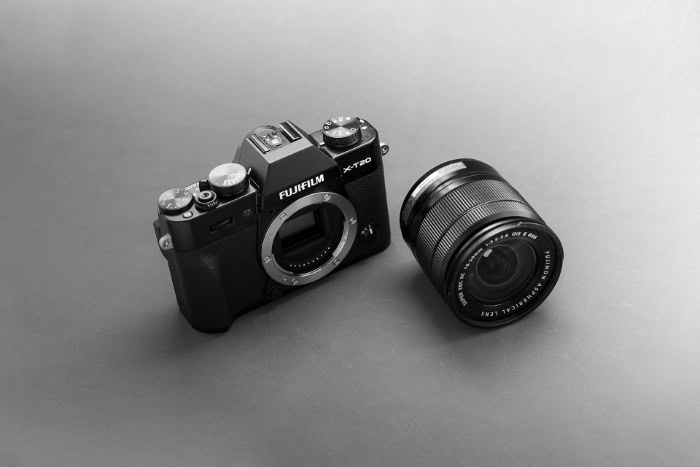
Investing in photographic equipment requires balancing immediate purchase prices against long-term hardware durability. Understanding how these tools hold their value over time provides clarity on their true financial footprint.
Upfront Acquisition Costs
Smartphones represent a sunk cost for the vast majority of consumers. Because people already purchase smartphones for communication, mapping, and entertainment, the mobile camera effectively comes bundled with the device.
Flagship phones cost between $800 and $1,600, but that investment covers a versatile computer that serves every aspect of daily life.
A dedicated mirrorless camera is a single-purpose investment. An entry-level mirrorless body bundled with a basic kit lens typically starts around $700 to $1,000, while midrange and professional bodies range from $1,500 to over $3,500 for the body alone.
For casual snapshot photography, spending hundreds of extra dollars on a standalone camera provides poor financial value compared to using the handset already in one’s pocket. The standalone investment only makes sense for individuals pursuing photography as a focused creative pursuit or professional service.
The Added Expense of Lenses and Modular Gear
The initial camera body purchase is merely the starting point of an interchangeable lens system. Quality prime lenses cost between $300 and $1,200 each, while professional zoom lenses frequently exceed $2,000.
Building a versatile kit with wide, standard, and telephoto coverage can easily multiply the initial camera body cost by two or three times.
Beyond lenses, mirrorless setups require a host of supporting accessories. Photographers routinely spend money on high-speed memory cards, extra batteries, external battery chargers, protective carrying bags, sturdy tripods, and neutral density filters.
Maintenance also represents an ongoing cost, including sensor cleaning swabs, blower bulbs, and protective padded cases. In contrast, smartphone photography requires virtually no secondary accessories beyond a standard protective phone case.
Depreciation Rates and Technological Obsolescence
Smartphones suffer from rapid technological obsolescence and steep depreciation. Mobile manufacturers release new flagship models annually, and battery degradation typically limits the effective service life of a handset to three or four years.
After four years, most flagship smartphones retain roughly 15% to 25% of their original retail value, while budget models lose nearly all resale worth.
Dedicated mirrorless camera bodies experience a much slower product cycle, typically remaining competitive for six to eight years. More importantly, high-quality optical lenses do not become obsolete.
A premium lens purchased today can last 15 to 20 years, functioning seamlessly across multiple camera body upgrades. High-grade camera lenses maintain strong resale value on the used market, often retaining 70% to 80% of their purchase price for years, making a dedicated optical system a remarkably stable long-term asset.
Conclusion
The choice between a smartphone and a mirrorless camera centers on the trade-off between operational simplicity and absolute visual control. Smartphones deliver unmatched convenience, automated processing, and instant connectivity, making them the ideal tool for documenting spontaneous daily memories, casual outings, and rapid social media sharing.
In contrast, mirrorless cameras provide genuine optical depth, expansive raw editing latitude, and modular lens versatility, rewarding creators who treat photography as an intentional, methodical craft.
Rather than competing in direct opposition, these two imaging tools serve complementary roles. Carrying a smartphone ensures you never miss an unexpected moment in everyday life, while a dedicated camera system delivers the physical precision, ergonomic control, and optical resolution required for demanding artistic projects.
Deciding where to commit your time and money comes down to whether you prioritize effortless pocket portability or the uncompromised image quality of dedicated optical glass.
Frequently Asked Questions
Is a mirrorless camera really that much better than a new smartphone?
Yes, a mirrorless camera delivers significantly better raw image quality, optical depth, and low-light performance due to its physically larger sensor and dedicated lenses. While smartphones use computational software to simulate these effects, dedicated cameras capture genuine detail without digital smoothing or artificial edge halos. They also provide far greater flexibility for large prints and professional editing.
Why do phone photos sometimes look better than unedited camera photos?
Phone photos often look better initially because smartphones automatically apply heavy computational sharpening, color saturation, and HDR contrast the moment you take a picture. Mirrorless cameras save unedited RAW files that intentionally look flat and muted out of the camera. These files require manual post-processing to reveal their superior dynamic range and natural optical detail.
Can I easily post photos from a mirrorless camera to social media?
You can post mirrorless photos to social media, but the process takes several extra steps compared to a smartphone. You must transfer the images to your phone or computer using a wireless companion app or memory card reader. Once transferred, the files usually require quick editing before they are ready to publish online.
Do megapixels matter more than sensor size when choosing a camera?
Physical sensor size matters significantly more than megapixel count for overall image quality. A large sensor collects vastly more light, creating cleaner images, better dynamic range, and less noise. In contrast, cramming high megapixel counts onto tiny phone sensors results in microscopic pixels that struggle in dim lighting without heavy software correction.
Is buying a mirrorless camera a good long-term investment?
Yes, mirrorless cameras are durable long-term purchases, especially when investing in high-grade lenses. While smartphones lose most of their resale value within three years, camera bodies remain competitive for six to eight years. High-quality optical glass holds value even better, frequently retaining 70% to 80% of its original worth across decades of use.
About the Author: Elizabeth Baker


