
The Best Headphone Brands of 2026: Ranked

The 2026 personal audio market spans century-old acoustic pioneers, dominant smartphone makers, and agile budget challengers. With dozens of new releases arriving every year, evaluating a manufacturer’s broader track record is far more reliable than comparing isolated specification sheets.
Every company operates with a distinct engineering philosophy that dictates how its gear sounds, how long the physical hardware lasts, and how well its customer support handles warranty claims or replacement parts. Choosing the right manufacturer first narrows the field by matching a buyer’s daily habits to a company’s core strengths.
Categorizing major audio makers by everyday lifestyle utility, price tiers, acoustic design, and device compatibility reveals which brands deliver genuine value for commuters, studio professionals, athletes, and home listeners alike.
Key Takeaways
- Prioritize Sony, Bose, or Sennheiser for daily travel: In the $350 to $550 flagship tier, Sony’s WH-1000XM6 leads in voice call clarity and smart automation, Bose’s QuietComfort Ultra 2nd Gen offers the lightest fit and strongest cabin silence, and Sennheiser’s Momentum 5 delivers 50 to 60 hours of battery life with high-fidelity vocal detail.
- Match smartphone brands to your existing hardware: Apple’s AirPods Max 2 and AirPods Pro 3 provide effortless device switching and head-tracked spatial audio for iPhone and Mac owners, but Android and Windows users should choose cross-platform brands like Sony or Sennheiser to avoid losing core software controls.
- Choose wired heritage brands for studio and desktop accuracy: Recording professionals and home listeners get far better durability and sound neutrality from wired models by Beyerdynamic and Audio-Technica, or open-back planar magnetic headphones from HiFiMAN, than from similarly priced wireless commuters.
- Spend under $100 with Anker Soundcore or JLab for budget value: Students and casual listeners can secure active noise cancellation, multipoint Bluetooth pairing, and over 40 hours of battery life for less than $100 by sacrificing luxury metal finishes and top-tier microphone isolation.
- Check for replaceable parts and USB-C audio before buying: Because lithium-ion batteries degrade after two to three years of heavy use, buying from manufacturers that sell official replacement earpads, cables, and batteries, such as Beyerdynamic, Sennheiser, and Bose, protects your hardware investment.
Flagship Wireless Leaders for Everyday Use
Mainstream wireless headphones priced between $350 and $550 dominate daily commutes, open-plan offices, and long-haul flights. Four major manufacturers lead the category by balancing active noise cancellation, microphone clarity, and portable convenience, though each brand prioritizes a distinct aspect of the daily listening experience.
Sony and the Balance of Smart Features and Audio Quality
Sony holds a strong reputation as the best all-around audio brand for tech enthusiasts, anchored by its flagship WH-1000XM6 over-ear headphones and WF-1000XM6 earbuds. Powered by the QN3 noise-cancelling processor, Sony coordinates 12 microphones in real time to adapt to shifting street noise and cabin air pressure.
The brand excels in customizable sound profiles through a 10-band equalizer, high-resolution LDAC and LC3 wireless coding, and AI-assisted beamforming microphones that isolate voices during windy phone calls. Smart automation features such as Speak-to-Chat, which pauses music automatically when the wearer begins talking, make Sony ideal for busy commuters who want hands-free convenience.
The primary trade-offs are synthetic leather earpads that trap warmth during summer walks and a default bass-forward tuning that requires app adjustment for neutral listening.
Bose and the Standard for Cabin Quietness and Comfort
Bose focuses its engineering on class-leading noise isolation and low-pressure physical ergonomics, highlighted by the QuietComfort Ultra 2nd Gen and the standard QuietComfort 2nd Gen. Weighing roughly 9 ounces (255 grams) with deep, pill-shaped earcups and a wide headband, Bose headphones distribute weight evenly to prevent head fatigue over 8-hour flights.
Whenever the headphones power on, Bose’s CustomTune technology plays a brief chime to measure the wearer’s internal ear shape and calibrate both the audio output and noise suppression accordingly. The resulting consumer-friendly sound profile pairs warm lows with a dedicated Cinema Mode that keeps movie dialogue crisp.
Frequent flyers and all-day office workers consistently gravitate toward the Bose catalog because no competitor matches its blend of physical lightness and low-frequency engine silence.
Apple and Seamless Integration for iPhone Users
Apple leverages custom silicon, specifically the H2 chip inside the AirPods Max 2 and AirPods Pro 3, to deliver instant pairing, automatic iCloud switching between iPhones, iPads, and Macs, and personalized head-tracked spatial audio. Features like Conversation Awareness automatically lower media volume and boost voices in front of the listener without requiring button presses.
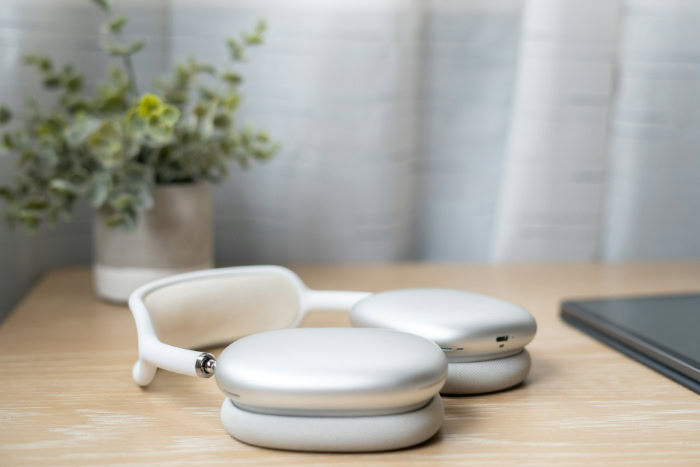
Unlike rivals that rely on plastic housings, Apple builds the AirPods Max 2 with anodized aluminum earcups, stainless steel telescoping arms, and a breathable knit mesh canopy. While those materials feel luxurious, they push the weight to 13.6 ounces (385 grams).
Apple remains a top choice for buyers invested in iOS and macOS, but it is a poor fit for Android and Windows users, who lose access to system-level customization, battery widgets, and multipoint switching, while still facing a modest 20-hour battery life.
Sennheiser and the Bridge Between Consumer Tech and High Fidelity
Sennheiser brings decades of German acoustic engineering to everyday portable audio through its Momentum 5 Wireless series. Built around 42mm transducers inspired by the company’s audiophile headphone line, Sennheiser prioritizes natural midrange presence, detailed vocal reproduction, and wide instrument separation over artificial bass boosts.
The brand also leads the flagship tier in battery stamina, routinely delivering 50 to 60 hours of playback per charge, alongside aptX Lossless wireless transmission and a user-replaceable battery design. Buyers who value musical accuracy, lifelike acoustic instruments, and multi-week battery endurance over having the absolute quietest airplane cabin experience should choose Sennheiser over Sony or Bose.
Heritage Brands for Studio Precision and Home Acoustics

Dedicated acoustic manufacturers prioritize pure sound accuracy, durable wired connections, and serviceable hardware over portable wireless gimmicks. For home listeners, audio engineers, and desktop computer users, heritage brands offer a level of sonic resolution and physical repairability that mainstream Bluetooth models rarely match.
Beyerdynamic and Audio-Technica for Professional Studio Reliability
Beyerdynamic and Audio-Technica serve as the workhorse brands of recording studios, broadcast radio stations, and home production setups worldwide. Models such as Beyerdynamic’s DT 770 Pro X and DT 990 Pro X, alongside Audio-Technica’s ATH-M50x series, emphasize spring-steel headbands, replaceable velour or high-density pleather earpads, and heavy-duty coiled or detachable cables that reach up to 10 feet (3 meters).
Because music producers and podcasters need to hear flaws in an audio mix, both brands tune their drivers for uncolored clarity rather than flattering warmth. With core wired models priced between $150 and $250, both manufacturers provide accessible entry points for everyday buyers who want durable, zero-latency wired headphones for desktop computer work, gaming, and critical listening.
HiFiMAN and the Accessibility of Planar Magnetic Drivers
HiFiMAN specializes in open-back headphones equipped with planar magnetic drivers, a speaker technology that operates differently from standard cone drivers. Instead of using a tiny voice coil attached to a stiff cone, planar magnetic headphones suspend an ultra-thin flat diaphragm printed with electrical circuits between arrays of magnets.
Combined with perforated open-back earcups that allow sound waves to expand freely into the room, this design creates a wide, concert-like soundstage where individual instruments occupy distinct positions around the listener’s head. HiFiMAN has aggressively lowered the cost of planar magnetic engineering, offering acclaimed models like the Sundara and Edition XS between $150 and $300.
Because the open grilles leak audio outward and block zero external noise, HiFiMAN headphones are strictly built for quiet rooms at home rather than public transit.
Focal and Bowers & Wilkins for Luxury Craftsmanship
High-end European loudspeaker companies Focal and Bowers & Wilkins merge fine luxury materials with elite acoustic engineering for listeners who refuse to choose between wireless convenience and audiophile fidelity. French manufacturer Focal equips its Bathys and Bathys MG wireless headphones with French-made aluminum-magnesium or pure magnesium dome drivers, while British icon Bowers & Wilkins outfits its $799 Px8 S2 with angled 40mm carbon cone units, die-cast aluminum arms, and soft Nappa leather cushions.
Catering to buyers willing to spend $600 to $1,000 or more, these models incorporate high-resolution 24-bit digital-to-analog converters for pristine wired and wireless playback. While a portion of the price reflects a luxury markup for genuine leather and machined metal, the gains in micro-detail retrieval and dynamic punch over $400 plastic models are unmistakable in quiet listening environments.
Value Champions, Fitness Specialists, and Market Disruptors

Outside the flagship commuter and studio categories, specialized brands dominate targeted niches. Manufacturers focusing on sub-$100 affordability, workout stability, and bold industrial design prove that buyers do not need to spend $400 to get dependable performance tailored to specific daily routines.
Anker Soundcore and JLab for Maximum Budget Value
Anker Soundcore and JLab have reshaped the sub-$100 market by packing features once reserved for premium flagships into affordable everyday headphones. Lines such as the Soundcore Space series and JLab JBuds Lux deliver effective active noise cancellation, simultaneous two-device Bluetooth pairing, companion app equalizers, and 40 to 50 hours of battery life for $50 to $99.
For students, budget-conscious commuters, and casual listeners who want to avoid luxury brand markups, these two manufacturers represent the smartest value on the market. To keep retail prices under $100, budget brands make calculated compromises, using lighter, hollow-feeling plastic frames, simpler foam padding, and voice microphones that struggle to separate speech from heavy traffic noise during outdoor calls.
Shokz and Beats for Athletic Stability and Sweat Resistance
Athletic headphones face physical demands that ruin standard commuter gear, and Shokz and Beats dominate the fitness category through distinct engineering approaches. Shokz leads the outdoor running and cycling market with open-ear and bone-conduction models like the OpenRun Pro 2, which rest on the cheekbones to transmit vibrations directly to the inner ear while leaving the ear canal completely open to approaching cars and cyclists.
For gym lifters and indoor runners who prefer enclosed sound, Beats combines flexible ear-hook and wingtip stability with IPX4 sweat resistance on models like the Powerbeats Pro 2 and Beats Fit Pro. Unlike Apple’s main AirPods line, modern Beats hardware supports one-touch pairing, battery status, and device tracking across both iOS and Android.
Gym-ready models differ from standard over-ear headphones by using washable silicone surfaces and high-friction grips rather than plush leather earpads that absorb sweat and slide off during floor exercises.
Sonos and Nothing as Modern Lifestyle Challengers
Recent market entrants Sonos and Nothing challenge legacy manufacturers by rethinking how headphones integrate into home entertainment and personal style. Home-theater leader Sonos designed its Sonos Ace series to pair over Wi-Fi with compatible Sonos soundbars; pressing a single button swaps television audio from the living room speakers directly to the headphones with full spatial surround sound for late-night viewing.
Meanwhile, London-based challenger Nothing attracts design-conscious buyers with transparent earcup shells, tactile physical volume rollers, and aggressive pricing across its $199 Headphone (a), $299 Headphone (1), and triple-driver Headphone (1) Pro. By partnering with established acoustic houses like KEF and Metropolis Studios and delivering up to 80 hours of battery life on select models, Nothing and Sonos match the day-to-day performance of older audio brands, though their long-term spare parts ecosystems are still maturing.
Signature Audio Profiles and Hardware Benchmarks in 2026

Evaluating headphones requires looking beyond marketing terms to compare the core acoustic and physical criteria that separate manufacturers. Sound tuning, microphone array processing, wired digital connections, and physical weight distribution dictate how a pair of headphones performs over months of daily use.
Brand Sound Signatures from Bass Boost to Studio Neutrality
Every audio manufacturer tunes its headphones toward a recognizable “house sound,” which explains why the exact same track sounds warm and booming on one brand yet crisp and analytical on another. Brands fall along three main points on the tuning spectrum:
- Bass-heavy consumer profiles: Sony, Beats, and Skullcandy amplify low-frequency sub-bass and upper treble, creating an energetic, club-like punch that suits hip-hop, pop, and electronic workouts.
- Warm and balanced profiles: Bose, Sennheiser, and Bowers & Wilkins maintain a smooth midrange with controlled bass, keeping vocals natural for rock, acoustic music, and all-day playlist listening.
- Neutral and treble-focused studio profiles: Beyerdynamic, Audio-Technica, and HiFiMAN keep bass flat and highlight high-frequency detail, allowing audio editors, classical listeners, and podcast fans to hear subtle room acoustics and vocal articulation.
Active Noise Cancellation and Ambient Transparency Modes
Modern active noise cancellation relies on external feedforward microphones to monitor incoming street noise and internal feedback microphones inside the earcup to catch residual sound, generating an inverted sound wave in milliseconds to erase the noise. While hardware from all major brands handles steady, low-frequency airplane and train rumbles well, filtering sudden high-frequency office voices requires rapid digital processing.
Bose and Sony currently lead the industry in total cabin silence, whereas Apple sets the benchmark for ambient transparency. A natural transparency or Aware mode is essential for ordering coffee or hearing transit announcements without removing your headphones, and Apple’s low-latency microphones pass outside voices through with minimal robotic hiss.
Lossless USB-C Connections and Modern Bluetooth Stability
By 2026, flagship wireless headphones from Bose, Apple, Sennheiser, Bowers & Wilkins, and Nothing use a single USB-C port for both battery charging and uncompressed 24-bit digital audio playback. Plugging a USB-C cable directly from a laptop or smartphone into the headphones bypasses wireless compression entirely and eliminates audio lag during video editing or gaming.
For cord-free daily use, Bluetooth 5.3 and Bluetooth 5.4 provide stable connections across a standard 30-foot (9.1-meter) indoor range and support multipoint pairing, which keeps headphones connected to a work computer and a phone at the same time. Everyday listeners streaming standard Spotify or YouTube tracks rarely need to worry about complex Bluetooth codec acronyms like LDAC or aptX Lossless, as those high-bitrate formats only yield audible benefits when paired with paid lossless streaming tiers in quiet rooms.
Physical Ergonomics, Weight Distribution, and Material Selection
Long-term wearing comfort depends on headband contact area, internal earcup depth, and inward clamping force rather than raw weight alone. A pair of headphones weighing 9 ounces (255 grams) with a narrow headband pad will create a painful hotspot on the crown of the head faster than a 12-ounce (340-gram) model with a wide, suspended strap.
Material choice also affects temperature and acoustics; plush synthetic protein leather used by Sony and Bose forms an airtight seal that boosts bass and noise isolation, whereas breathable woven fabrics and velour pads found on Beyerdynamic, Sonos, and Apple keep ears cooler in warm rooms. Glasses wearers should prioritize brands with soft, slow-rebound memory foam cushions, such as Bose and Sennheiser, so the earpad molds around glasses frames without pinching the temples or breaking the acoustic seal.
Ecosystem Compatibility, Software, and Long-Term Ownership
Post-purchase realities such as software stability, operating system compatibility, and hardware serviceability determine the true value of an audio investment. A pair of headphones is only as reliable as the mobile software that controls it and the replacement parts that keep it out of a landfill.
Smartphone System Synergy Versus Cross-Platform Freedom
Headphone buyers face a clear divide between smartphone manufacturers, including Apple, Samsung, and Google, and independent audio specialists like Sony, Bose, Sennheiser, and Anker. Smartphone makers design their audio gear to reward brand loyalty, locking features such as instant pop-up pairing, seamless multi-device audio handoffs, head-tracked spatial audio, and high-resolution proprietary codecs behind their own phones and laptops.
Independent audio brands embrace cross-platform freedom by relying on standard Bluetooth multipoint and offering identical companion apps on both iOS and Android. For households or offices that mix Windows PCs, Macs, iPhones, and Android handsets, independent audio brands provide a far more consistent and frustration-free experience.
Companion Mobile Apps, Equalizer Controls, and Firmware Updates
In 2026, a wireless headphone’s capabilities are heavily defined by its companion smartphone software. Brands like Sennheiser, Sony, Anker Soundcore, and Nothing offer comprehensive apps featuring 5-band to 10-band graphic equalizers, custom touch-control remapping, and guided hearing tests that tune frequencies to the listener’s ears.
By contrast, Apple eschews a standalone app, embedding basic accessibility tone sliders directly inside iOS system settings while leaving Android users with zero software controls. Dependable manufacturers also use their mobile apps to deliver over-the-air firmware updates that patch Bluetooth dropouts, improve microphone noise suppression, and add support for newer Bluetooth standards years after initial release.
Battery Lifespan, Replaceable Parts, and Warranty Support
All rechargeable wireless headphones rely on lithium-ion cells that naturally lose charge capacity after two to three years of daily charging cycles. Furthermore, earpad foam flattens and synthetic leather flakes after months of exposure to skin oils and sweat.
Choosing a manufacturer that sells official spare parts dramatically extends the usable lifespan of your purchase. Beyerdynamic, Sennheiser, and Audio-Technica lead the industry in serviceability, offering official replacement earpads, headband cushions, cables, and, on models like the Sennheiser Momentum 5 Wireless, user-replaceable batteries.
Bose and Apple also sell snap-on replacement ear cushions, whereas many sub-$100 budget brands treat headphones as sealed, disposable units. Most mainstream consumer brands provide a 1-year limited warranty, while studio and select European manufacturers back their hardware with 2-year coverage.
Conclusion
The 2026 headphone market divides cleanly into three distinct groups: mainstream wireless leaders built for travel and office quietness, studio heritage brands engineered for wired accuracy and repairability, and agile challengers delivering sub-$100 value, athletic durability, or home-theater integration. Rather than chasing whichever individual model tops a specification chart, buyers get the best return on their money by matching a manufacturer’s core strength to their daily routine.
Commuters and frequent flyers benefit most from the noise suppression and comfort of Bose, Sony, and Sennheiser; Apple loyalists gain unmatched convenience from AirPods hardware; desktop creators thrive with durable wired gear from Beyerdynamic, Audio-Technica, and HiFiMAN; and value seekers get remarkable performance from Anker Soundcore and Nothing. Identifying how, where, and with which devices you listen makes selecting the right audio brand straightforward.
Frequently Asked Questions
Which headphone brand has the best noise cancellation in 2026?
Bose and Sony share the top spot for active noise cancellation in 2026. The Bose QuietComfort Ultra 2nd Gen excels at muting deep airplane engine rumbles with unmatched physical comfort, while the Sony WH-1000XM6 uses 12 microphones to block unpredictable office chatter and street noise slightly better during daily commutes.
Are Apple AirPods Max 2 worth buying if I use an Android phone or Windows PC?
No, the Apple AirPods Max 2 are a poor value for Android and Windows users. Connecting them to non-Apple devices strips away automatic device switching, spatial audio head tracking, and system-level settings, making cross-platform flagships from Sony, Bose, or Sennheiser much smarter investments for mixed-device households.
What is the best budget headphone brand under $100?
Anker Soundcore is the most reliable headphone brand under $100 for everyday listeners. Models in the Soundcore Space series deliver effective active noise cancellation, 40 to 50 hours of battery life, multipoint Bluetooth connections, and a full graphic equalizer app at a fraction of flagship prices.
Do wired studio headphones still sound better than wireless Bluetooth headphones?
Yes, wired studio headphones from brands like Beyerdynamic, Audio-Technica, and HiFiMAN still deliver cleaner audio detail than similarly priced Bluetooth models. Because wired headphones do not spend manufacturing budget on batteries, microphones, or wireless chips, the entire cost goes toward superior speaker drivers and acoustic enclosures.
How long do wireless headphones last before the battery wears out?
Most wireless headphones last between two and four years of daily use before the internal lithium-ion battery loses significant capacity. To extend the lifespan of your gear, choose brands like Sennheiser, Beyerdynamic, or Bose that sell official replacement earpads, cables, and serviceable battery components.
About the Author: Elizabeth Baker


