
What Is Tap to Pay and How Does It Work?
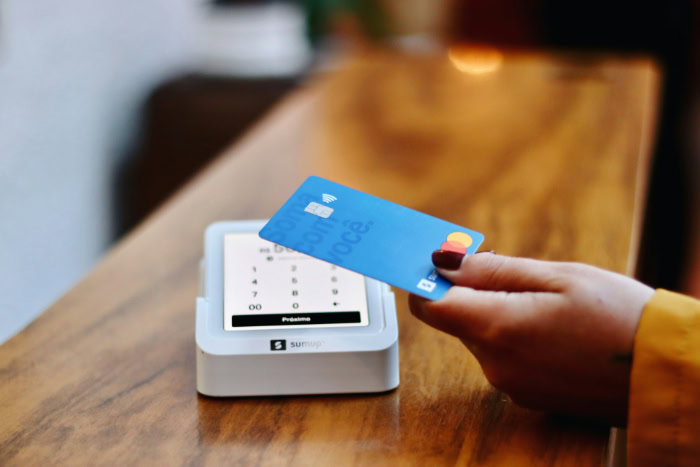
Payment checkouts once required swiping a magnetic stripe through a card reader or inserting a plastic card into an electronic chip slot. Today, a brief wave above a terminal completes an entire transaction in seconds.
Tap to Pay functions as an umbrella term for contactless payment methods, encompassing enabled debit and credit cards alongside mobile wallets on smartphones and smartwatches. Behind each instant purchase lies short-range radio frequency communication, tokenized account numbers, and dynamic cryptographic defenses that protect sensitive account information from theft.
Looking at the underlying hardware, transaction mechanics, and retail setups demonstrates how contactless technology delivers rapid convenience while maintaining rigorous fraud protection for shoppers and merchants alike.
Key Takeaways
- Contactless payments operate through physical cards, smartphones, and smartwatches, all identified by an indicator showing four curved radiating wave lines.
- Transactions rely on Near Field Communication (NFC) at 13.56 MHz and require devices to stay within 1 to 2 inches of the terminal, preventing accidental reads from nearby shoppers.
- Tapping a card or smart device clears checkout registers in roughly 2 seconds, eliminating physical slot wear and cutting customer waiting times compared to traditional chip insertions.
- Payment systems never transmit genuine 16-digit card numbers; instead, they generate a randomized token and a single-use dynamic cryptogram that renders intercepted data useless for fraud.
- Mobile wallets add biometric verification through fingerprint or facial scans, allowing consumers to complete secure offline purchases without active cellular or Wi-Fi connections.
Definition and Common Form Factors
Modern payment systems allow shoppers to complete retail purchases without physically inserting or swiping payment cards. Contactless payment methods encompass several hardware form factors, ranging from traditional plastic bank cards equipped with internal circuitry to mobile devices and smart accessories. These options share standardized visual cues and functional protocols to deliver quick, contact-free checkout experiences across commercial retail environments.
Contactless Payment Symbol and Visual Identification
Contactless payment systems rely on a globally recognized indicator to signal compatibility. This visual marker consists of four curved lines arranged in a radiating wave pattern, resembling a sideways Wi-Fi symbol.
Payment networks and terminal manufacturers place this emblem directly on the front or back of compatible cards, as well as on point-of-sale terminals, to indicate the exact spot where a card or device should be presented.
Physical differences between standard chip cards and contactless-enabled cards appear subtle at first glance. Traditional chip cards feature only the metallic contact plate on the front face, requiring insertion into a terminal slot so the internal reader pins can touch the metal plate.
Contactless cards retain that same metallic chip for backward compatibility, but they also display the four-wave contactless indicator, confirming that internal radio frequency hardware is present beneath the plastic exterior.
Physical Contactless Debit and Credit Cards
Physical contactless cards combine a standard microchip with a thin wire antenna embedded between laminated plastic layers. The copper or aluminum antenna loops around the outer perimeter of the card, connecting directly to the microchip.
When the card enters the electromagnetic field generated by a payment terminal, the internal antenna captures electrical energy from the radio waves, powering the chip without requiring an internal battery.
This physical arrangement enables direct communication with checkout terminals across short distances. Shoppers do not need to push cards into mechanical slots or drag magnetic stripes through terminal readers.
Simply holding the card parallel to the terminal surface allows the internal antenna to exchange payment instructions instantly, eliminating physical abrasion on both the card and the card-reading hardware.
Mobile Wallets and Wearable Devices
Modern mobile devices expand contactless payment methods beyond physical cards. Smartphone platforms such as Apple Wallet and Google Wallet store virtual representations of payment cards directly on the mobile operating system.
These applications run on phones equipped with internal transmission chips, enabling users to present their phone in place of a plastic card at compatible retail registers.
Wearable electronics provide another convenient form factor for contactless checkouts. Smartwatches and dedicated fitness trackers house the necessary transmission antennas and processing components inside compact wristwear. Consumers can complete payments during outdoor exercise or quick errands by positioning their wrist near an active terminal, removing the need to carry a wallet or remove a smartphone from a pocket.
Contrast Between Contactless and Traditional Payment Cards
Contactless transactions provide substantial speed and hardware preservation advantages over older payment techniques. Swiping a magnetic stripe or inserting an EMV chip card creates mechanical friction, which gradually degrades card surfaces and wears down internal terminal contacts.
Contactless payments avoid physical contact entirely, cutting checkout processing time to under 2 seconds compared to the 10 to 15 seconds often required for inserted chip authorizations.
Despite the physical differences in how data passes between devices, contactless transactions maintain complete functional parity with traditional chip insertions under financial network regulations. Card networks treat a contactless tap with the exact same legal and clearing standards as a physical contact-chip transaction.
Both methods generate authorized electronic data records that route through payment networks for clearing, settlement, and fraud liability assignment.
The Technology and Transaction Mechanics

Contactless transactions rely on established wireless standards to transmit financial records across miniature distances. Specialized radio frequency protocols allow payment terminals to power nearby cards, authenticate account credentials, and secure transaction approvals in fractions of a second.
Clear physical and procedural rules govern how these devices communicate, ensuring that retail payments proceed smoothly without accidental cross-talk between adjacent checkout lanes.
Near Field Communication (NFC) Basics
Near Field Communication, commonly abbreviated as NFC, forms the technical foundation for modern tap-to-pay systems. NFC operates at a high radio frequency of 13.56 MHz, adhering to international standards established by the International Organization for Standardization under ISO/IEC 14443.
This frequency enables fast data exchange while restricting transmission range to a tightly controlled perimeter.
The communication architecture relies on an interaction between active and passive components. A point-of-sale terminal acts as an active reader, continuously transmitting an electromagnetic radio field while awaiting a customer.
A standard contactless card acts as a passive device, possessing no internal battery; it draws operating power solely from the terminal field through magnetic induction. Modern smartphones and smartwatches function as active devices, utilizing their internal batteries to power their NFC controllers and execute automated security checks before responding to the reader.
Short-Range Radio Signals and Proximity Requirements
NFC signals function only across exceptionally narrow physical boundaries. A payment device must typically rest within 1 to 2 inches of the terminal reader surface to initiate data transmission.
Moving the card or mobile device beyond this operational perimeter breaks the radio connection, instantly interrupting communication.
These physical proximity constraints serve an intentional security purpose. The restricted transmission range prevents terminals from picking up stray signals from nearby customers standing in line.
A shopper carrying a contactless card in a handbag or back pocket cannot trigger an unintentional charge while waiting 3 feet (0.91 meters) away from an active register. A successful purchase requires a deliberate physical approach toward the designated reader zone.
Step-by-Step Data Exchange Between Device and Terminal
A contactless transaction follows a rapid, automated sequence of communication stages. First, when a merchant finalizes purchase totals, the terminal reader broadcasts an interrogation signal at 13.56 MHz.
As soon as a compatible card or mobile wallet enters the 1-to-2-inch field, the payment device wakes up and identifies its supported payment applications to the reader.
Second, the terminal and device establish a secure channel to transfer encrypted payment credentials. The payment device sends a temporary virtual token alongside a transaction verification code to the terminal, which immediately forwards the request through merchant acquiring networks to the issuing bank for approval.
Third, upon receiving authorization from the bank, the terminal alerts the shopper and cashier simultaneously through an auditory chime, bright green LED lights, or an approval prompt on the visual display.
Security Architecture and Fraud Protection

Modern tap-to-pay systems incorporate multiple layers of digital defense to safeguard customer funds during retail purchases. Rather than exposing permanent account numbers across open radio frequencies, contactless protocols employ dynamic cryptography and tokenized data structures.
These protective mechanisms render intercepted communication useless to malicious actors while protecting consumer accounts against unauthorized duplication and billing errors.
Tokenization and Encryption Protocols
Tokenization serves as a foundational defense against financial data theft in contactless ecosystems. When a consumer uses a mobile wallet or enabled card, the system replaces the actual 16-digit Primary Account Number with a randomized surrogate value known as a token.
This token carries no intrinsic financial value outside the specific network relationship established between the merchant processor and the issuing bank.
End-to-end encryption protocols shield all data transferred between the payment hardware and the processing network. Even if an unauthorized party intercepted radio packets during the split-second transmission, the captured data would appear as unreadable binary code.
Because the genuine 16-digit account number never travels across the airwaves or resides within merchant point-of-sale storage, data breaches targeting store servers do not compromise primary banking cards.
Dynamic Security Codes and Transaction Cryptograms
Traditional magnetic stripe cards store static card verification values that remain identical across every purchase, making them vulnerable to skimming devices. Contactless payments eliminate this vulnerability by generating a unique cryptographic code, often called a cryptogram or dynamic security code, for every individual tap.
The internal chip calculates this code using secret cryptographic credentials alongside specific details of the pending purchase, such as the transaction amount and timestamp.
Because each cryptogram expires immediately after single-use authorization, intercepted transmission data cannot be replayed to execute additional purchases. A thief capturing the signal from a completed transaction cannot use that information to duplicate a card or submit subsequent charges, as the bank verification system immediately rejects any repeated cryptogram.
Defense Against Duplicate Charges and Unauthorized Scanners
Point-of-sale terminals use built-in transaction controls to prevent accidental double-billing. Once a terminal detects a payment device and registers a transaction, it automatically locks the active sale and ceases reading until the cashier initiates an entirely new checkout process.
Holding a card against a reader for several seconds or tapping twice in rapid succession cannot result in two separate deductions for the same bill.
Technical restrictions also protect cards against unauthorized portable scanners in crowded areas. A fraudulent actor operating a rogue handheld reader cannot extract enough information from a passing card to manufacture a functional counterfeit.
Standard tap protocols withhold billing addresses, cardholder names, and three-digit security codes, while the necessity of generating a dynamic cryptogram prevents off-line cloning.
Consumer Setup and Day-to-Day Operation

Setting up contactless payment tools requires only standard consumer hardware and routine account configuration. While physical contactless cards arrive pre-configured from issuing banks, digital wallets on personal smart devices require a straightforward setup procedure.
Built-in biometric protections and regulatory spending parameters maintain user safety during daily shopping routines.
Integration of Cards into Digital Wallets
Adding a physical payment card to a smartphone or smartwatch takes only a few minutes through built-in digital wallet software. A user opens the wallet application, selects the option to add a payment card, and points the device camera at the physical card to capture the printed account number and expiration date automatically.
Alternatively, card details can be entered manually through the on-screen keyboard.
Issuing banks verify the cardholder identity before activating the digital card for mobile transactions. The banking network usually sends a one-time passcode via SMS text message, makes an automated phone call, or prompts the user to confirm the addition inside their official mobile banking application.
Once verified, the digital wallet assigns an internal device account number to the card, completing the setup process.
Device Authentication and Biometric Verification
Mobile wallets introduce an extra verification layer that physical cards lack. Before a smartphone or smartwatch transmits payment data to a register, the operating system requires device authentication.
Depending on the device capabilities, the user must present facial recognition through Face ID, scan a fingerprint, or enter an alphanumeric device passcode.
This authentication step functions independently of an active internet connection. Digital wallets store pre-generated cryptographic payment tokens in an isolated hardware component known as a secure element.
Consequently, consumers can authenticate with biometrics and tap their phone at a terminal even while deep inside an underground parking garage or in an airplane cabin without cellular reception or Wi-Fi connectivity.
Transaction Limits and PIN Requirements
Financial authorities and banking networks implement regional spending caps on physical contactless cards to limit losses if a plastic card is lost or stolen. In many countries, purchases under a designated threshold, such as $50 or $100, process instantly with a single tap without requiring secondary authentication.
When a purchase total exceeds that specified regional cap, the terminal prompts the user to insert the card and enter a personal identification number (PIN) or provide a physical signature.
Banking systems also track cumulative spending across multiple consecutive contactless taps. After several consecutive tap transactions or upon reaching a cumulative daily monetary limit, the terminal asks the cardholder to enter their PIN, even if the individual purchase falls below the single-transaction ceiling.
Mobile wallet transactions on smartphones often bypass these physical card caps because the biometric scan performed on the handset satisfies strict identity verification rules.
Merchant Implementation and Payment Acceptance

Retailers and service providers adopt contactless payment infrastructure to streamline store operations and accommodate evolving consumer checkout habits. Modern payment processing options scale across varied commercial environments, from multi-lane supermarket setups to independent pop-up shops.
Standardized hardware components and emerging software platforms make payment acceptance accessible for businesses of all sizes.
Contactless Point-of-Sale (POS) Hardware
Retailers can choose from several physical POS hardware configurations to accept tap payments. Traditional brick-and-mortar storefronts typically deploy dedicated countertop terminals with integrated PIN pads and customer-facing screens.
In larger retail environments, contactless reader modules connect directly to computerized cash registers and inventory management systems through USB or Ethernet connections.
Mobile payment accessories provide added flexibility for hospitality venues and mobile service operations. These compact card readers connect to smartphones or tablets via Bluetooth, enabling staff to accept contactless cards and mobile wallets at restaurant tables or outdoor market booths.
Standard setup requires only linking the reader to an approved merchant processing account and installing the vendor checkout application.
Smartphone-Based Payment Readers (SoftPOS)
Software point-of-sale technology, frequently known as SoftPOS, allows business owners to accept contactless payments without purchasing specialized card-reading accessories. SoftPOS software turns standard commercial smartphones running iOS or Android into functional payment readers using the device built-in NFC chip.
This software-driven approach simplifies business operations for independent contractors, food truck operators, and mobile service providers. A merchant simply enters the purchase amount into their merchant app, and the customer taps their card or mobile wallet directly against the merchant smartphone.
Eliminating external card-reader hardware reduces startup expenses and removes the chore of charging peripheral hardware accessories.
Operational Advantages for Retail Checkout
Adopting tap-to-pay hardware delivers measurable workflow efficiencies for retail storefronts. Because a contactless transaction clears in roughly 2 seconds, store staff can process customer lines substantially faster than with cash or chip insertion methods.
This speed reduction helps prevent checkout bottlenecks during peak shopping hours, boosting overall transaction volume.
Contactless readers also minimize hardware maintenance expenses over time. Mechanical chip-insertion slots and magnetic swipe readers suffer wear and tear from repeated physical contact, dust accumulation, and physical debris.
Because tap payments require zero physical contact between the card and the reader casing, contactless terminals experience fewer mechanical failures, cutting equipment repair costs and terminal downtime.
Conclusion
Tap to Pay establishes a fast, dependable checkout standard by uniting short-range radio signals with advanced cryptographic protection. Consumers gain the convenience of completing purchases in roughly 2 seconds without exposing primary account numbers or wearing down physical cards.
At the same time, merchants benefit from shorter checkout queues, lower terminal repair costs, and versatile point-of-sale options that run on everyday smartphones. By pairing single-use dynamic security codes with widespread hardware compatibility, contactless payment systems deliver effortless daily transactions while preserving rigorous institutional security across modern commerce.
Frequently Asked Questions
Can someone steal my card info just by walking past me with a scanner?
No, digital pickpocketing cannot steal enough usable information to duplicate your card or make purchases. Contactless cards only transmit data within 1 to 2 inches of a reader and never share your name, billing address, or three-digit security code. Every tap also requires a unique, one-time cryptographic code that cannot be reused.
Will I get charged twice if I accidentally tap my card two times?
No, payment terminals are programmed to process only one charge per transaction. Once the terminal detects your payment and completes the sale, it locks automatically and stops reading signals. The cashier must start a fresh checkout sequence before the reader can accept another payment, preventing accidental double billing.
Can I use tap to pay on my phone without an internet connection?
Yes, you can complete contactless mobile payments without Wi-Fi or cellular service. Your smartphone stores pre-authorized payment tokens in an isolated security chip inside the phone. These stored tokens communicate directly with the retail register through radio waves, allowing your transaction to process smoothly even in remote spots or airplane cabins.
What happens if I tap an entire wallet containing several cards?
The terminal will usually display an error message and refuse to process any payment. When multiple contactless cards sit in the same radio field, their signals conflict, creating reader collision. To avoid payment errors or charging the wrong card, remove the specific card you intend to use and present it alone.
Why do some tap transactions still ask for a PIN?
Terminals request a PIN when a purchase exceeds regional contactless spending caps or triggers daily security limits. Banks enforce these thresholds on physical cards to minimize losses from unauthorized use if a card is stolen. Entering your PIN proves card ownership, whereas smartphone payments usually bypass this step through built-in biometric authentication.
About the Author: Julio Caesar


